CMP Series Vertical Shaft Planetary Mixer
Planetary blades that sweep the whole drum and leave no dead mixing zone
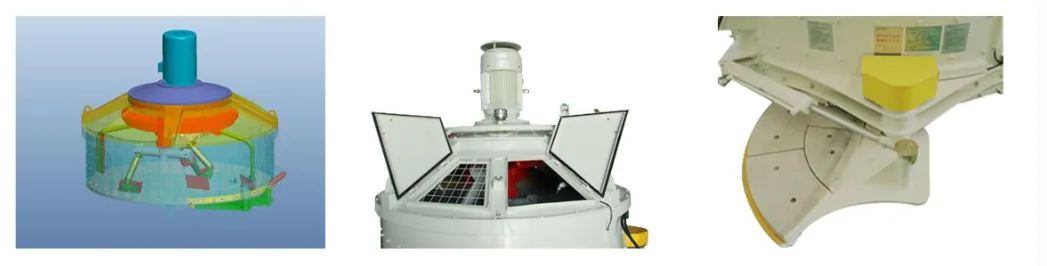
The CMP series vertical shaft planetary mixer is built for plants that have to blend aggregates and powders into a uniform mix. The mixing head combines two motions, revolution around the drum centre and rotation of each arm on its own axis, so the blade path covers the whole mixing vessel and reaches the material near the wall as well as the material at the centre. A hardened gear reducer drives the head with low noise and high torque, and the seal around the shaft keeps slurry from leaking out of the drum. The mixing unit can be configured to suit the plant, the discharge system offers one to three doors in hydraulic or pneumatic form, and a large access door with safety switches simplifies maintenance. Blade and liner materials are chosen for the industry being served, from wear resistant alloy and stainless steel to ceramic, high chromium alloy, polyurethane, wear resistant rubber and cast stone.
Configured around output, blocks and operating conditions.
Revolution and rotation blade motion covers the entire mixing drum, Hardened gear reducer delivers low noise, high torque and long service life, Streamlined mixing arms with wear resistant sleeves double arm service life, One to three hydraulic or pneumatic discharge doors with tight sealing devices, Liner and blade options from wear resistant alloy to ceramic and cast stone, Parallelogram blades can be flipped 180 degrees for a second working life
Typical decision factors
What changes the machine price?
Daily capacity
Output target determines machine size, mould cycles and line configuration.
Automation
Pallet handling, cubing, batching and packaging change total project scope.
Block types
Hollow block, paver, interlock and curbstone may require different moulds and handling.
Service scope
Shipping, installation, training and spare parts are quoted by destination.
How the Mixing Head Moves
A single shaft mixer turns material in one direction, and material near the wall tends to sit outside the active zone. The CMP head combines revolution with rotation: the arms travel around the drum centre while each arm spins on its own axis. The result is a path that covers the whole vessel. One full cycle reaches the bottom of the mixing tank completely and leaves no dead zone, which shows up as a shorter mixing time and a more even result at the discharge gate. Plants that run several recipes in a day notice the difference most, because a shorter cycle leaves more room in the schedule for changeovers.
Mixing System and Wear Parts
Two mixing systems are offered, a standard unit and a differential speed unit, and the second widens the range of materials a plant can blend. The mixing arms use a streamlined profile that limits material sticking to the blade and extends service life, and wear resistant protective sleeves are fitted to the mechanism. Field experience with this arrangement shows the service life of the mixing arms doubling compared with unprotected arms. Reinforced scrapers remove material from the wall and the bottom so no unmixed pockets survive the cycle.
Discharge, Sealing and Access
Discharge doors can be hydraulic or pneumatic depending on the plant, and between one and three doors are available so the mixer can serve a single line or feed several. Sealing devices on the doors close tightly around the gate and stop the slurry leakage that marks many mixer designs. A large maintenance access door with safety switches gives the crew room to reach the mixing unit and the liners without dismantling the machine, which cuts the length of each service stop.
Materials and Options
Liner and blade material is chosen to match the industry rather than fixed in advance. Options include stainless steel, ceramic, high chromium alloys, wear resistant alloy inserts, polyurethane, cast stone, surfacing materials and highly wear resistant rubber. The mixing unit itself can also be tailored to the customer's process. The parallelogram shaped mixing blades can be turned 180 degrees and used a second time, which doubles their utilisation and lowers the cost per ton of mix. Optional high pressure cleaning with spiral nozzles covers the drum interior and speeds up changeover between products. A hardened gear reducer keeps transmission smooth, quiet and durable across long shifts.