Automatic Block Making Machine
High-output automatic block machine for industrial production lines.
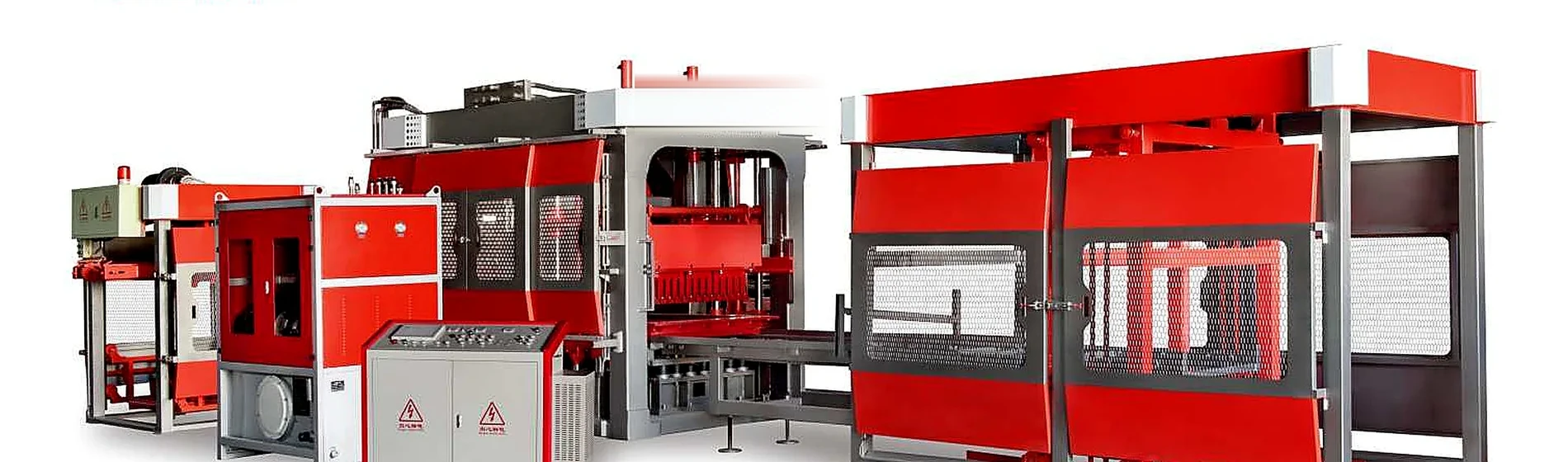
What an automatic block making machine is and how the QST1800 and QST1500 are configured: PLC control, capacity conditions, raw materials, main components, price factors and regional fit for Syria and the Middle East.
Configured around output, blocks and operating conditions.
PLC control, hydraulic forming, replaceable moulds, configurable automation, installation and training support.
Typical decision factors
What changes the machine price?
Daily capacity
Output target determines machine size, mould cycles and line configuration.
Automation
Pallet handling, cubing, batching and packaging change total project scope.
Block types
Hollow block, paver, interlock and curbstone may require different moulds and handling.
Service scope
Shipping, installation, training and spare parts are quoted by destination.
What "Automatic" Means on a Block Machine
An automatic block making machine completes the moulding cycle without an operator touching the press. The PLC touch screen sequences feeding, vibration, pressing, demoulding, pallet handling and stacking, and the operator watches quality rather than turning valves. On the QST1800 and QST1500 that cycle repeats from 15 to 25 seconds, which is what turns a machine into a production line.
Three levels are sold in the market. A manual machine relies on hand controls for every step. A semi-automatic machine automates moulding but leaves stacking and pallet movement to people. A fully automatic block making machine links moulding to pallet feeding, curing and cubing so the crew supervises instead of lifts. This page deals with the third level.
The gap between semi-automatic and fully automatic shows up in labour and consistency, not only in speed. With semi-automatic operation the press waits whenever the stacking crew falls behind, so the cycle stretches through the shift. A fully automatic cycle keeps the press fed and keeps pallets moving, which is why the same host machine reports a higher daily total once the line around it is automated.
- Fully automatic cycle: feeding, vibration, pressing, demoulding, pallet handling and stacking under one PLC.
- Operator role shifts from machine control to mix, quality and changeover.
- Automation raises output per worker far more than it raises output per machine.
Automatic Block Making Machine Models: QST1800 and QST1500
Two models carry the fully automatic line in this range. The QST1800 is the larger machine, built for high output on a 1,400 x 1,400 mm pallet. The QST1500 is the next size down, running a 1,350 x 1,150 mm pallet with a lower installed capacity and a shorter cycle. Both use imported hydraulic proportional components, an intelligent PLC touch screen, arch-breaking rapid distribution and extended high-efficiency vibration.
Machine size follows the pallet. The QST1800 needs 15,500 x 5,500 mm of floor and 104 kW of installed capacity, so it belongs in a planned plant with a matching foundation and power drop. The QST1500 needs 11,500 x 4,550 mm and 69.1 kW, which suits a smaller building and a lighter civil budget. Both share the same control philosophy, so moving up a size changes capacity and space, not the way the machine is run.
Some buyers ask for a servo vibration block making machine by name. On these models the vibration system runs at 3,800 to 4,500 vibrations per minute and is driven and monitored through the PLC, so the vibration profile is tuned to the mix on the screen rather than adjusted by hand at the machine.
| Model | Machine size (mm) | Pallet size (mm) | Machine weight | Vibration force | Rated pressure | Installed capacity | Cycle time |
|---|---|---|---|---|---|---|---|
| QST1800 | 15,500 x 5,500 x 3,200 | 1,400 x 1,400 x 30 | 34 t | 280 kN | 31.5 MPa | 104 kW | 15 to 25 s |
| QST1500 | 11,500 x 4,550 x 2,800 | 1,350 x 1,150 x 30 | 20 t | 220 kN | 31.5 MPa | 69.1 kW | 15 to 23 s |
Capacity and Output
The QST1800 reference output is up to 220,000 standard bricks in an 8-hour shift, and the QST1500 runs below that. Both numbers assume a standard brick mould, a full shift and a stable mix. Output drops with a hollow block mould, with a wet mix, with limited pallet supply, or when curing space forces the machine to wait. Automation removes the human delay, but it cannot remove a materials or curing bottleneck.
| Model | Reference capacity, 8-hour shift | Conditions |
|---|---|---|
| QST1800 | Up to 220,000 standard bricks | Standard brick mould, stable mix, full shift |
| QST1500 | Below QST1800, configured to your target | Standard brick mould, stable mix, full shift |
Plan the automatic line backwards from curing. The press sets the pace, but pallets, curing racks and the cuber decide whether that pace survives the shift. If the cuber can take a pallet every 15 to 18 seconds and the press makes one every 15 to 25 seconds, the two stay in step. Fix the cuber and pallet count against the press cycle before you fix the shift target, and the automatic block factory plan shows how a fully automatic machine sits inside a line with batching, mixing, curing and cubing.
Raw Materials the Automatic Line Accepts
An automatic line runs on cement, sand, gravel and crushed stone powder, and accepts fly ash, slag, gangue and construction waste as cement-replacement fillers where supply allows. Automation suits a steady mix: once the moisture and grading are set, the PLC repeats the cycle closely, which keeps block strength consistent batch to batch.
An automatic press rewards a controlled mix. When the aggregate grading and moisture are steady, the PLC repeats the same fill and pressure every cycle, and block weight varies less. When the mix swings, the operator adjusts and the cycle slows. Stocking and blending aggregate before it reaches the batching machine is the cheapest way to protect the automatic cycle.
- Base materials: cement, sand, gravel, crushed stone powder.
- Fillers: fly ash, slag, gangue, crushed construction waste.
- Consistent moisture is the main input that keeps an automatic cycle stable.
- Stock and measure aggregate so the batching machine can keep pace with the press.
Main Components and Control System
The press is the centre, but the control system and the support equipment decide whether automation pays off. A complete line pairs the QST host with a PL batching machine, a CMP planetary mixer, a QS-1200 pallet feeder and a cuber or stacker.
- Control: intelligent PLC touch screen managing the full cycle and fault display.
- Batching: PL series concrete batching machine, fast and slow dosing.
- Mixing: CMP vertical shaft planetary mixer.
- Pallets: QS-1200 automatic pallet feeding machine, cycle about 13 s.
- Handling: cuber or stacker matched to the pallet size.
Control is only as good as what it controls. Position sensors, the hydraulic proportional valves and the vibration drives feed the PLC, and fault messages on the screen point the crew to the problem. That is why a spare sensor set and a clear fault display matter on an automatic machine: a stopped line costs more than the part that stopped it.
What Drives the Price of an Automatic Block Making Machine
Automation is one of the largest single cost factors, so the price of an automatic block making machine turns on how much of the plant is automated and how it is fed and served. We give no price figure here; these are the factors that set it.
- Model: QST1800 or QST1500, and the pallet size that follows.
- Depth of automation: press only, or press plus pallet feeding, curing and cubing.
- Mould set and the number of product types.
- Pallet quantity and the cuber or stacker type.
- Batching, mixing and conveying equipment.
- Spare parts kit, shipping, destination and installation scope.
Two automatic offers can look alike and price far apart. The difference is usually the scope around the press: how many pallets, whether curing and cubing are included, and how much of the batching and mixing chain is automated. Compare line by line, and read the block making machine price guide first, because an automatic offer is only comparable when both sides list the same scope.
Installation, Training and Spare Parts
An automatic machine needs a level, reinforced foundation, a stable three-phase supply sized to the installed capacity, and enough pallet and curing space to keep the cycle moving. We supply the foundation drawing, schematics and manual, and support commissioning by remote guidance or by an engineer on site depending on scope. Training concentrates on the PLC screen, mix moisture and mould change, since those three points decide whether the automatic cycle holds.
An automatic plant is commissioned in stages: foundation and power first, then mechanical erection, then electrical and PLC checks, then a trial run on your own mix. Training overlaps the trial run so operators learn the screen and changeover on the real product. Ask for a written commissioning sequence so site work is not repeated.
Wearing parts are the mould, the wear plates and the hydraulic and vibration components. Keep a first-order spare kit on site so the line does not wait on an air shipment. The block machine for sale guide lists what a complete automatic offer should contain.
Automatic Block Making Machines for Syria and the Middle East
We configure automatic machines for 380 V / 50 Hz three-phase supply and for hot, dusty sites, with hydraulic oil cooling and dust protection around the vibration unit so the cycle stays steady in high temperatures. Where yard space is limited, a cuber that stacks higher reduces the ground needed for the same output. We support buyers across Syria and the wider Middle East on machine selection and delivery planning, and a fully automatic machine can anchor a complete concrete block factory.
For the region, plan for dust and heat. Filters and seals around the vibration and hydraulic units protect the automatic cycle, and shade over the curing area keeps moisture in the block. A machine that is automated but unprotected on a dusty site will fault more often than the same machine kept clean, so site housekeeping is part of automation.
Send your block list, target output and power availability. Get Configuration and we return a matched automatic set with the scope stated in writing.