Concrete Block Making Machine
Core machine for hollow blocks, solid blocks, pavers and curbstones.
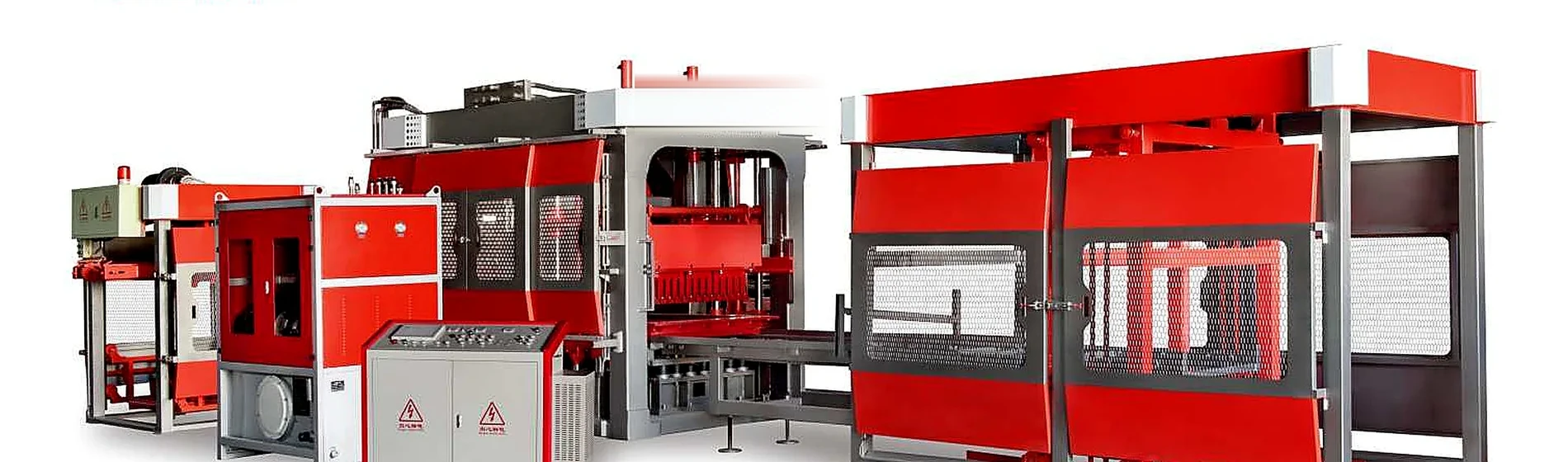
How a concrete block making machine is specified for real output: the QST1800, QST1500, QST1200, QST1000, QST8-15 and QST6-15 models, what each produces, capacity conditions, raw materials, main components and the factors that set the price.
Configured around output, blocks and operating conditions.
PLC control, hydraulic forming, replaceable moulds, configurable automation, installation and training support.
Typical decision factors
What changes the machine price?
Daily capacity
Output target determines machine size, mould cycles and line configuration.
Automation
Pallet handling, cubing, batching and packaging change total project scope.
Block types
Hollow block, paver, interlock and curbstone may require different moulds and handling.
Service scope
Shipping, installation, training and spare parts are quoted by destination.
Applications: What This Machine Produces
A concrete block making machine is selected around a product list, and that list decides the mould, the cycle time and the plant layout. The QST range presses hollow blocks, solid blocks and concrete bricks on one platform, then produces pavers, interlocking blocks, kerb stones and slope-protection units as soon as the mould is changed. A yard supplying a rebuilding programme usually starts with 390 x 190 x 190 mm hollow blocks for walls and 240 x 115 x 51 mm solid bricks for foundations, then adds pavers and kerb stones for road and yard work.
Nothing in the host machine changes between those products. The mould shapes the block, the pallet carries it, the vibration and press setting is tuned to the mix, and the same concrete block machine returns to its first product when the mould goes back on.
- Hollow blocks, solid blocks and standard concrete bricks.
- Interlocking pavers, lawn pavers and kerb stones.
- Slope-protection bricks and thin-wall insulation blocks.
- Mould change is the only product change; the host, mixer and pallet system stay in place.
Product size decides the mould, and the mould decides the count
Product dimensions set the mould, and the mould sets how many pieces fit each cycle. A 390 x 190 x 190 mm hollow block fills a pallet far faster than a 240 x 115 x 51 mm solid brick, because each block is much larger, so the same pallet carries fewer units and the per-shift total falls. Paver moulds follow the paver footprint and the laying pattern, and kerb stones follow length and profile. You can measure a machine by its rated cycle, but its commercial output is always the product, not the press.
Concrete Block Making Machine Models and Configuration
The line covers six models in three size pairs, so a buyer can match machine size to the daily output target instead of over-buying. The QST1800 and QST1500 are the large pair, suited to plants running a wide mould on a large pallet. The QST1200 and QST1000 are the mid pair, the common choice for a first fully automatic concrete block machine. The QST8-15 and QST6-15 are the compact pair, sized for start-ups and for a second machine added to an existing yard. Every model uses vibration plus press moulding at 3,800 to 4,500 vibrations per minute.
Machine size matters as much as output. The QST1800 occupies 15,500 x 5,500 mm, so the building, the foundation and the mixer layout must be planned around it before you order. The QST8-15 occupies 9,800 x 3,600 mm and fits an existing yard with less civil work. Pallet size then decides how many pieces each cycle carries and how many pallets must circulate for the line not to stall.
When you compare a concrete block machine manufacturer in China, compare machine size, pallet size, vibration force, installed capacity and cycle time rather than a single brochure number. Those five values decide what the machine can actually run, and a concrete block machine supplier that publishes all five lets you compare honestly.
| Model | Machine size (mm) | Pallet size (mm) | Machine weight | Vibration force | Rated pressure | Installed capacity | Cycle time |
|---|---|---|---|---|---|---|---|
| QST1800 | 15,500 x 5,500 x 3,200 | 1,400 x 1,400 x 30 | 34 t | 280 kN | 31.5 MPa | 104 kW | 15 to 25 s |
| QST1500 | 11,500 x 4,550 x 2,800 | 1,350 x 1,150 x 30 | 20 t | 220 kN | 31.5 MPa | 69.1 kW | 15 to 23 s |
| QST1200 | 11,500 x 4,550 x 2,800 | 1,350 x 880 x 25 | 17 t | 150 kN | 31.5 MPa | 57.6 kW | 15 to 25 s |
| QST1000 | 11,500 x 4,050 x 2,800 | 1,100 x 880 x 25 | depends on configuration | 105 kN | 31.5 MPa | 48.9 kW | 15 to 23 s |
| QST8-15 | 9,800 x 3,600 x 2,800 | 980 x 860 x 22 | 14 t | 95 kN | 31.5 MPa | 44.9 kW | 15 to 23 s |
| QST6-15 | 9,450 x 3,300 x 2,700 | 980 x 680 x 20 | 12 t | 68 kN | 25 MPa | 34.4 kW | 15 to 23 s |
Capacity and Output by Model
Published capacity is a ceiling, not a promise. The figures below assume a stable mix, a full 8-hour shift, a single standard brick mould and uninterrupted pallet handling. Real output falls when the mix is wet, when a large hollow block needs a longer cycle, when curing space is limited, or when the operator stops the machine to clear a jam. A solid block making machine running small bricks will always show a higher hourly count than the same machine running a heavy hollow block, because fewer pieces fit in the mould and the cycle stretches.
| Model | Reference capacity, 8-hour shift | Basis |
|---|---|---|
| QST1800 | Up to 220,000 standard bricks | Standard brick mould, full shift, stable mix |
| QST1200 | Up to 120,960 standard bricks | Standard brick mould, full shift, stable mix |
| QST8-15 | Up to 90,000 standard bricks | Standard brick mould, full shift, stable mix |
Plan pallets and curing space from the cycle, not from the daily target alone. A machine cycling every 20 seconds makes three pallets a minute, and each pallet needs curing before it is emptied and returned. If the pallet pool is too small, the operator stops the press even though the machine could keep running, and the daily total drops without any mechanical fault.
For a hollow block mould the count drops sharply, and for pavers it depends on the paver footprint and the mould layout. Send your block drawing and the number of pieces you need per day, and we calculate the cycle, the pallet count and the curing area that match it. The complete concrete block factory plan shows how the machine links to the mixer, the conveyor and the curing yard.
Raw Materials and Mix Design
A concrete block making machine works with cement, sand, gravel and crushed stone powder as the base mix, and accepts cement-replacement fillers such as fly ash, slag and construction waste where local supply allows. Mix design governs block strength far more than machine settings do. A dry, well-graded mix packs into the mould and releases cleanly; a wet mix sticks, slumps and slows the cycle.
- Base materials: cement, sand, gravel, crushed stone powder.
- Fillers that work with the same machine: fly ash, slag, gangue, construction waste.
- Moisture control matters more than compression force for a clean release.
- Cement content drives cost per block, so trial mixes on site should precede full production.
Curing is part of the process, not a separate plant. Fresh block needs moisture and time before it reaches strength, and in a hot, dry climate that means shade, water and covered storage. Strength measured at the machine is green strength; the figure that matters to the buyer is compressive strength after curing, and that is set as much by the curing area as by the press.
Main Components of the Machine
The machine is more than the moulding frame. A working concrete block machine is a system: a batching machine that weighs aggregate, a planetary or pan mixer, a host press with the vibration and hydraulic unit, a pallet feeding magazine, and a stacker or cuber that moves green blocks onto curing pallets or racks. The QST host uses imported hydraulic proportional components and an intelligent PLC touch screen, with arch-breaking rapid distribution and extended high-efficiency vibration across the range.
- Batching and weighing: PL series concrete batching machine with fast and slow dosing.
- Mixing: CMP vertical shaft planetary mixer for uniform batches.
- Host: QST vibration plus press moulding frame with PLC control.
- Pallet system: QS-1200 automatic pallet feeding machine, feeding cycle about 13 s.
- Handling: cuber, stacker or forklift clamp depending on the line.
Balance the support equipment to the press. A batching machine that weighs slowly, or a mixer that cannot deliver a batch in time, will idle an expensive host machine. The QST host is matched to a PL batching machine and a CMP mixer so the feeding, mixing and moulding steps run at one rhythm.
Not sure which host and support equipment fit your product list? Check the cost structure of a block making machine and then Request Factory Price so the configuration is quoted against your target, not a generic brochure.
What Drives the Price of a Concrete Block Making Machine
No careful supplier quotes a single figure before the configuration is fixed, because the price of a concrete block machine is the sum of choices made around one job. These are the factors that move the price up or down. We publish no price on this page and put no number on these drivers here.
- Machine model and size, from the compact QST6-15 to the large QST1800.
- Automation level: manual, semi-automatic or fully automatic control.
- Mould set: how many block types, and how complex each mould is.
- Pallet quantity: the number of pallets in circulation limits real output.
- Support equipment: mixer, batching machine, conveyor, cuber, packaging.
- Spare parts kit and wearing parts included in the first order.
- Shipping, destination, voltage and installation scope.
Because the same machine can be sold with or without a cuber, with ten moulds or one, the only fair comparison is a like-for-like offer on the same product list. That is why we configure before we quote.
Installation, Training and Spare Parts
A block machine is installed on a level, reinforced foundation sized to the machine footprint, with the mixer and batching plant positioned to cut travel time. We supply the foundation drawing, the electrical and hydraulic schematics and the operating manual, and we support commissioning by remote guidance or by an engineer on site depending on the project. Operators need training on mix moisture, mould change and the PLC screen, because most early production problems come from the mix and the changeover, not the machine.
Foundation design follows machine weight and vibration. A 34 t QST1800 on a soft or under-reinforced slab will vibrate into the ground and lose compaction, so the slab, the bolt layout and the isolation details come from the drawing, not from guesswork. Confirm the slab and the power drop are ready before the container arrives, because site preparation is the most common cause of an installation delay.
Wearing parts are the mould, the wear plates and the hydraulic and vibration components. Plan a first-order spare kit so a stoppage never waits on an air shipment. Buyers comparing offers should read the block machine for sale guide to see what a complete offer should include.
Concrete Block Making Machine Fit for Syria and the Middle East
Machines for the region are configured for 380 V / 50 Hz three-phase supply and for hot, dusty sites. That means attention to hydraulic oil cooling, dust protection around the vibration unit, and curing arrangements that hold moisture in high temperatures. Pallet and cuber choices also follow the site: where yard space is tight, a cuber that stacks higher uses less ground for the same output. Our team works with buyers across Syria and the wider Middle East on machine selection, power supply and delivery planning.
Delivery planning matters as much as machine choice. Large models ship in several containers and need a route, a crane and a foundation ready at the receiving end. Regional buyers should agree who unloads, who assembles and who supplies local materials before shipment, so the machine moves from the port to production without a long stop.
To move from this page to a real offer, send your block list and daily target. Request Factory Price and we return a configured quotation. Buyers who already know the automation level they want can start from the automatic block factory plan instead.