PL Series Concrete Batching Machine QS-1200
Automatic sand, gravel and cement batching with dual-speed weighing and 2 to 4 hoppers.
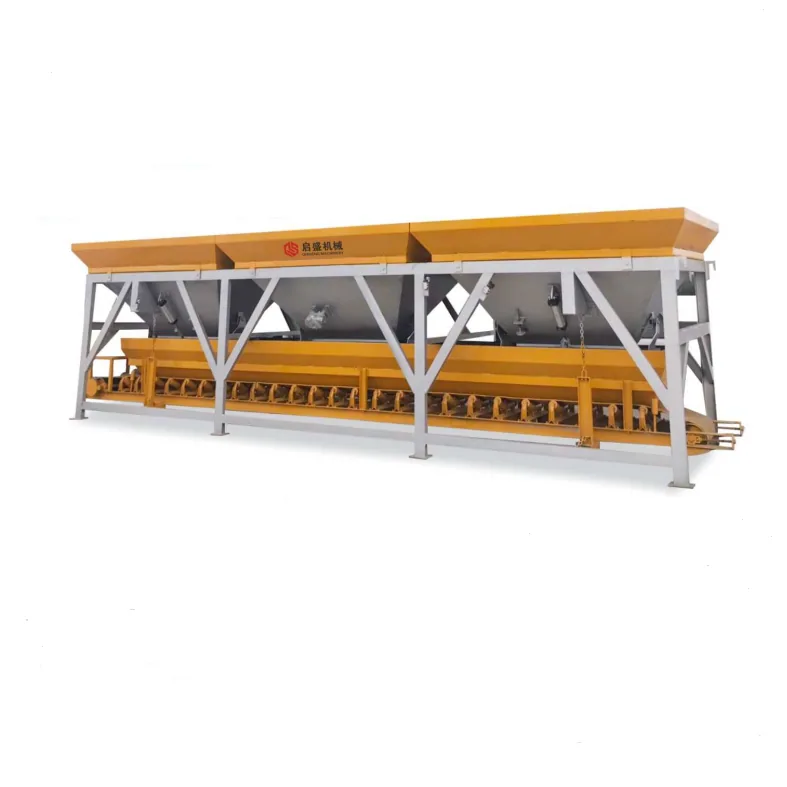
The PL series concrete batching machines handle front-end material proportioning for block production lines and concrete mixers. Sand, gravel and cement are delivered and measured to preset ratios without manual intervention, so mix consistency stays steady across every batch. Four main assemblies carry the work: a storage hopper group, a weighing section, a feeding section and an electrical control cabinet. Storage can be arranged with 2 to 4 hoppers, letting one machine serve several aggregate grades. Weight control relies on three-point induction sensors and electronic weighing, with fast and slow dual-speed filling that keeps small-dose materials inside a tight error band. Feeding runs from hopper to weighing area through vibration units fitted with arch-breaking anti-blocking parts, so damp or cohesive materials do not bridge over the outlet. The control cabinet uses microcomputer logic with a digital display, supporting ratio adjustment and automatic over-limit alarms. Operators set the recipe once and the cycle repeats unattended. Because measurement is repeatable, cement consumption is easier to control and waste drops. The units suit brick plants, block lines and small ready-mix setups that need accurate aggregate batching ahead of a mixer, and they integrate with existing production equipment.
Configured around output, blocks and operating conditions.
Three-point induction sensors and electronic weighing keep every batch inside a tight error band., Fast and slow dual-speed filling measures small cement doses as accurately as bulk aggregate., Two to four storage hoppers let one unit feed several aggregate grades in sequence., Vibration feeders with arch-breaking parts release damp sand and gravel without blocking., Microcomputer control with digital display supports recipe entry, ratio changes and over-limit alarms., Automatic cycling replaces manual proportioning and holds mix consistency through the shift.
Typical decision factors
What changes the machine price?
Daily capacity
Output target determines machine size, mould cycles and line configuration.
Automation
Pallet handling, cubing, batching and packaging change total project scope.
Block types
Hollow block, paver, interlock and curbstone may require different moulds and handling.
Service scope
Shipping, installation, training and spare parts are quoted by destination.
Batching at the Front of the Line
The PL series concrete batching machines sit at the front end of a block production line or a concrete mixer, where raw materials must arrive in the right quantities before mixing starts. Sand, gravel and cement are drawn from storage and delivered to preset ratios automatically, replacing the manual shoveling and guesswork that causes batch-to-batch variation. Because every cycle follows the same recipe, the mix that reaches the mold or the mixer stays consistent through the shift.
A complete machine is built from four assemblies: a storage hopper group, a weighing section, a feeding section and an electrical control cabinet. Each part has a clear job and they work in sequence rather than in isolation, which keeps the proportioning cycle stable even when one material runs fine and another runs coarse.
How the Four Assemblies Work Together
The storage hoppers hold the different grades of production material. A machine can be ordered with 2 to 4 hoppers, so a single unit serves several aggregate sizes or a mix of sand, stone and cement without a second machine. Hopper count is chosen against the recipe a plant actually runs, not a fixed number.
The weighing section turns stored material into measured material. Three-point induction sensors combined with electronic weighing read the load and cut the feed when the target is reached. The feeding section moves material from hopper to weighing area using vibration units, and those units carry arch-breaking anti-blocking parts so damp or cohesive sand does not bridge over the outlet. The control cabinet ties the sequence together using microcomputer logic.
Weighing Accuracy and Dual-Speed Batching
Measurement follows metrological licensing standards, and the machine supports fast and slow dual-speed batching. The fast stage closes most of the gap quickly, while the slow stage trims the final amount. That two-stage approach matters most for small-dose materials such as cement or additives, raising throughput without giving away accuracy on the small components of the recipe, so proportion errors stay inside reasonable limits.
For a plant, the practical result is predictable cement usage. When cement is measured the same way every cycle, over-dosing stops and material cost becomes easier to plan. A stable recipe also means the blocks leaving the press hold their strength and appearance, which reduces rejects downstream.
Control, Alarms and Daily Operation
The electrical control system supports digital display, ratio adjustment and automatic over-limit alarms. Operators can change a recipe from the panel and watch the live reading during the cycle. If a weight runs past its limit, the alarm shows it before the batch leaves the weighing area, so a wrong mix is corrected instead of poured.
The unit is a front-end device, so it is sized to match the line behind it. Brick plants, block lines and small ready-mix operations use it to prepare aggregate ahead of a mixer. Installation, commissioning and operator training are handled as part of the wider production line supply, so the batching section is aligned with the mixer and the molding machine from the start.