QS-1000Y Mobile Brick Stacking Machine
Travels across the yard to stack cured bricks where the piles actually stand
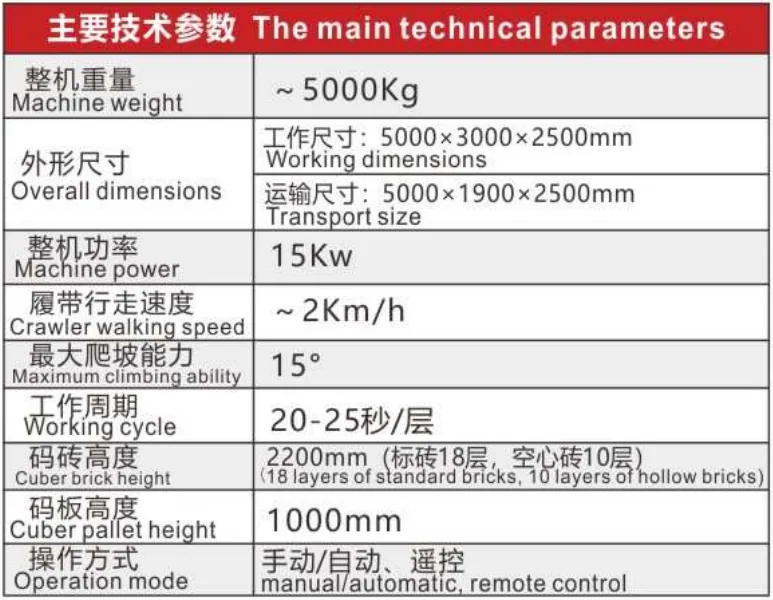
The QS-1000Y is a mobile brick stacking machine built for simple block production lines. Instead of sitting in one spot, it travels through the stacking yard and works directly where cured product has been left to dry, so bricks do not have to be carried to a fixed machine. Belts and clamps on the unit sort bricks of different specifications into separate piles and stack them on site. A pile of standard solid bricks can reach 20 layers in one pass, while hollow bricks stop at 11 layers. The machine is controlled by a PLC with a touchscreen panel, and one operator is enough to run it through a shift. When a forklift clamp is fitted, the stacker can pick up finished piles and load them straight onto trucks, which cuts the labour needed at the dispatch end. Daily stacking capacity is about 1,300 boards. The unit suits small and medium block yards that want to cut the carrying work at dispatch without installing a fixed palletizing line.
Configured around output, blocks and operating conditions.
Mobile stacking unit that works directly among cured piles in the yard, Sorts bricks of different specifications into separate piles on site, Standard solid bricks stack up to 20 layers high in a single pass, Hollow bricks stack up to about 11 layers, matched to product stability, PLC with touch screen control, operated by a single crew member, Forklift clamp loading reduces manual handling between stacking and dispatch
Typical decision factors
What changes the machine price?
Daily capacity
Output target determines machine size, mould cycles and line configuration.
Automation
Pallet handling, cubing, batching and packaging change total project scope.
Block types
Hollow block, paver, interlock and curbstone may require different moulds and handling.
Service scope
Shipping, installation, training and spare parts are quoted by destination.
A Stacker That Travels to the Product
Most palletizing equipment in a block plant is bolted to one spot, and every brick has to come to it. The QS-1000Y inverts that arrangement. It is a site-mobile, on-site stacking system that moves through the stacking yard and works directly among the cured piles. Because it goes to the product, the plant avoids extra transport passes and saves the yard space that a fixed machine and its feed conveyor would occupy.
Layer Heights and Brick Types
The stacker sorts bricks of different specifications produced by various brick-making machines into separate piles, so a plant running several moulds can keep the output apart without a second machine. Solid brick piles reach 20 layers in a single lift, while hollow brick piles go to 11 layers. That difference reflects the stability of each product when it is lifted as a block rather than a layer at a time. Because the machine holds several piles separately, one yard can serve more than one product at a time, and a pile that is out of place does not have to be re-sorted later.
Control and Crewing
A PLC with a touch screen runs the whole system. The operator drives the unit and sets the working parameters from the panel, and no second man is needed to spot layers or guide the clamp. Movement through the yard is under manual control, which suits sites where piles are placed by eye and where the layout changes from one shift to the next. The simple panel layout means a crew can be trained on the machine in a short time.
Loading Out and Daily Capacity
Paired with a forklift clamp, the machine picks up a finished pile and loads it straight onto a truck, which removes the hand labour that normally sits between stacking and dispatch. Daily stacking capacity is about 1,300 boards, so the unit fits plants whose yard output is lower than that of a fully automatic gantry line but which still want to cut the carrying work at the dispatch end. The machine is a practical choice for small and medium block yards, and for larger plants that want a mobile unit to handle odd sizes and short runs that a fixed line cannot justify. The mobile arrangement also lets one unit cover two curing areas that sit far apart, which a fixed palletizer cannot reach without extra conveyors.