QSD-A Series Cement Tile Forming Machine
High-pressure filter pressing turns cement and sand into dense, weatherproof roof tiles.
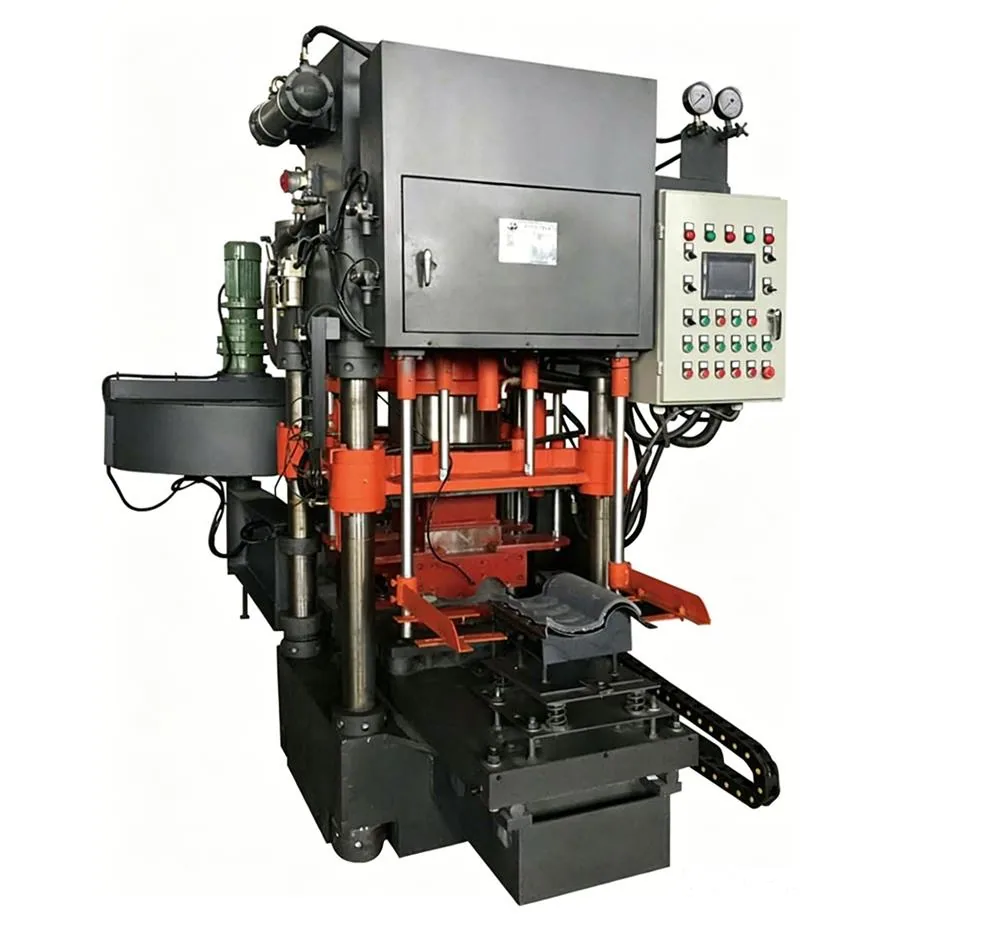
The QSD-A is a forming machine built for roof covering material, and it is the main unit of an automated cement tile line. Two mainstream classes are offered, the 320 and the 400, and the buyer picks the class that matches the tile size and the daily output target. The forming process is hydraulic static pressure combined with filter pressing, a different route from the old vibrating table. Mortar concrete made from cement, sand and gravel goes into the mold cavity, the hydraulic system applies a steady high pressure, and excess water and trapped air are squeezed out through the mold. The blank that comes out is dense, with no internal voids and no delamination, and the tile keeps clean edges and accurate dimensions. Because the void content is low, finished tiles resist cracking, surface chalking and distortion far better than vibrated tiles, and they hold up to rain and frost. The line suits residential roofing, industrial plant roofs and landscape structures, and it gives small and medium tile factories a way to reach standard output at moderate cost.
Configured around output, blocks and operating conditions.
Hydraulic static pressure combined with filter pressing, no vibrating table in the process, Dense tile blank with no internal voids or layer separation, clean edges and accurate size, Two classes, 320 and 400, so capacity can be matched to tile size and output, Works from a simple cement, sand and gravel mix with optional fly ash filler, Closed-loop electric control runs feeding, pressing, forming and discharge as one sequence, Low water absorption improves frost resistance and weather durability of finished tiles
Typical decision factors
What changes the machine price?
Daily capacity
Output target determines machine size, mould cycles and line configuration.
Automation
Pallet handling, cubing, batching and packaging change total project scope.
Block types
Hollow block, paver, interlock and curbstone may require different moulds and handling.
Service scope
Shipping, installation, training and spare parts are quoted by destination.
Filter Press Forming Instead of Vibration
Most low-cost tile lines shake the mix into shape on a vibrating table. The QSD-A does the opposite: it presses the mix under hydraulic static pressure while the mold filters out water and air. The difference shows up in the blank. Instead of a surface layer that is dense and a core that is porous, the tile is uniform through its thickness, so it does not crack along a weak internal plane later. Water absorption stays low, which is the property that decides how a tile behaves after ten winters of rain and frost.
Raw Materials and Feeding
Cement, sand and gravel in a mortar concrete mix are the base materials, and fly ash can be added as an industrial filler. Proportions are simple to follow and feeding is straightforward, which matters in a plant where the batching crew changes between shifts. There is no need for a special aggregate grade, and the same recipe can serve the whole tile range by changing the mold rather than the mix.
Inside the Cycle
Mixed material fills the mold cavity. The hydraulic system then applies steady pressure and drives water and air out of the material in one integrated step. Because static pressure and filter pressing happen together, the tile blank reaches a compact structure without internal voids or separation between layers, and the finished piece comes out with precise dimensions and neat lines. Hydraulic release pushes the molded tile out smoothly and the cycle repeats, so the machine can run continuously.
Two Classes, One Process
The series covers the 320 and 400 classes, two tonnage options that let a buyer match the press to the tile size and output required rather than over-buying capacity. Changing the dedicated mold produces different roofing tile profiles on the same machine. The whole process runs under electric control in a closed loop from feeding through pressing and forming to discharge, which makes round-the-clock production in a workshop practical with only a small crew.
Where the Tiles Are Used
Output goes to pitched roofing on residential buildings, roofs on industrial plants and covering for landscape and garden structures. Compared with vibrated tile, the finished product holds its colour and surface finish longer, resists water penetration and stands up to frost cycles, so the maintenance burden on the building owner is lower. For a small or medium tile factory that wants standardised, low-cost production, the QSD-A is the forming unit to build the line around.