QSD-B Series PC Stone Molding Machine
Wet mix filtration plus vacuum molding for curbs and pavers that replace quarry stone.
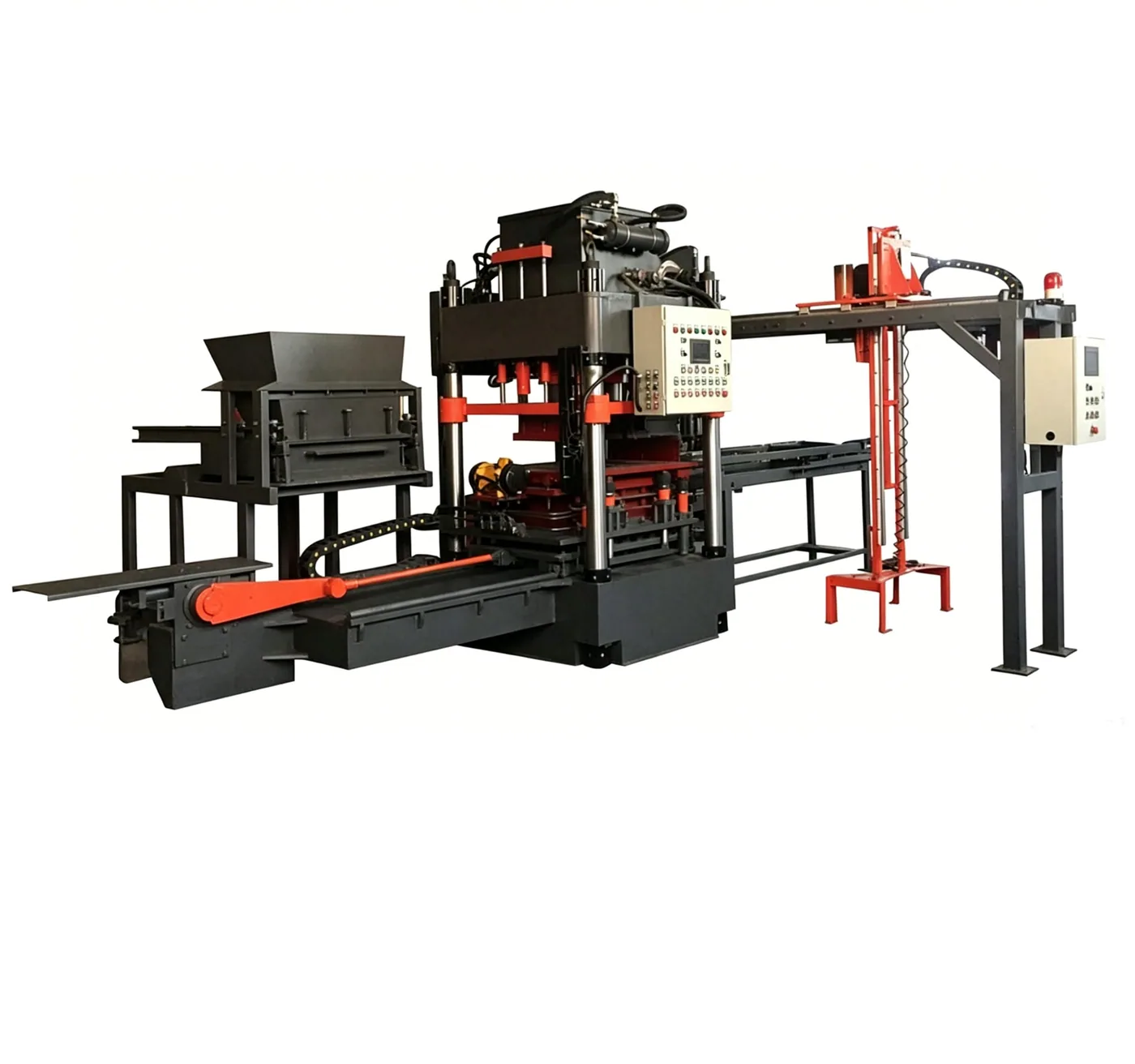
The QSD-B makes granite-look kerbs and municipal paving slabs by a route that combines high-pressure wet mix filtration with vacuum assisted molding in a single unit. Wet material goes into the mold cavity, the press filters out air and surplus water while pulling a vacuum at the same time, and the blank that results is dense, pore free and free of layering. Colour and surface are even, edges are straight, and the product reads as quarried granite. Because the material goes in wet, the plant saves the drying step. Cement, washed sand, stone powder, granite edge scraps and manufactured sand can all be blended in variable proportions, so quarry waste becomes raw material instead of disposal cost. Molding pressure and dwell time are adjustable, which allows standardised output of curbs and pavers in different sizes, strengths and thicknesses. The unit is aimed at building material factories that want to move their faux-stone range upmarket while holding raw material spend down.
Configured around output, blocks and operating conditions.
High-pressure wet mix filtration and vacuum extraction work together in one mold charge, Dense, pore-free, non-layered blanks with straight edges and a smooth face, Wet mix goes straight in, no pre-drying and no lengthy curing before molding, Uses stone powder, granite edge scraps and manufactured sand as raw material, Adjustable molding pressure and dwell time for different sizes, strengths and thicknesses, PLC automatic demolding and discharge, finished pieces need no grinding
Typical decision factors
What changes the machine price?
Daily capacity
Output target determines machine size, mould cycles and line configuration.
Automation
Pallet handling, cubing, batching and packaging change total project scope.
Block types
Hollow block, paver, interlock and curbstone may require different moulds and handling.
Service scope
Shipping, installation, training and spare parts are quoted by destination.
One Unit, Two Actions
Conventional imitation stone lines either press a semi-dry mix or cast wet material and wait. The QSD-B does neither. A single mold cavity receives a wet mix while the machine applies high pressure filtration and vacuum extraction together. Air and excess water leave the material at the same moment the load is applied, so the blank settles without trapped pores and without a soft inner layer. The density that results is the source of nearly every property buyers care about: surface hardness, flexural strength and the depth of colour that makes the slab look like stone rather than concrete.
Working Sequence
Raw materials such as cement, washed sand, stone powder, granite edge scraps and manufactured sand are mixed in variable proportions to make a uniform wet blend. No pre-drying and no long curing stage are needed before molding. The wet mix is fed into the mold cavity, where high pressure filtration and vacuum extraction run at once and strip internal air and surplus moisture. Linear and stable pressure then compacts the mix, producing a dense, pore-free, non-layered blank with straight edges and a smooth face. A PLC handles automatic demolding and discharge, and the finished pieces need no grinding or polishing before they go to later sandblasting or polishing steps.
Material Flexibility and Waste Reuse
Because the process accepts wet material directly, there is no need to dry feed before molding. Stone powder, granite edge scraps and manufactured sand can all be used in quantity, which turns quarry and stone processing waste into an input. For a factory that already cuts granite, that is a direct cut in raw material procurement cost and a way to keep the operation compliant with environmental rules on waste handling.
Control Over the Finished Product
Molding pressure and duration are both adjustable, so a plant can dial in the density and surface finish required for each product line. Curbs and paving stones can be produced in various sizes, strengths and thicknesses from one machine, and the standardised setting is stored and repeated. Demolding and discharge are automatic, which keeps cycle time stable across a shift and keeps the finish consistent from the first piece of the day to the last.
Where It Fits
The machine is the core molding unit when a building material factory upgrades its high-end faux-stone product line. Output covers municipal curbs, paving stones and heavy slabs for roads, plazas and landscape projects. The series is offered in QST1200 and QST1800 sizes, and buyers who already run a QSD-A tile press or a PC finishing line can add the QSD-B to extend the range without changing the plant layout.