Semi-Dry Gypsum Block Production Line QS600
Semi-dry gypsum block line with atomized water addition and no drying stage.
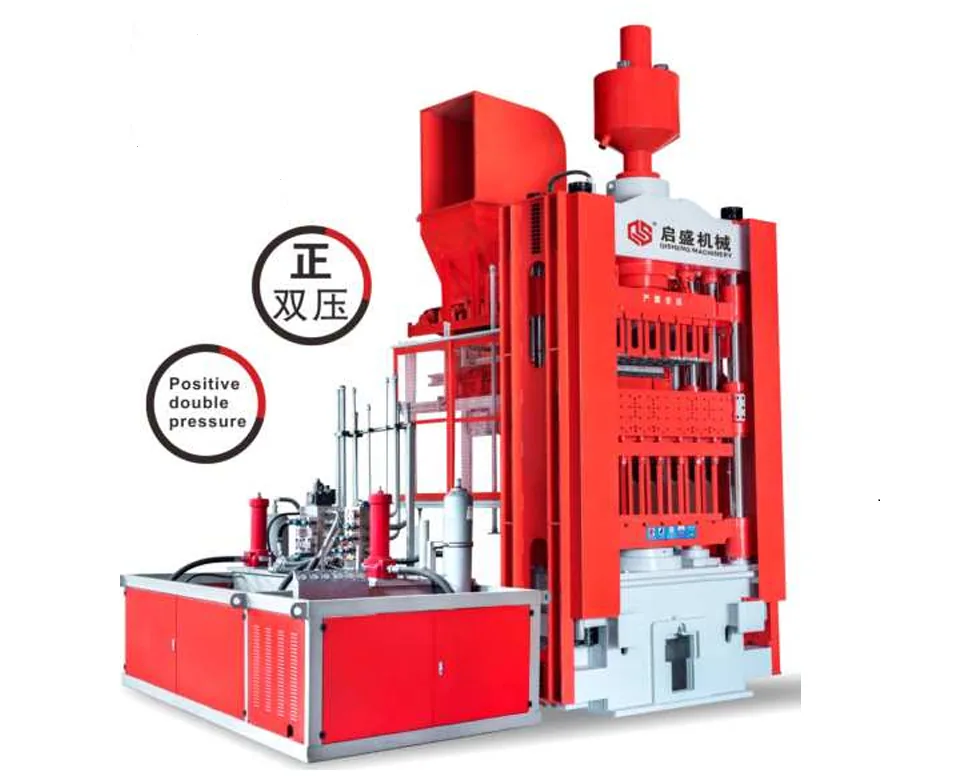
This line produces gypsum building blocks with a semi-dry forming process instead of traditional casting. Cast methods use a high water-to-material ratio, dry slowly and cost more, which limits continuous output and makes bulk use of industrial by-product gypsum difficult. Semi-dry forming lowers the water ratio and shortens the cycle. The main raw material is construction stone with a small amount of proprietary additive. The additive adjusts the hydration reaction and crystal nucleation of the stone, and the forming process uses hydrogen bonds and crystal nuclei during hydration to raise block strength. The product exceeds the JC/T698-2010 standard for gypsum blocks. The technical core is a water ratio of the stone mix near 30 percent. Lowering water intensifies the hydration reaction compared with casting, raising temperature by roughly 10 degrees Celsius and speeding the setting that gives the block its strength. On the line, a distinctive mixing mode works with water added through secondary atomization and an accurate distribution system. Compression ratio and pressure are coordinated, start-up is one-touch, blocks need no drying, and palletizing is automated.
Configured around output, blocks and operating conditions.
Secondary atomization adds water precisely so the stone mix stays near a 30 percent ratio., Semi-dry forming removes the drying stage that casting-based lines depend on., Compression ratio and pressure are set together to keep block density even., One-touch electrical start-up with quiet high-pressure operation and a small footprint., Formed blocks exceed the JC/T698-2010 standard for gypsum blocks., Automated palletizing and brick collection run at the end of the line.
Typical decision factors
What changes the machine price?
Daily capacity
Output target determines machine size, mould cycles and line configuration.
Automation
Pallet handling, cubing, batching and packaging change total project scope.
Block types
Hollow block, paver, interlock and curbstone may require different moulds and handling.
Service scope
Shipping, installation, training and spare parts are quoted by destination.
Semi-Dry Forming Against Casting
Traditional gypsum blocks are made by casting, a method with a high water-to-material ratio, long drying cycles and higher cost. Those characteristics make continuous, large-scale production hard to reach, and they also make it difficult to consume industrial by-product gypsum in bulk. Cast gypsum does harden to a light density, but it dries slowly and can show low hardness, weak strength and a high breakage rate in handling, which limits how far the material travels in the market.
The semi-dry forming line was developed to remove those limits. Lowering the water ratio cuts drying cost, shortens the production cycle and lifts product strength and quality, which is what lets a plant serve real construction demand rather than small volumes.
Material and Chemistry of the Mix
The primary raw material is construction stone, used with a small amount of a proprietary additive. The additive adjusts the hydration reaction and crystal nucleation of the stone, guiding how the material sets. The forming process then uses hydrogen bonds and crystal nuclei formed during hydration to build strength in the block, so the finished unit exceeds the requirements of the JC/T698-2010 standard.
The technical heart of the process is a water-to-material ratio of the stone mix kept near 30 percent. Because there is much less water than in casting, the hydration reaction runs more intensely, raising temperature by roughly 10 degrees Celsius and driving the strength gain that cast blocks struggle to reach.
Equipment and Process Control
The line runs a distinctive mixing mode and adds water intelligently through secondary atomization, so water is distributed finely rather than dumped in a single pour. An accurate material distribution system places the mix where the mold needs it, and compression ratio and pressure settings are coordinated so density stays even.
Electrical control supports one-touch start-up, and the press runs at high pressure with low noise. Blocks come off the line formed and ready, with no drying stage to schedule, which removes an energy cost and a bottleneck at the same time. Palletizing and brick collection are automated, so the end of the line keeps pace with the press.
What the Plant Gains
Put together, the design gives a compact footprint, fast production speed and high output. Operating noise stays low, and the process fits projects that convert phosphogypsum or construction stone into building blocks at scale. Because the block is formed rather than poured, the plant avoids the long drying cycles that made bulk gypsum utilization difficult, and the strength and surface quality of the product make it easier to place in the market.