CX20-45 Nine-Head Pneumatic Polishing Machine
Nine flexible heads polish the face, the side and the chamfer in one pass.
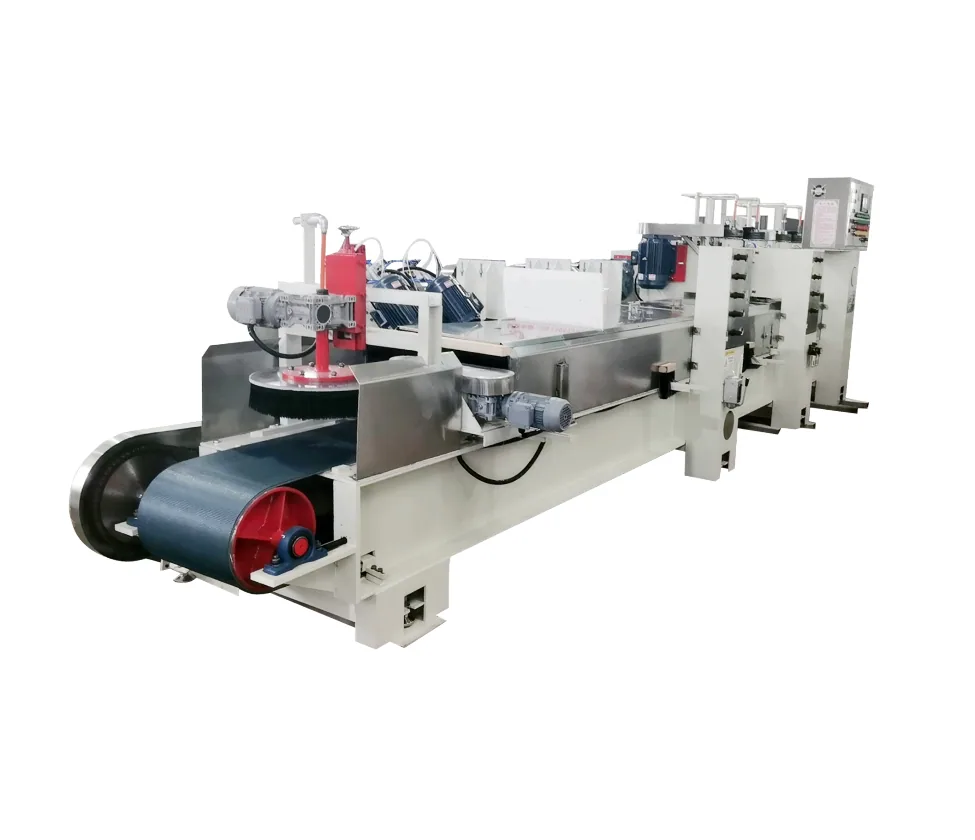
The CX20-45 is a finishing machine for PC imitation stone kerbs, municipal paving stones and large landscape slabs. Nine independent pneumatic polishing assemblies handle three jobs at once: flat face polishing, side edge polishing and corner chamfering. Because the heads are air driven rather than rigid, each one floats over the stone, follows slight differences in curvature and adjusts its own working gap, so the abrasive never digs in. A PLC and inverter package regulates polishing force and conveying speed, which keeps the finish even along the slab and stops the missed patches, burn marks and chipped edges that hand held or hard wheel polishing leaves behind. Material is carried at constant speed by a motor and reducer drive, so every area receives the same treatment. The whole sequence runs from stored settings and discharges automatically, which lets the machine sit directly in a high-pressure PC stone line. It is the standard finishing station for plants producing high-end imitation stone slabs.
Configured around output, blocks and operating conditions.
Nine independent pneumatic heads polish face, side edges and corner chamfers in one pass, Air driven heads float over the surface and correct the gap as the slab passes, PLC and inverter control regulates polishing force and speed for a repeatable finish, Motor and reducer drive carries slabs at constant speed so no area is missed, Handles PC imitation stone kerbs, paving stones and large landscape slabs, Automatic discharge allows direct integration into a high-pressure molding line
Typical decision factors
What changes the machine price?
Daily capacity
Output target determines machine size, mould cycles and line configuration.
Automation
Pallet handling, cubing, batching and packaging change total project scope.
Block types
Hollow block, paver, interlock and curbstone may require different moulds and handling.
Service scope
Shipping, installation, training and spare parts are quoted by destination.
What the Machine Does
Stone slabs made on a high-pressure press leave the mold with the right density but not the right surface. The CX20-45 takes those pieces and brings the face, the side edges and the chamfer up to a saleable finish in one continuous pass. It is built for PC imitation stone kerbs, municipal paving stones and large landscape slabs, and it sits at the post-processing stage of a molding line rather than acting as a stand alone machine.
Nine Independent Pneumatic Heads
The frame carries nine separate pneumatic polishing assemblies. The front and side surfaces use their own flexible structures, and each head controls its own pressure independently. Because the polishing heads are air driven, they rise and fall with the surface and dynamically correct the gap as the slab passes. A hard wheel forces itself into high spots and skips the low ones; a pneumatic head does not. That is why the machine can hold a uniform polish over a slab that is not perfectly flat.
Control and Conveying
A PLC with inverters regulates polishing force and operating speed, so the setting that suits one product can be stored and repeated. A motor and reducer linkage drives the conveying system at constant speed, which keeps every part of the slab under the heads for the same length of time. The result is that areas are neither under worked nor over worked, edges are not chipped and the surface does not take on a patchy look. Automatic discharge at the end of the cycle means the machine can be linked to upstream and downstream equipment without a manual transfer station.
Problems It Solves
Plants that finish imitation stone by hand or with basic mechanical polishing run into the same list of faults: uneven sheen across the face, rough edges and corners, visible colour variation from one part of the slab to the next, and a high reject rate. The three-sided machining on this unit addresses each of them at the source, which is why it is treated as a standard accessory rather than an optional extra on a high-end imitation stone line.
Where It Fits in the Line
The machine can be placed directly after a high-pressure PC stone molding press and before any later texturing step. It matches the QST1200 and QST1800 machine sizes commonly used in the same plants, so a producer can build a complete sequence of press, polisher and surface texturing equipment from one supplier. Output suits municipal paving contracts, garden and landscape work and facade panel production where the buyer checks the finish closely before accepting the batch.