QS-1200 Automatic Pallet Feeder
Keeps empty pallets flowing into the bin at the main machine's pace
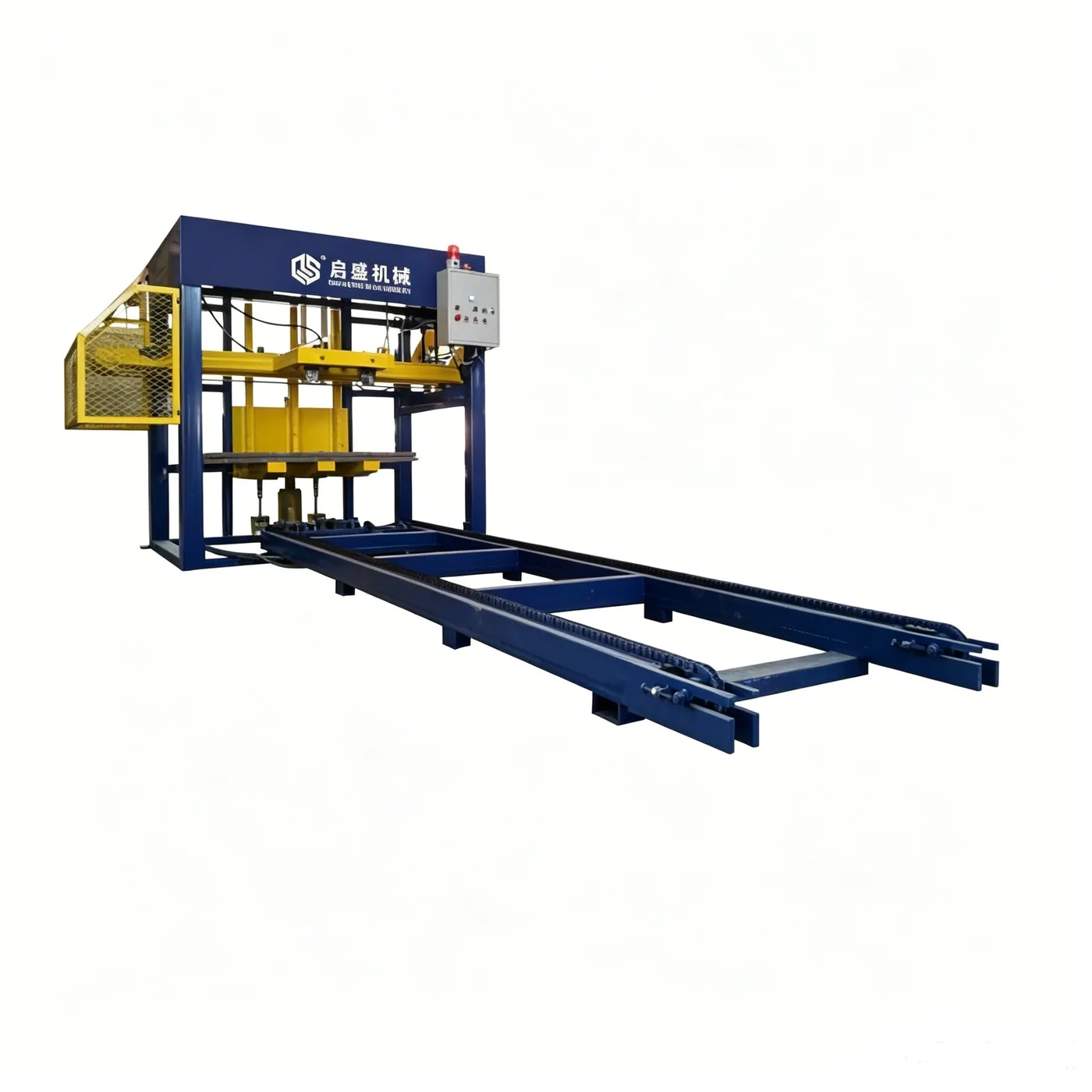
The QS-1200 automatic pallet feeder supplies empty pallets to a brick production line. Its job is to take neatly stacked empty pallets and deliver them into the pallet storage bin in step with the brick-making main machine, so the line never waits for a board. The unit combines PLC control with hydraulic drive, which automates the loading task from end to end and replaces the manual work of carrying and stacking pallets by hand. On the floor that means fewer people, less lifting strain on the crew and a more even level of automation across the line. The PLC reads the demand of the storage bin and times each delivery, while the hydraulic unit supplies steady power for smooth movement. Dimensions are about 3300 x 1700 x 2100 mm, total weight is about 1300 kg, total power is 3 kW, the bin holds three stacks of pallets and one cycle takes about 13 seconds. The feeder connects to block moulding machines of different makes.
Configured around output, blocks and operating conditions.
Delivers neatly stacked empty pallets into the storage bin in step with the main machine, PLC control and hydraulic drive automate the whole pallet loading task, Replaces manual pallet carrying, cutting labour cost and lifting strain, PLC manages delivery speed and position to prevent jammed or damaged pallets, Rated at 3 kW with a bin holding three stacks of pallets, Each delivery cycle takes about 13 seconds, matching line pallet consumption
Typical decision factors
What changes the machine price?
Daily capacity
Output target determines machine size, mould cycles and line configuration.
Automation
Pallet handling, cubing, batching and packaging change total project scope.
Block types
Hollow block, paver, interlock and curbstone may require different moulds and handling.
Service scope
Shipping, installation, training and spare parts are quoted by destination.
What It Does in the Line
In a block plant the pallets have to arrive at the moulding machine at the same rate as the finished product leaves it. If boards run short, the machine stops; if they pile up, they clutter the aisle. The QS-1200 sits at that point. It takes neatly stacked empty pallets and feeds them into the storage bin in step with the rhythm of the main machine, so the supply stays level instead of arriving in bursts.
PLC and Hydraulic Drive
The unit pairs a PLC with a hydraulic drive. The PLC watches the demand of the pallet storage bin and controls the speed and position of each delivery, which keeps pallets dropping into the right place and avoids the jams and broken boards that come from rough handling. The hydraulic circuit supplies the power for steady movement, and it works alongside the control system rather than against it. Because the logic and the drive are separated, the feeder lines up with moulding machines of different makes and becomes part of one automated workflow rather than a stand-alone station. The hydraulic drive also removes the shock loading that a pneumatic pusher brings, so pallet edges survive the trip and the bin needs less tidying between cycles.
Rated Data
The machine measures about 3300 x 1700 x 2100 mm and weighs about 1300 kg. Total power is 3 kW, which is light for the duty it performs. The bin holds three stacks of pallets, and one delivery cycle takes about 13 seconds. Those figures let a plant check the feeder against its own line speed: at roughly 13 seconds per cycle the supply keeps up with lines whose pallet consumption matches that rhythm.
Labour and Line Balance
Feeding pallets by hand is heavy, repetitive work, and it also creates its own errors, from pallets placed crooked to minor injuries during lifting. Automating the task removes that exposure and moves the crew to tasks that need judgement. It also smooths the whole line, because a steady pallet supply removes one of the most common reasons a moulding machine pauses. For factories counting labour cost per brick, the saving shows up quickly. Plants running two shifts often find the feeder pays for itself through the operators it releases from the loading point, since one man can then cover the yard instead of standing at the bin.