QST6-15 Automatic Concrete Block Molding Machine
One mold set, four product types, from 8,640 hollow blocks to 61,440 bricks per shift
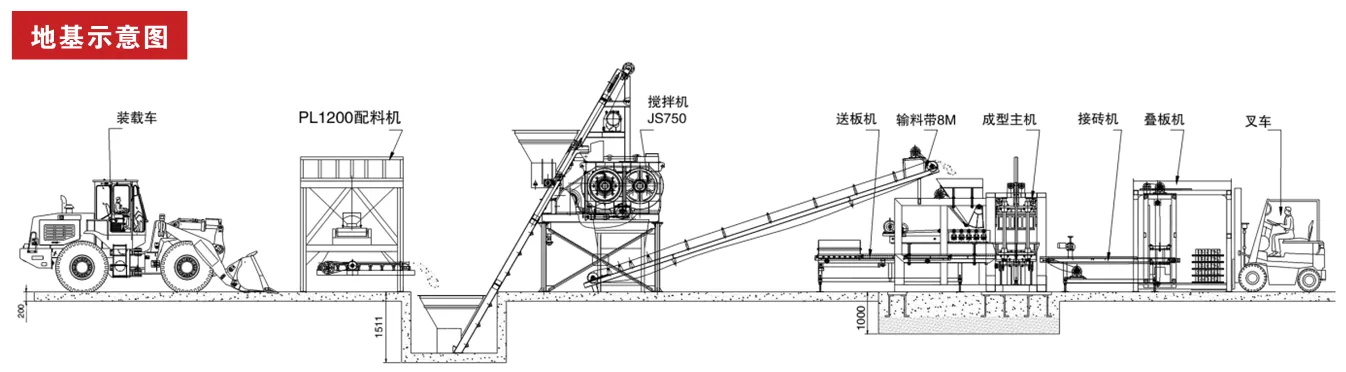
The QST6-15 is a vibration-press block molding machine with a forming cycle of 15 to 23 seconds and a rated pressure of 25 MPa. It measures 9450 x 3300 x 2700 mm, weighs 12 t and uses a tray of 980 x 680 x 20 mm. Installed capacity is 34.4 kW, with a further 3.0 kW for the stacking machine, and the vibrator works at 3800 to 4500 cycles with an excitation force of 68 kN. Raw material is mixed from crushed stone powder, sand, gravel and cement, and the machine can also take large amounts of fly ash, slag, steel slag, coal gangue, ceramic granules and perlite. By changing the mold it produces hollow and porous bricks, ceramic granule insulation blocks and composite insulation concrete blocks, so one machine covers ordinary building work and energy-saving wall products. Five features shape the daily performance: a high-efficiency hydraulic proportional system, an intelligent PLC with touch screen and genuine electrical components, an arch-breaking rapid material distributor, expanded high-frequency vibration, and molds given a special high-temperature heat treatment for wear resistance.
Configured around output, blocks and operating conditions.
High-efficiency hydraulic proportional system built with genuine components for quick, economical pressure response, Intelligent PLC with touch screen and genuine electrical components for a high level of automation, Arch-breaking rapid material distributor that feeds porous brick molds evenly across every pocket, Expanded high-frequency vibration that shortens forming time and raises block density, Molds given a special high-temperature heat treatment for greater wear resistance and robustness, Accepts fly ash, slag, steel slag, coal gangue, ceramic granules and perlite alongside stone powder and cement
Typical decision factors
What changes the machine price?
Daily capacity
Output target determines machine size, mould cycles and line configuration.
Automation
Pallet handling, cubing, batching and packaging change total project scope.
Block types
Hollow block, paver, interlock and curbstone may require different moulds and handling.
Service scope
Shipping, installation, training and spare parts are quoted by destination.
Five Technical Features
The machine is built around five points. A high-efficiency hydraulic proportional system with genuine components keeps pressure response quick and trims energy use. An intelligent PLC with a touch screen and genuine electrical components raises the level of automation while keeping the operation simple for the shift operator. An arch-breaking rapid material distributor is fitted, and it is particularly useful when feeding porous brick molds, where material must reach every pocket evenly. An expanded high-frequency vibration arrangement shortens forming time and increases density. Finally, the molds pass through a special high-temperature heat treatment, which makes them more wear resistant and more robust in daily service.
Raw Materials
Aggregate and binder come from crushed stone powder, sand, gravel and cement. On top of that the machine absorbs large quantities of fly ash, slag, steel slag, coal gangue, ceramic granules and perlite. For plants in regions where industrial by-products are cheap and locally available, this input range matters more than any single performance figure: raw material cost is the largest part of the cost of a block, and the ability to use waste streams is what separates a profitable line from a marginal one.
Products and Output
The machine is multi-purpose and switches product by changing the mold. It makes porous bricks and hollow blocks, ceramic granule insulation blocks and composite insulation concrete blocks, and the insulation products reach thermal performance that answers current energy-saving requirements for walls. Measured output is expressed per mold and per eight-hour shift. Hollow brick at 390 x 190 x 190 mm: 6 blocks per mold, 8,640 to 11,520 per shift. Porous brick at 240 x 115 x 90 mm: 15 per mold, 21,600 to 28,800 per shift. Standard brick at 240 x 115 x 51 mm: 32 to 36 per mold, 46,080 to 61,440 per shift. Colored floor tile at 200 x 100 x 60 mm: 21 to 24 per mold, 27,360 to 34,560 per shift.
Machine Parameters
Overall dimensions are 9450 x 3300 x 2700 mm and the machine weighs 12 t. The tray specification is 980 x 680 x 20 mm. Vibration frequency runs from 3800 to 4500 cycles, forming is by vibration and pressurised molding, the forming cycle is 15 to 23 seconds, the excitation force is 68 kN and the rated pressure is 25 MPa. Installed capacity is 34.4 kW, and the stacking machine adds 3.0 kW of installed capacity.
Choosing the Right Mold Set
Buyers normally fix the mold set by the product mix they sell locally. A plant supplying hollow blocks for structural walls will run one set, while a plant serving insulation demand will run another. Because the change is made in the mold rather than in the machine, one QST6-15 can serve both markets as orders shift, which is useful where demand for energy-saving wall products is growing and standard block demand is already established.