20000 Blocks Per Day Block Making Machine Line
A 20000 blocks per day line runs on a QST1200 host, a QSDJ belt-rack curing line with a lithium transfer car, and a QS-1000G-C double-station cuber across two shifts. This page lists the equipment, capacity, area, power, manpower and cost factors.
A 20000 blocks per day block making machine line is a two-shift factory built on a mid-size host, usually the QST1200 at up to 120,960 standard bricks per 8-hour shift. It links a larger PL Series batching machine, a CMP mixer, a QSDJ belt-rack curing line with a lithium-battery transfer car, a QS-1000G-C double-station cuber and automatic packing. A 380 V three-phase supply, a large curing volume and a small automatic-crew are the main site conditions.
Building a 20000 Blocks Per Day Block Making Machine Line
A 20000 blocks per day block making machine line is a two-shift factory, not a scaled-up yard. It needs a mid-size host machine, a belt-rack curing line that can hold and return thousands of pallets a day, and a double-station cuber so the flow never waits at the end of the line. The configuration is different in kind from a 10000-block plant, not just larger in number.
At this output, the constraint moves from the press to the material supply and the pallet loop. The host machine is rarely the bottleneck. Batching that cannot keep the mixer full, or a curing area that returns pallets slowly, will cap a 20000-block plant at 13,000 or 14,000 pieces and nobody notices until the monthly totals come in.
- Host machine: QST1200 fully automatic block machine, with QST1500 for higher single-machine output.
- Stated host output: up to 120,960 standard bricks per 8-hour shift on the QST1200.
- Curing: QSDJ belt-rack curing line with a lithium-battery transfer car and 485 wireless networking.
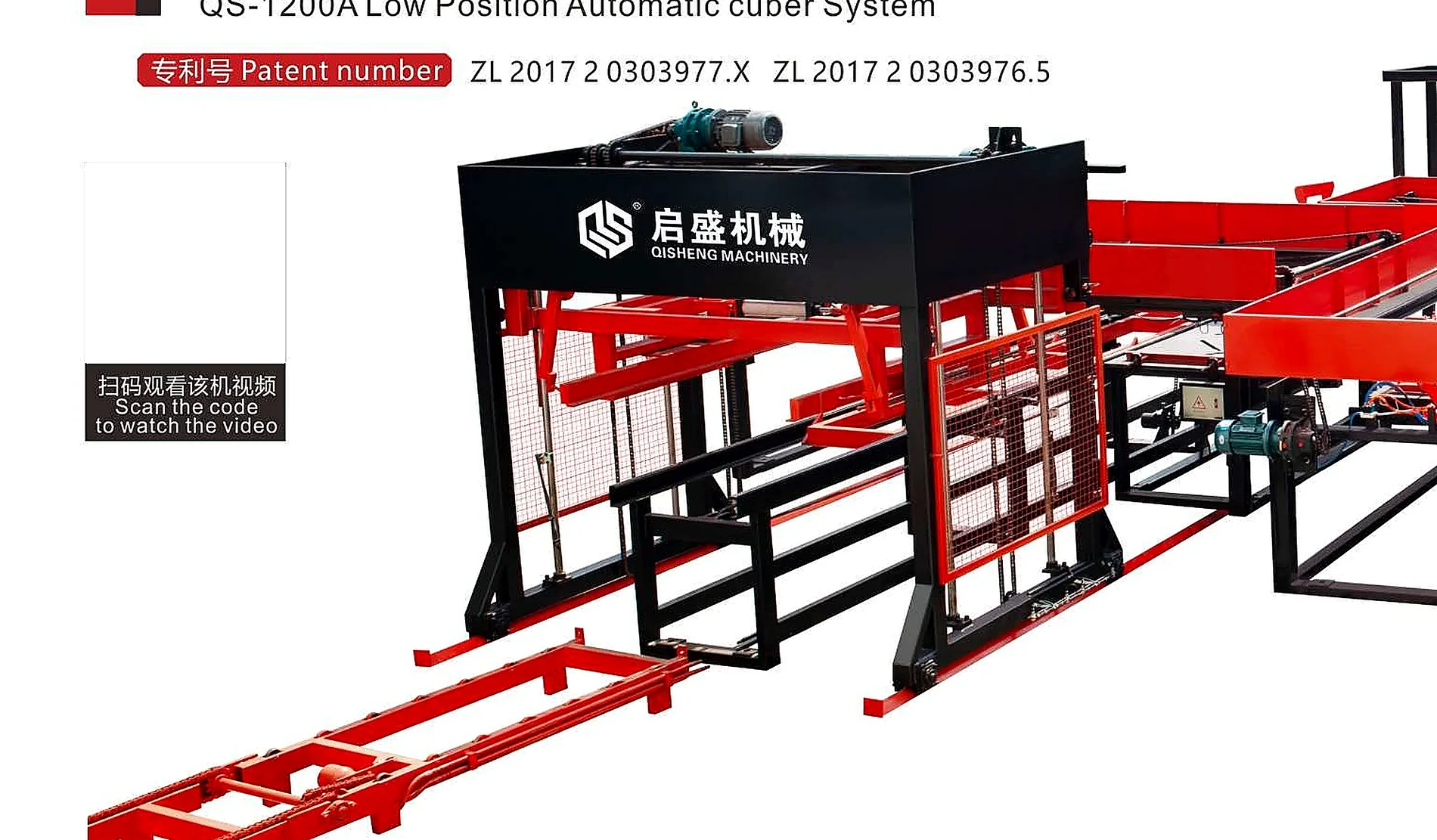
- Cubing: QS-1000G-C double-station cuber, about 3,800 pallets per shift.
- Host footprint: QST1200 measures 11,500 x 4,550 x 2,800 mm at 17 t.
- Packing: QSSX-16A top-rotary baler or the QS cantilever wrapper for a closed pack.
Line Flow for a 20k/day Plant
At 20000 blocks per day the line runs continuously and the pallet loop carries real volume. Each stage must be sized for two shifts of steady work.
- Aggregates are weighed by the PL Series batching machine, sized to the QST1200 cycle so the mixer never waits for a batch.
- The batch is mixed in the CMP vertical shaft planetary mixer, which keeps turnout uniform on short cycles.
- The QST1200 moulds the products on a 1,350 x 880 x 25 mm pallet with a cycle of 15 to 25 seconds.
- Loaded pallets transfer into the QSDJ belt-rack curing line. A lithium-battery transfer car moves stacks to and from the curing racks, and a self-organised RS-485 wireless network links the line to cloud remote monitoring.
- Cured products reach the QS-1000G-C double-station cuber, which runs two-way cubing on the left and right to lift line efficiency, at about 3,800 pallets per shift.
- Finished cubes are strapped or wrapped, then handled to the yard or straight onto a truck.
Equipment List and Configuration
| Stage | Equipment | Why it fits a 20k/day line |
|---|---|---|
| Batching | PL Series batching machine | Larger dosing capacity so the mixer keeps pace with a two-shift host cycle. |
| Mixing | CMP vertical shaft planetary mixer | Uniform mix with a discharge gate for fast batch turnaround. |
| Moulding | QST1200 (QST1500 optional) | Up to 120,960 standard bricks per shift, 57.6 kW installed, 17 t. |
| Pallet feed | QS-1200 pallet feeding machine | Keeps the pallet magazine full against a faster host cycle. |
| Curing | QSDJ belt-rack curing fully automatic line | Lithium-battery transfer car, wireless control, cloud monitoring, host of any brand. |
| Cubing | QS-1000G-C double-station cuber | About 3,800 pallets per shift, two-way cubing to match host output. |
| Packing | QSSX-16A baler or QS cantilever wrapper | Straps or wraps palletised cubes; the wrapper makes a five-sided closed pack. |
| Handling | QS series forklift clamp | Loads stacks without pallets, up to 500 to 800 standard bricks per bite. |
The QSDJ line matches a host machine of any manufacturer and any model, so a plant can add the curing line around an existing press without replacing it. See the concrete block production line range for how these stages connect.
Capacity Assumptions
| Measure | Value | Condition |
|---|---|---|
| QST1200 stated output | Up to 120,960 standard bricks per 8-hour shift | One product, stable mix, clean cycle |
| QST1200 cycle | 15 to 25 s | Block height and mould layout |
| Pallet size | 1,350 x 880 x 25 mm | Fixed by the host model |
| QS-1000G-C cuber | About 3,800 pallets per shift | Double station, 12 to 15 s per layer |
| Commercial target | 20000 blocks per day | Two shifts, with curing sized to the pallet loop |
Two shifts change the arithmetic. The host figure is per shift, so a two-shift plant doubles the daily ceiling, but only if batching, curing and packing carry the second shift without extra downtime. A hollow block carries fewer pieces per mould than a thin brick, so the block count for a 390 x 190 x 190 mm product is lower than the standard-brick figure. Confirm your own piece count with the block machine capacity guide.
How a 20k/day Line Differs From a 10k/day Line
| Item | 10000 blocks per day | 20000 blocks per day |
|---|---|---|
| Host machine | QST8-15, up to 90,000 standard bricks per shift | QST1200, up to 120,960 standard bricks per shift |
| Curing line | QSRGY finger-car line, single layer standard | QSDJ belt-rack line with lithium transfer car and cloud monitoring |
| Cubing | QS-1000G-A fixed cuber, about 1,700 pallets per shift | QS-1000G-C double-station cuber, about 3,800 pallets per shift |
| Packing | Optional, often manual | QSSX-16A baler or cantilever wrapper in scope |
| Shifts | One shift is enough | Two shifts to reach the daily total |
| Power profile | Lower driven load, compact supply | Higher driven load across batching, host and double cuber |
The difference is not a bigger number on the same list. The larger line carries a different curing technology, a double-station cuber, automatic packing and a bigger batch plant, and it is planned for two shifts from the start.
Factory Requirements
Area
A 20k/day plant needs more curing volume than a compact line, because pallets spend hours curing while the host keeps making new ones. The QSDJ rack-curing design stores each layer on an isolated rack level and uses building height, which holds the ground footprint down. The QS-1000G-C double-station cuber covers about 19,000 x 7,500 x 5,500 mm, and the batching plant and aggregate yard need room for two shifts of consumption.
Power
The driven load is roughly the host plus the cuber plus batching and packing. Reference values: QST1200 host 57.6 kW, QS-1000G-C cuber 44 to 45 kW, QSSX-16A baler about 5 kVA, QSPY-16A baler 2 kW. Equipment is built for a 380 V three-phase supply, and the QSDJ transfer car runs on a new-energy lithium battery with wireless control and an automatic charging pile. Size the transformer to the total installed load plus a margin, and plan for two-shift duty, not peak-only.
Water and Foundation
Water is for mixing and for curing moisture, sized from your mix design and two-shift batch count. The QST1200 host weighs 17 t and vibrates; its foundation must carry that weight with dynamic loading on stable ground. Release foundation drawings before shipment so concrete work runs during transit.
Manpower
| Zone | People per shift | Note |
|---|---|---|
| Fully automatic curing and transfer line | 3 to 6 persons (reference range) | QSGW range applies to a fully automatic high-level line; the QSDJ line is automated end to end |
| Finger-car curing line (smaller plant reference) | 3 to 4 persons | QSRGY figure, shown for comparison against a compact line |
| Cuber and packing stations | Set by the packing scope | Automatic cubing and balers reduce hands, not skill |
The QSDJ line is automatic, so the crew is small relative to the tonnage moved, but the exact number follows the finished-goods and packing scope you select. With two shifts the same small crew runs twice, and the operating skill concentrates in the PLC, the wireless transfer control and the mould change.
Cost Factors
No price is quoted here, because a figure only exists once the configuration is fixed. These are the variables that move a 20k/day budget.
- Host size. QST1200 against QST1500, which carries a heavier frame and higher installed capacity.
- Curing technology. A belt-rack line with a lithium transfer car and wireless monitoring carries more control and battery content than a single-layer layout.
- Cuber. The double-station QS-1000G-C costs more than a single-station cuber but removes a flow limit at the end of the line.
- Pallet count. Two shifts and a large curing volume multiply the pallet requirement.
- Packing. A strapping baler or a cantilever wrapper adds equipment and removes manual handling.
- Batching and mixing. Larger dosing capacity is needed to feed a two-shift host.
- Site works and freight. Foundations, buildings, incoming power, container count and site conditions are the buyer scope.
Delivery and Installation
A 20k/day line is a project with a defined sequence, and the curing line is the long pole.
- Confirm the configuration and site conditions, then freeze the drawings and release foundations.
- Install batching and mixing, then set the QST1200 host on its foundation and level it to the pallet line.
- Assemble the QSDJ curing racks, the transfer car track and the charging pile, then align the transfer points.
- Install the QS-1000G-C double-station cuber and the packing equipment, and connect them to the control system.
- Run the whole loop on real mix across both shifts, then train the crew on the control system, the wireless transfer and the mould change.
- Agree the wear-parts list and the two-shift maintenance routine before handover.
Plan for two shifts from day one, including staffing and spare pallets, or the second shift will arrive without the support it needs. For regional demand and power habits, see the Syria market page, and when you are ready Get 20k/day Plan with your block sizes, shift plan and site area.
Frequently Asked Questions
What equipment makes up a 20000 blocks per day block making machine line?
Which host machine is used for 20000 blocks per day?
How does a 20k/day line differ from a 10k/day line?
How much power does a 20k/day plant need?
How many operators does a 20k/day line need?
What curing system suits 20000 blocks per day?
How much site area is needed for a 20k/day plant?
What decides the cost of a 20k/day line?
Related machines
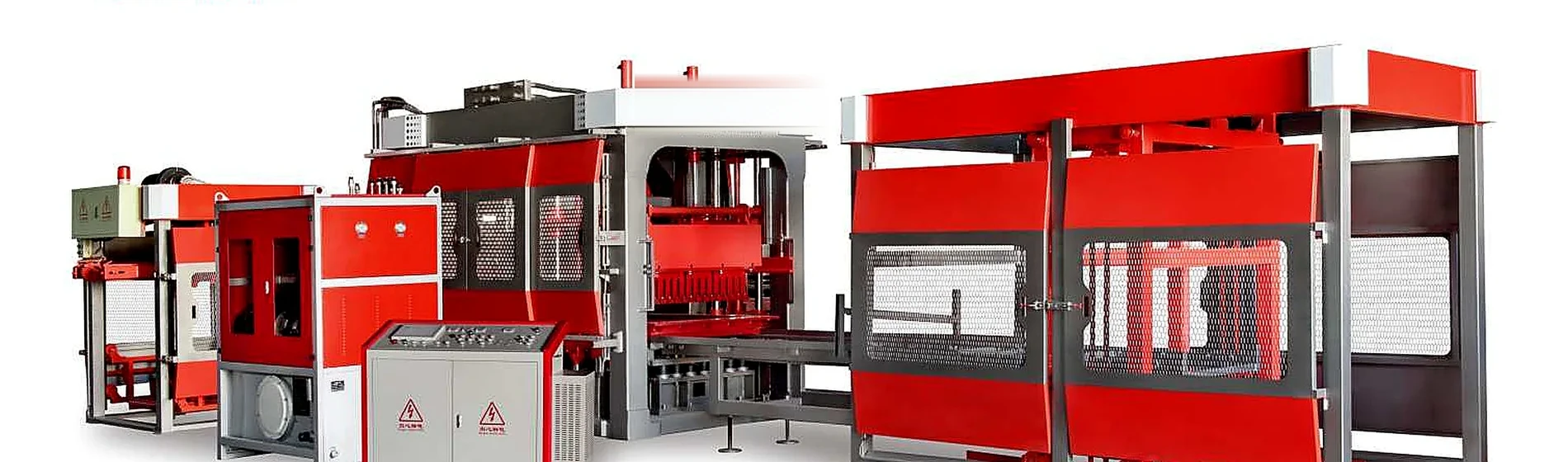
Concrete Block Making Machine
Core machine for hollow blocks, solid blocks, pavers and curbstones.
Automatic Block Making Machine
High-output automatic block machine for industrial production lines.
Hydraulic Block Making Machine
Hydraulic forming system for stable density and consistent blocks.
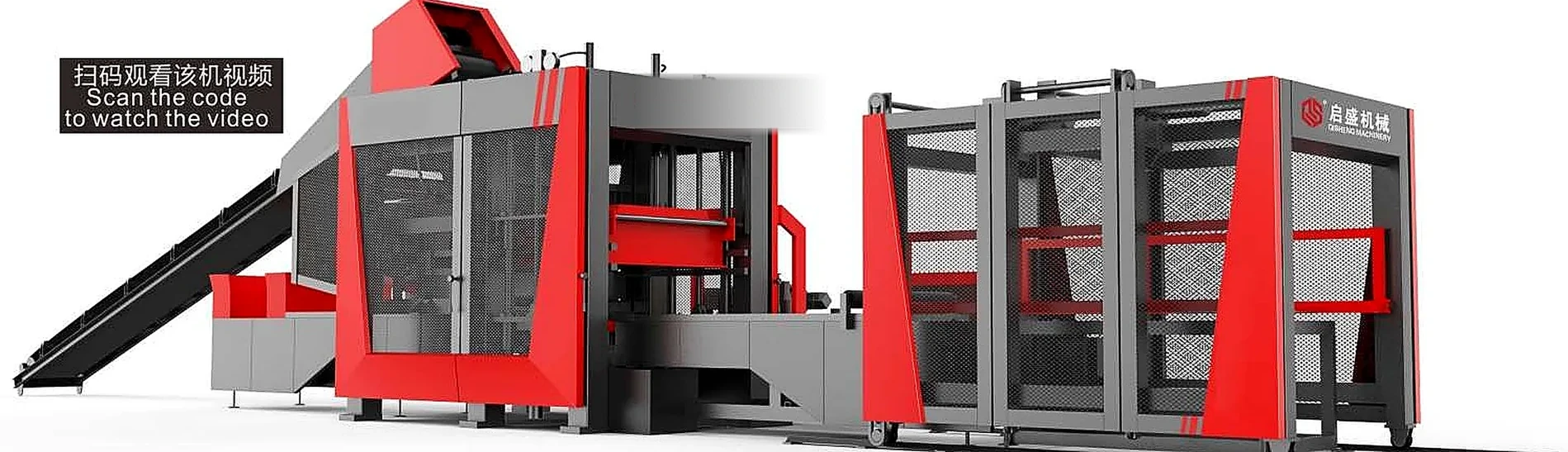
Hollow Block Making Machine
Machine configurations for common hollow concrete block sizes.