Hydraulic Block Making Machine
Hydraulic forming system for stable density and consistent blocks.
How a hydraulic block making machine is chosen: the double-direction QS800, QS1000 and QS1500 presses and the single-direction QS600, QS800, QS1000 and QS1500 presses, with specs, pieces per mould, capacity conditions, price factors and regional fit.
Configured around output, blocks and operating conditions.
PLC control, hydraulic forming, replaceable moulds, configurable automation, installation and training support.
Typical decision factors
What changes the machine price?
Daily capacity
Output target determines machine size, mould cycles and line configuration.
Automation
Pallet handling, cubing, batching and packaging change total project scope.
Block types
Hollow block, paver, interlock and curbstone may require different moulds and handling.
Service scope
Shipping, installation, training and spare parts are quoted by destination.
How a Hydraulic Block Machine Presses
A hydraulic block machine does not rely on vibration alone. Hydraulic cylinders press the mix inside the mould at high pressure, so the block is compacted from the surface inward and the face comes out dense and sharp. Two pressing directions are used. A double-direction press applies force from top and bottom, which packs tall or shaped products evenly and suits high-density pavers and kerb stones. A single-direction press applies force one way, runs with low noise, and covers a wide product list at a lower machine weight. Working pressure in this range is 31.5 MPa on every model.
Because the press works by compression rather than by impact, the mould quality shows directly in the product. A well-made mould and a correctly set press give a strong paving brick or a clean kerb edge. A worn mould shows as a burr or a soft corner long before the machine reports a fault, so the mould and the press are bought together, not separately.
- Double-direction presses: force from two sides for even density on tall products.
- Single-direction presses: one-way force, low noise, wide product range.
- Working pressure 31.5 MPa across the range.
- Mould condition sets the finish; the press only delivers the force.
Hydraulic Block Making Machine Models: Double-Direction and Single-Direction
The double-direction family covers three sizes: QS800, QS1000 and QS1500. They share the 31.5 MPa working pressure and an 18 to 22 second moulding cycle, and they scale up in cylinder bore, moulding area and machine weight. These presses produce high-density pavers, kerb stones and shaped concrete products, and can run without pallets where the process allows, with a pallet size listed for the pallet-based arrangement.
| Model | Max pressure | Machine weight | Total power | Cylinder bore | Moulding cycle | Moulding area | Pallet size (where used) |
|---|---|---|---|---|---|---|---|
| QS800 | 31.5 MPa | 22 to 25 t | 70 kW | 500 mm | 18 to 22 s | 1,100 x 680 mm | 1,100 x 750 x 20 mm |
| QS1000 | 31.5 MPa | 33 t | 105.4 kW | 600 mm | 18 to 22 s | 1,100 x 850 mm | 1,200 x 950 x 20 mm |
| QS1500 | 31.5 MPa | 43 t | 108.2 kW | 720 mm | 18 to 22 s | 1,440 x 850 mm | 1,500 x 950 x 30 mm |
Pieces per mould scale with the moulding area, so the same press yields very different counts by product:
| Product | QS800 | QS1000 | QS1500 |
|---|---|---|---|
| Hollow block 390 x 190 x 190 mm | 5 per mould | 10 per mould | 12 per mould |
| Standard brick 240 x 115 x 51 mm | 28 per mould | 45 per mould | 87 per mould |
| Small block 170 x 80 x 80 mm | 30 per mould | 36 per mould | not applicable |
The single-direction family adds four sizes: QS600, QS800, QS1000 and QS1500. These run a 20 to 25 second cycle at 31.5 MPa, with low noise operation and the same progressive scaling in bore, area and weight.
| Model | Max pressure | Machine weight | Total power | Cylinder bore | Moulding cycle | Moulding area | Pallet size |
|---|---|---|---|---|---|---|---|
| QS600 | 31.5 MPa | 23 t | 46.9 kW | 450 mm | 20 to 25 s | 850 x 700 mm | 900 x 700 x 20 mm |
| QS800 | 31.5 MPa | 24 t | 54.9 kW | 500 mm | 20 to 25 s | 1,100 x 680 mm | 1,100 x 700 x 20 mm |
| QS1000 | 31.5 MPa | 29 t | 66.4 kW | 600 mm | 20 to 25 s | 1,100 x 850 mm | 1,200 x 900 x 20 mm |
| QS1500 | 31.5 MPa | about 39 t | 88.4 kW | 720 mm | 20 to 25 s | 1,440 x 850 mm | 1,500 x 900 x 30 mm |
Pieces per mould for the single-direction presses:
| Product | QS600 | QS800 | QS1000 | QS1500 |
|---|---|---|---|---|
| Holland brick 200 x 100 x 60 mm | 16 per mould | 24 per mould | 32 per mould | 40 per mould |
| Square block 250 x 250 x 60 mm | 6 per mould | 8 per mould | 12 per mould | 15 per mould |
| Small block 170 x 80 x 80 mm | 12 per mould | 30 per mould | 36 per mould | 42 per mould |
When you compare a hydraulic block machine supplier, compare the cylinder bore, the moulding area and the pieces per mould for your own product, because those three values decide real output. A smaller bore with a well-designed mould can beat a larger press on a small product, and a hydraulic concrete block making machine is only worth its size when the mould matches the job.
Capacity and Output
A hydraulic press is quoted by moulding cycle, but the daily total depends on how many pieces the mould holds and how steadily the press runs. With an 18 to 22 second cycle on the double-direction presses and a 20 to 25 second cycle on the single-direction presses, a machine completes roughly three cycles a minute. Multiply by pieces per mould and by the working minutes in a shift to reach the ceiling, then reduce that for mould change, material feeding and curing.
| Family | Moulding cycle | Reference |
|---|---|---|
| Double-direction QS800 / QS1000 / QS1500 | 18 to 22 s | About three cycles per minute |
| Single-direction QS600 / QS800 / QS1000 / QS1500 | 20 to 25 s | About three cycles per minute |
Because the press can work without pallets on some products and on pallets on others, the handling plan changes real output as much as the press does. A paver plant that cubes green product directly moves faster than one that waits on pallets. The paver block production line plan sets out how the press, the mould, the pallet handling and the curing fit together.
Raw Materials the Press Uses
A hydraulic block machine presses the same cement, sand, gravel and crushed stone powder base as a vibration press, and accepts fly ash, slag and construction waste as fillers where supply allows. The difference is in the mix target: a compressing press rewards a slightly drier, well-graded mix that packs under load and holds a sharp edge, while a wet mix bleeds water and marks the face.
- Base materials: cement, sand, gravel, crushed stone powder.
- Fillers: fly ash, slag, gangue, crushed construction waste.
- Target a drier, well-graded mix so the product holds a sharp edge.
- Set the cement content by trial press, because density and finish respond to it.
Main Components of the Press
The press frame, the hydraulic power unit and the main cylinder are the core of the machine, and they are matched by the batching machine, the mixer and the handling equipment. The PL batching machine weighs aggregate in fast and slow steps, and the CMP planetary mixer delivers a uniform batch to the press.
- Hydraulic unit: main cylinder and proportional valves running at 31.5 MPa.
- Press frame: rigid structure sized to the machine weight and the mould.
- Batching: PL series concrete batching machine, fast and slow dosing.
- Mixing: CMP vertical shaft planetary mixer for a uniform batch.
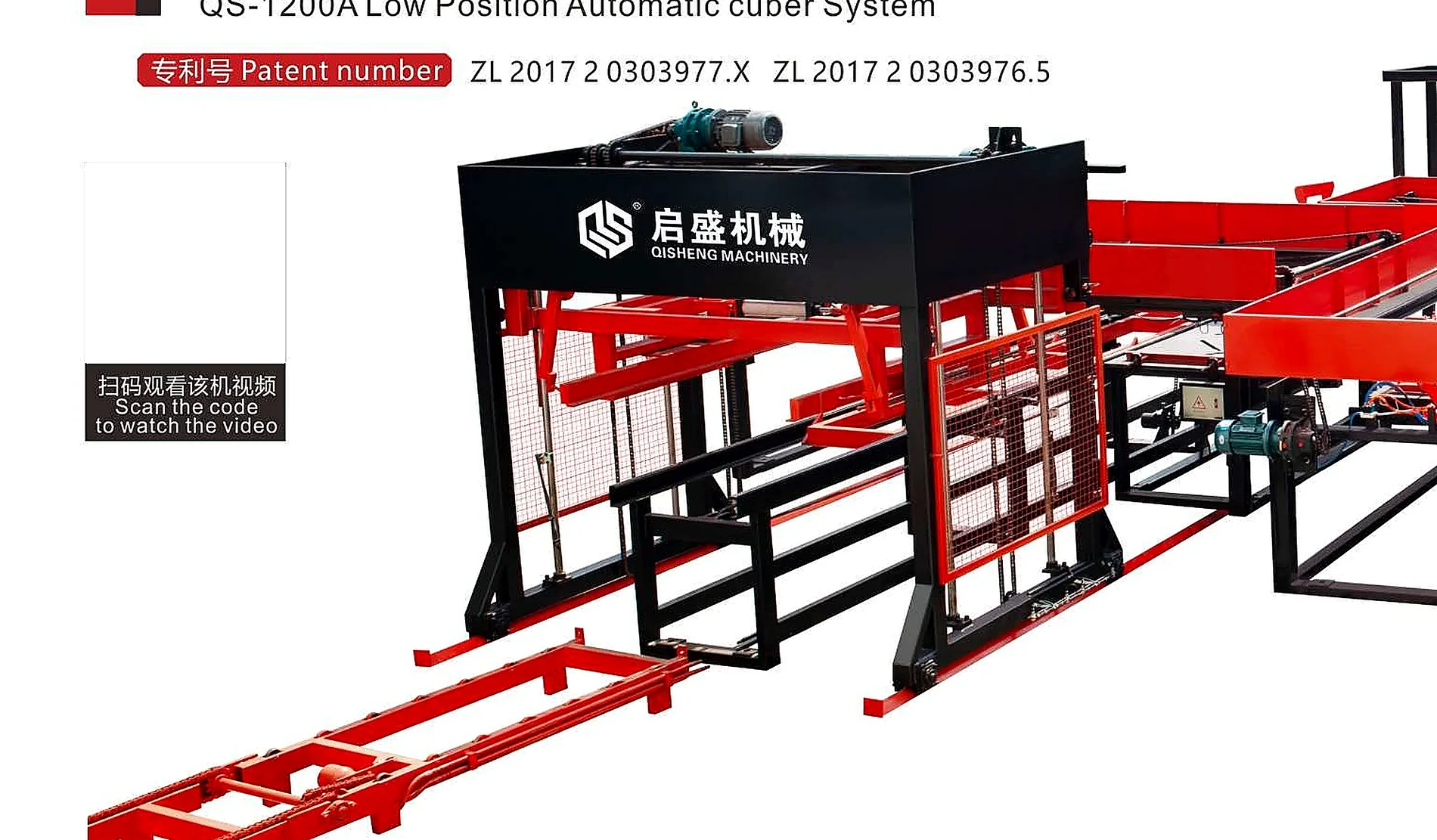
- Handling: cuber, stacker or forklift clamp matched to the product.
What Drives the Price of a Hydraulic Block Making Machine
The price of a hydraulic block making machine follows its size and its pressing capacity, not a single number, and we publish no figure here. These are the factors that raise or lower the cost of a block press machine.
- Model and size: QS600 on the small end to QS1500 at the top.
- Pressing direction: double-direction or single-direction build.
- Cylinder bore and moulding area, which set the press force and the pieces per mould.
- Mould set: paver, kerb, brick or shaped products, and how many types.
- Automation level and control system.
- Support equipment: batching, mixing, pallet handling and curing.
- Spare parts kit, shipping, destination voltage and installation scope.
Installation, Training and Spare Parts
A hydraulic press is heavy and works by compression, so it needs a level, reinforced foundation sized to the machine weight and the pressing force, with the hydraulic power unit positioned for service access. We supply the foundation drawing, the hydraulic and electrical schematics and the manual, and support commissioning by remote guidance or by an engineer on site depending on scope. Operators are trained on the mould, the pressing cycle and the hydraulic controls, because a correct pressing setup is what keeps the product uniform.
The wearing parts are the mould, the wear plates and the hydraulic seals. Keep a first-order spare kit on site so a seal change never stops the plant for a week. For buyers comparing offers, the block machine for sale guide sets out what a complete press offer should include.
Hydraulic Block Machines for Syria and the Middle East
Hydraulic presses sold into the region are configured for 380 V / 50 Hz three-phase supply, with attention to hydraulic oil cooling because a press running in high ambient heat holds its pressure and cycle better when the oil is controlled. Dust protection around the hydraulic unit and the mould also protects the finish of dense products, where any grit shows on the face. We support buyers across Syria and the wider Middle East, and a press can sit inside a larger complete concrete block factory or run as a focused paver plant.
Send your product list, the pieces per day you need and your power supply. Request Quote and we match the press model and mould to your job. The block making machine price guide explains how the cost of the press and its support equipment is built up.