Paver Block Production Line
A paver block production line makes interlocking pavers, kerb stones and lawn pavers on a QST host with a CMP planetary mixer, QSGW or QSRGY curing and QS-1200 cubing. This page covers the equipment, capacity conditions, area, power and manpower for a paver plant.
A paver block production line makes interlocking pavers, kerb stones and lawn pavers on a QST series host, usually the QST1200 or QST1500, running paver moulds. A CMP vertical shaft planetary mixer gives the uniform blend that paver faces and colour need. A QSGW or QSRGY line cures the green pavers, and a QS-1200B cuber leaves forklift holes in the stack for pallet-free handling. Broader moulds and thicker kerb stones change the piece count, so capacity is set by the mould and cycle.
What a Paver Block Production Line Covers
A paver block production line makes decorative and load-bearing surface units: interlocking pavers, lawn pavers, kerb stones and slope-protection bricks. Pavers are judged on face quality and edge sharpness, so the line puts more weight on mixing and on the mould than a line making plain wall blocks.
The host machine is a QST series machine, usually the QST1200 or the QST1500, running paver moulds. The single most important choice is the mixer: for permeable eco-pavers and PC imitation-stone landscape bricks, the CMP vertical shaft planetary mixer gives the uniform, well-blended mix that surface quality depends on.
- Host machine: QST1200 or QST1500 with paver and kerb moulds; QS hydraulic press for high-density units.
- Mixing: CMP planetary mixer for permeable pavers and PC imitation-stone products.
- Curing and handling: QSGW high-level line lists permeable pavers among its typical products.
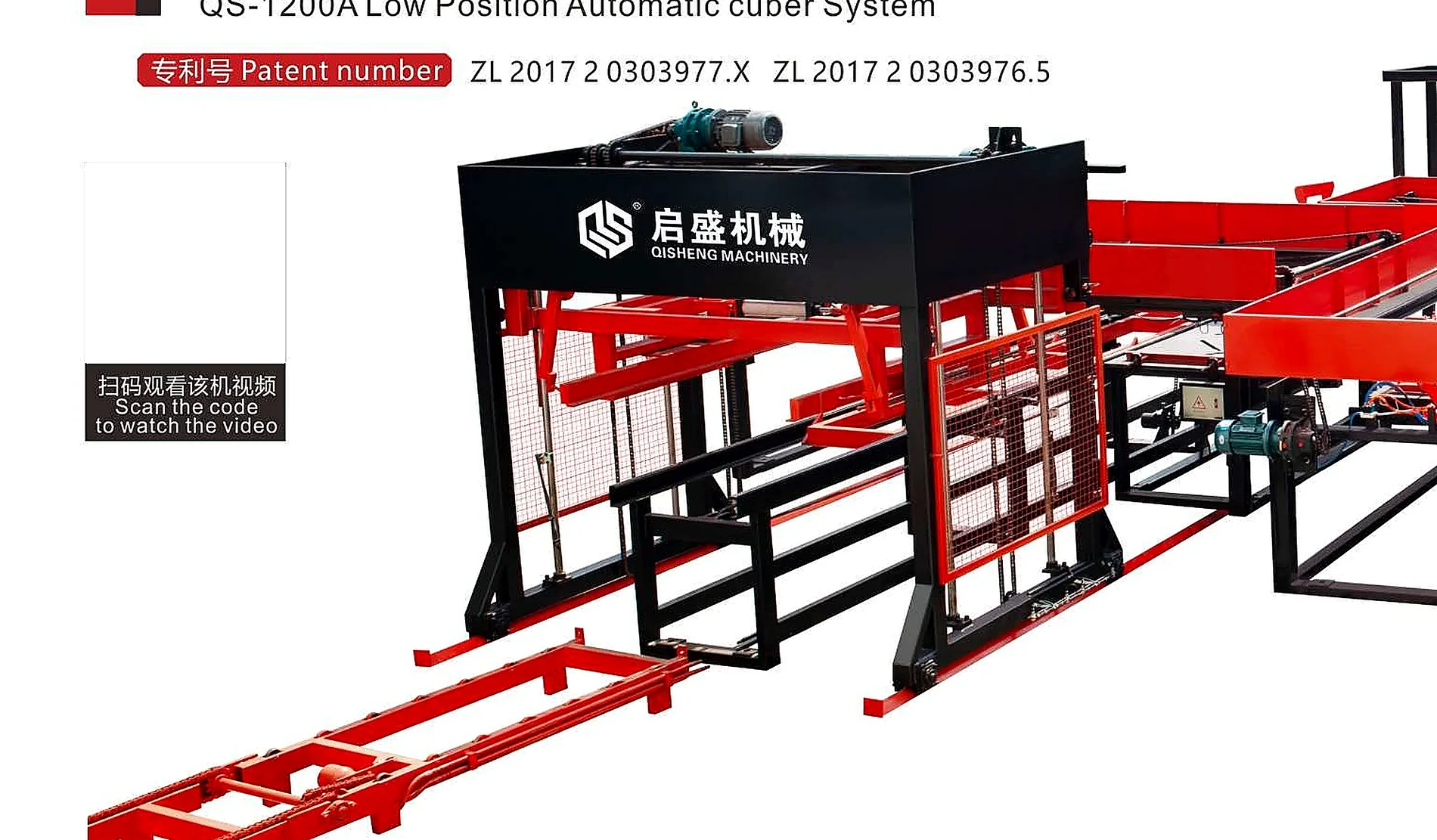
- Pallet-free option: the QS-1200B cuber leaves forklift holes in the stack for direct truck loading.
- Packing: the QS cantilever wrapper forms a five-sided closed pack for palletised pavers.
- One machine, many moulds: pavers, kerb stones and hollow blocks share the same host by changing the mould.
Line Flow for Pavers
Pavers move through the same loop as any block, but every stage is held to a tighter surface standard.
- Aggregates and any colour pigment are weighed by the PL Series batching machine against a pre-set ratio, using fast and slow dosing.
- The batch mixes in the CMP vertical shaft planetary mixer, which handles the closer blend that paver faces need.
- The QST host moulds the paver on a steel or plastic pallet with a cycle matched to block height, 15 to 25 seconds on the QST1200.
- Loaded pallets transfer into curing, QSGW high-level line or QSRGY finger-car line, which stores and returns pallets.
- Cured pavers reach the cuber. The QS-1200B separates and re-arranges them with self-retained forklift holes, so the cube can be handled without pallets.
- Finished cubes are wrapped or strapped, then handled to the yard or straight onto a truck.
Equipment List by Function
| Stage | Equipment | Role for pavers |
|---|---|---|
| Batching | PL Series batching machine | Fast and slow dosing to a pre-set ratio, three-point induction weighing, vibration anti-bridging. |
| Mixing | CMP vertical shaft planetary mixer | Uniform, well-blended mix for permeable and imitation-stone paver faces. |
| Moulding | QST1200 or QST1500 (QST series) | Vibration and press host; paver and kerb moulds, cycle 15 to 25 s on the QST1200. |
| High-density option | QS800 / QS1000 / QS1500 double-direction press | Pallet-free pressing for high-density pavers and shaped concrete products. |
| Curing | QSGW high-level line or QSRGY finger-car line | QSGW lists permeable pavers among its typical products; both return empty pallets. |
| Cubing | QS-1200B self-retaining hole cuber | Rebuilds the stack with forklift holes for pallet-free handling. |
| Packing | QS cantilever wrapper | Five-sided closed pack for palletised cured pavers. |
| Handling | QS series forklift clamp | Grips the stack directly for yard stacking and truck loading without pallets. |
See the paver block making machine page for host and mould choices, and the concrete block production line range for the line-level families.
Capacity Assumptions for Paver Lines
| Measure | Value | Condition |
|---|---|---|
| QST1200 stated output | Up to 120,960 standard bricks per 8-hour shift | Paver counts differ by mould area and thickness |
| QST1200 cycle | 15 to 25 s | Paver height and mould layout |
| QST1500 pallet | 1,350 x 1,150 x 30 mm | Fixed by the host model |
| QSGW line range | 30,000 to 250,000 pieces per 8-hour shift | Depending on the host machine |
| QS-1200B cuber | Pallet-free stack with self-retained forklift holes | Configuration by machine model and product type |
A paver is broad and shallow compared with a wall block, so the pieces per mould and the cycle differ, and a thicker kerb stone returns fewer pieces than a thin lawn paver on the same host. Because the QSGW line is configured from 30,000 to 250,000 pieces per 8-hour shift depending on the host, a paver plant can be sized across a wide range on the same line family. Convert figures for your mould with the block machine capacity guide.
Colour adds one more variable. Where pavers carry a face colour, the pigment or the colour layer is dosed separately from the base mix, and that extra step costs a little cycle time and a little material handling. Plan the batching and colour zone together, because a colour line bolted on after the layout is frozen usually ends up sharing space with the aggregate yard and slowing both.
Factory Requirements
Area
A paver line needs space for colour materials and for cured goods that must stay clean before dispatch. If the QS-1200B cuber is used, plan the yard for pallet-free cubes and forklift access with the clamp. Where the QSGW high-level line is chosen, the three-dimensional kiln uses building height to hold the ground footprint down. Plan batching and colour handling, moulding hall, curing, cuber and finished-goods yard as separate zones.
Power
Reference values: QST1200 host 57.6 kW, QST1500 69.1 kW, QS-1000G-C double-station cuber 44 to 45 kW, QS-1200A low-position cuber 34.15 kW. Equipment is built for a 380 V three-phase supply, and the QSRGY sub-car can run on 380 V AC stepped to 36 V DC on the rail or on a 36 V lithium battery with a charging pile. Size the supply to the driven load plus a margin.
Water and Foundation
Water is for mixing, for colour handling and for curing moisture, sized from your mix design and daily batch count. The host machine is heavy and vibrates; its foundation must carry that weight with dynamic loading on ground that does not settle unevenly. Release foundation drawings before shipment so the concrete work runs during transit. A level, clean hardstanding also protects the paver faces during yard handling.
Manpower
| Zone | People per shift | Note |
|---|---|---|
| QSGW high-level fully automatic line | 3 to 6 persons | Depends on configuration, central computer and PLC drive the cycle |
| QSRGY finger-car curing line | 3 to 4 persons | Completes the whole production task, automatic fault display |
| Wrapping and strapping stations | Automatic, unmanned | The QS cantilever wrapper runs fully automatic |
Pavers are judged on appearance, so the crew spends more attention on the mixer and the mould than a plain-block line does. A clean mould face and a stable mix are worth more than extra hands, and both are set by the operator on the control screen.
Cost Factors
No price is quoted here, because a figure only exists once the configuration is fixed. These are the variables that move a paver line budget.
- Host model. QST1200 against the larger QST1500, with higher installed capacity.
- Mixing. A CMP planetary mixer is placed where paver face quality matters, and it lifts the mixing line cost.
- Curing line. A high-level three-dimensional kiln and a finger-car line differ in steel, track and control content.
- Cuber choice. A self-retaining hole cuber such as the QS-1200B enables pallet-free handling at a higher equipment cost.
- Moulds. Every paver shape, thickness and kerb profile needs its own mould, and paver moulds are a large part of the product package.
- Packing and site works. Wrapping or strapping, foundations, buildings, incoming power, freight and commissioning each move the total.
Delivery and Installation
A paver line is commissioned as a loop, and the mixer and moulds are checked against the first saleable pavers.
- Install batching and the CMP mixer, then set the QST host on its foundation and level it to the pallet line.
- Assemble the curing line and align the transfer points.
- Fit the paver mould and set the cycle for the product height.
- Install the cuber and the wrapper, and connect them to the control system.
- Run the loop on a real paver mix, check face quality, then train the crew on the control system, the mould change and colour handling.
- Agree the wear-parts list for the moulds and the mixer before handover.
Paver moulds set the product range and wear with use, so budget the mould package and its maintenance from the start. For regional demand and power habits, see the Syria market page, and when you are ready Get Paver Line Plan with your paver shapes, thicknesses and output target.
Frequently Asked Questions
What is a paver block production line?
Which machine makes interlocking pavers?
Why does a paver line need a planetary mixer?
How are pavers cured and palletised?
Can one line make both hollow blocks and pavers?
What area and power does a paver line need?
How many workers run a paver line?
What affects the cost of a paver block production line?
Related machines
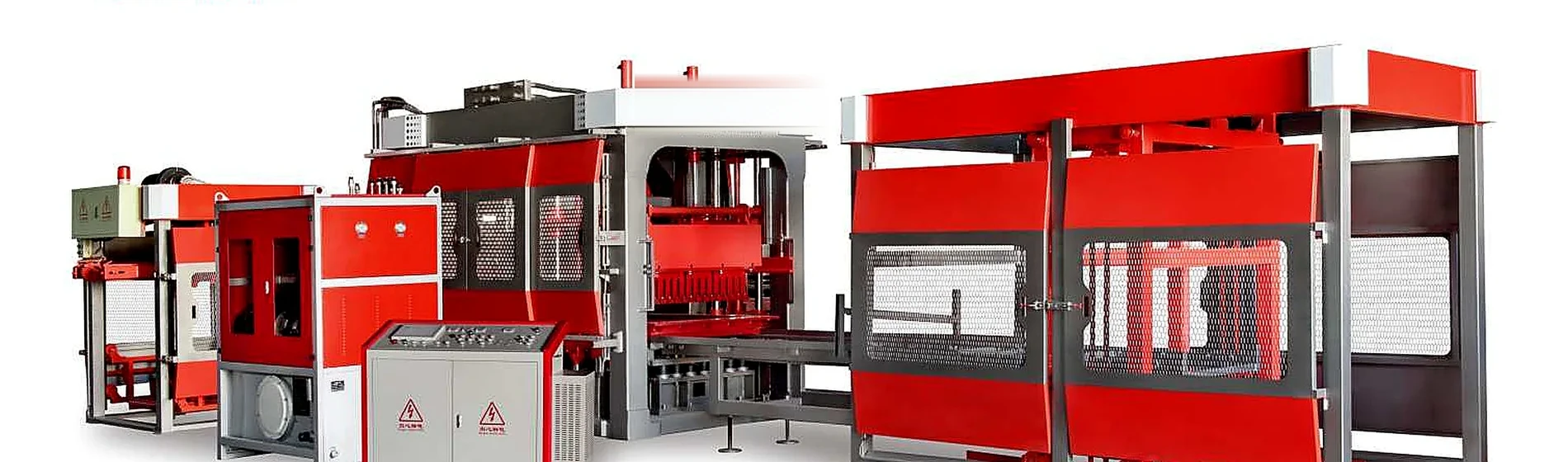
Concrete Block Making Machine
Core machine for hollow blocks, solid blocks, pavers and curbstones.
Automatic Block Making Machine
High-output automatic block machine for industrial production lines.
Hydraulic Block Making Machine
Hydraulic forming system for stable density and consistent blocks.
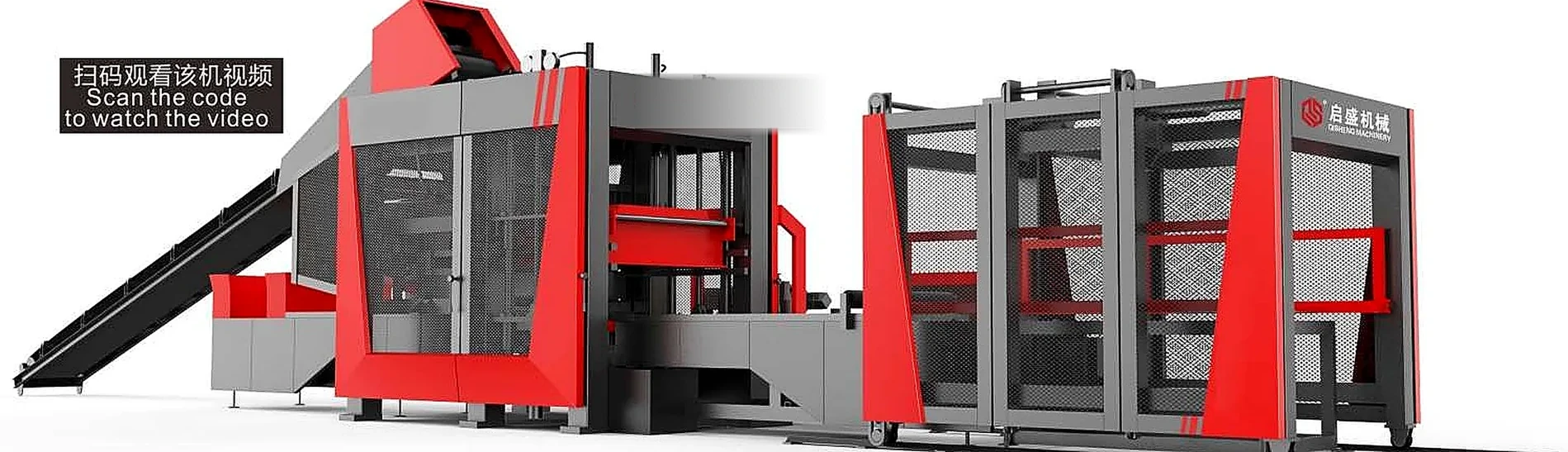
Hollow Block Making Machine
Machine configurations for common hollow concrete block sizes.