Paver Block Making Machine
Paver and interlocking block production with interchangeable moulds.
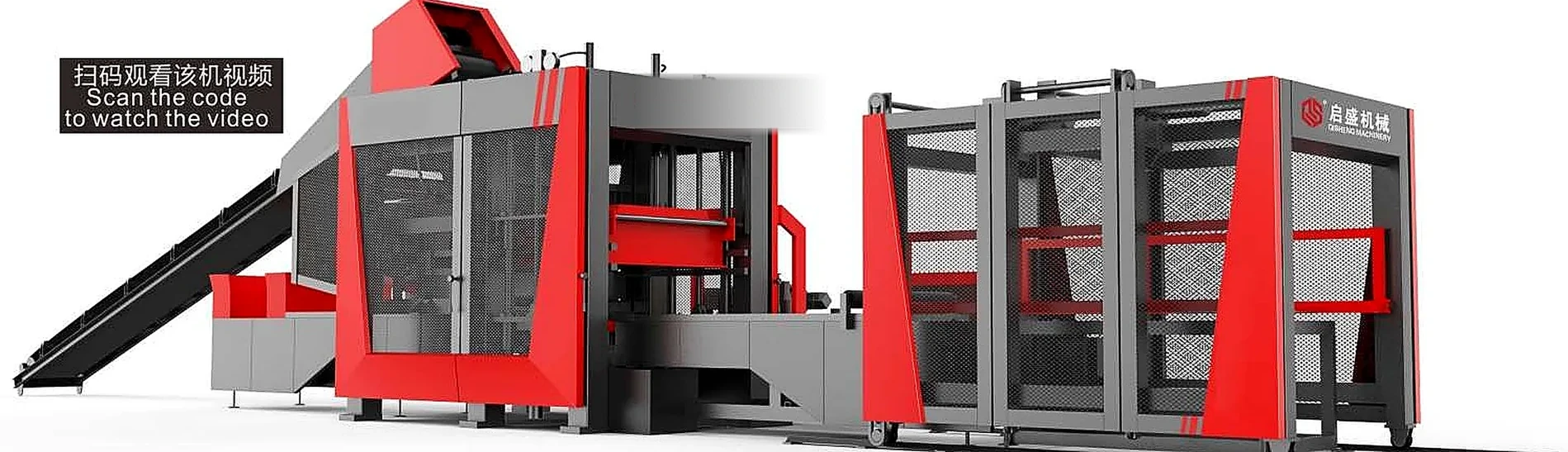
A paver block machine forms interlocking pavers, lawn pavers, kerb stones and slope-protection bricks by running paver moulds on a QST series host. This page explains which models cover paver work, the real cycle and power figures, how pieces per mould set the output, what raw materials and surface finishes require, and which factors decide the price for buyers in Syria and the Middle East.
Configured around output, blocks and operating conditions.
PLC control, hydraulic forming, replaceable moulds, configurable automation, installation and training support.
Typical decision factors
What changes the machine price?
Daily capacity
Output target determines machine size, mould cycles and line configuration.
Automation
Pallet handling, cubing, batching and packaging change total project scope.
Block types
Hollow block, paver, interlock and curbstone may require different moulds and handling.
Service scope
Shipping, installation, training and spare parts are quoted by destination.
What a Paver Block Machine Produces
A paver block machine uses the same vibration-press host as any block machine, but it is set up for paver moulds. The QST series changes product by changing the mould, so a single host produces interlocking pavers, lawn and garden pavers, kerb stones and slope-protection bricks without a second machine.
Pavers are a denser, flatter product than a wall block, and they sell on shape, colour and edge finish. The buyer's catalogue decides the mould list. If you plan to sell two paver shapes and a kerb stone from the first week, name all of them at order time, because the mould set is built against the shapes you specify and a late addition means a separate order.
- Interlocking pavers and interlocking bricks for driveways and yards
- Lawn and garden pavers
- Kerb stones and edging units
- Slope-protection bricks and shaped concrete products
- Standard solid bricks and hollow blocks on the same host when a mould is added
One host that makes pavers in the morning and hollow blocks in the afternoon keeps the plant busy across seasons. The changeover is a mould swap, so the question is planning, not machinery.
Models and Mould Configuration for Paver Work
Paver work on this platform is a question of mould plus host size. The QST1000 and QST1200 are the common paver choices, the QST1500 and QST1800 carry higher volume, and the QST8-15 suits smaller plants. All run imported hydraulic proportional components, an intelligent PLC touch screen and arch-breaking rapid distribution.
| Model | Machine size | Pallet size | Vibration force | Installed capacity | Moulding cycle |
|---|---|---|---|---|---|
| QST8-15 | 9,800 × 3,600 × 2,800 mm | 980 × 860 × 22 mm | 95 kN | 44.9 kW | 15 to 23 s |
| QST1000 | 11,500 × 4,050 × 2,800 mm | 1,100 × 880 × 25 mm | 105 kN | 48.9 kW | 15 to 23 s |
| QST1200 | 11,500 × 4,550 × 2,800 mm | 1,350 × 880 × 25 mm | 150 kN | 57.6 kW | 15 to 25 s |
| QST1500 | 11,500 × 4,550 × 2,800 mm | 1,350 × 1,150 × 30 mm | 220 kN | 69.1 kW | 15 to 23 s |
| QST1800 | 15,500 × 5,500 × 3,200 mm | 1,400 × 1,400 × 30 mm | 280 kN | 104 kW | 15 to 25 s |
Match the host to the pallet, because the pallet decides how many paver pieces sit in one mould. A larger pallet such as the 1,400 × 1,400 mm on the QST1800 or the 1,350 × 1,150 mm on the QST1500 raises the pieces per cycle, which raises the daily output. Choose the smaller pallet when the paver is large or heavily shaped and the mould would otherwise carry too few pieces for a sensible cycle.
For a comparison against a general block platform, review the block moulding machine page, which explains the mould interface these pavers rely on.
Paver Block Machine Capacity and Output
Paver output is set by pieces per mould, cycle time and shift length, and pavers differ from bricks in one important way: they are heavier and often larger, so fewer pieces fit on a pallet. That means the brick figure is the upper bound, not the paver figure.
| Model | Reference output | Condition |
|---|---|---|
| QST1200 | Up to 120,960 standard bricks per 8-hour shift | Standard brick, stable mix, cycle at the fast end |
| QST1800 | Up to 220,000 standard bricks per 8-hour shift | Standard brick, stable mix, cycle at the fast end |
| Pavers | Fewer pieces than brick at the same cycle | Lower pieces per pallet and a heavier, denser piece |
Read the table as a ceiling. A 60 mm paver mould carries fewer pieces than a slim brick mould, so the same host produces fewer paver pieces per shift while producing the same number of pallet cycles. Keep the cycles and the piece count separate when you plan labour and curing space.
Three things move the real number: mix moisture, batching accuracy and how fast pallets reach the machine. Paver colour work adds a further stop if pigment is dosed by hand, which is why a proper mixer and a set dosing routine pay for themselves on a colour line.
Raw Materials and Surface Finish
The paver mix is a dry-cast blend of cement, sand, gravel or crushed stone, and water, with pigment for colour work. Fly ash, slag, stone powder and screened construction waste can replace part of the aggregate when the gradation is controlled, and they reduce the cement content.
- Cement as the binder
- Sand and gravel or crushed stone as the aggregate, graded for a dense face
- Pigment dosed into the mix for coloured and two-tone pavers
- Optional fly ash, slag and construction waste in place of part of the aggregate
Colour is where paver production differs from plain block work. An even colour across a batch needs even mixing and even dosing, so a mixer such as the CMP vertical shaft planetary mixer is a sensible choice for coloured pavers and imitation-stone landscape units. The mixing path on a planetary machine is more uniform than a simple paddle, which shows on the finished face.
Cure discipline protects the face. Pavers stacked and moved wet lose edge definition and show chips at the corners, so let the stack cure before the cuber and the forklift touch it.
Main Components on a Paver Line
The host is the visible machine, but paver quality depends on the whole line around it.
- The host, where the paver mix is filled, vibrated and pressed
- The paver mould set, which defines shape, thickness and pieces per cycle
- A batching machine that doses aggregate by weight, such as the PL series
- A mixer, such as the CMP vertical shaft planetary mixer, for even colour
- A pallet feeding machine, such as the QS-1200, cycling in about 13 seconds
- A cuber and, for dispatch, a baler and a forklift clamp for pallet-free handling
The handling end matters more for pavers than for wall blocks, because a chipped paver is a rejected paver. A cuber that stacks cleanly and a forklift clamp that grips without marking the face protect the product before it reaches the truck.
What Affects the Price of a Paver Block Machine
There is no single price for a paver block machine, because the mould set and the line around the host both change the total. Compare offers on the list below rather than on a headline figure.
- The host model and the pallet size that comes with it
- The number and complexity of paver moulds, which is usually the biggest swing
- Whether the mix is plain or coloured, and the dosing equipment that requires
- Batching, mixing, pallet feeding and cubing, included or bought later
- The pallet count, which ships as steel weight
- The site voltage and phase
- Freight, insurance, installation and training
A paver catalogue with several shapes means several moulds, so the mould list drives the budget more than the host choice in many paver projects. Build the mould list first, then size the host to it. For the broader cost items, see the block making machine price guide.
Installation, Training and Spare Parts
Paver installation follows the block machine sequence: a level, cured floor, a foundation matched to the footprint, power to the control cabinet, then commissioning on your mix.
- Foundation and floor: levelled and cured before the machine lands
- Commissioning: cycle timing, mould fit and mix tuning on your material
- Training: operator training on the touch screen and on the paver mould change
- Spare parts: wear list agreed at order, with mould wear items and pallets named
The paver mould is the part that wears and the part that decides your next product, so agree its lead time and its wear items at order. Pallets come next. On a paver plant, pallets and moulds are the two items you will reorder, and their availability matters as much as their price.
Paver Block Machines for Syria and the Middle East
Paver machines for this region are specified around voltage, dust and heat, the same as block machines. Confirm the site supply and phase before shipping so the motors and the control panel arrive ready for your grid.
Pigment and cement supply vary across the region, so the paver mix is tuned on your local materials during commissioning. Dust protection on the PLC and the sensors, plus a covered yard, keep the cycle stable through the hot months. Kerb stones and interlocking pavers are in steady demand for road and yard work, which makes a paver line a practical second product for a block plant that already sells wall blocks.
To plan the whole plant, review the paver block production line solution or the complete concrete block factory. Buyers weighing new against used should read the block machine for sale guide, and buyers in Syria can check the Syria market page.
Get Paver Configuration. Send your paver drawing or shape list, the pallet plan and the daily target, and CEMBRIQ will return a QST host with the matching paver mould set and a factory price. Use the request for quotation form to send the shapes and the target output together.