Hollow Block Making Machine
Machine configurations for common hollow concrete block sizes.
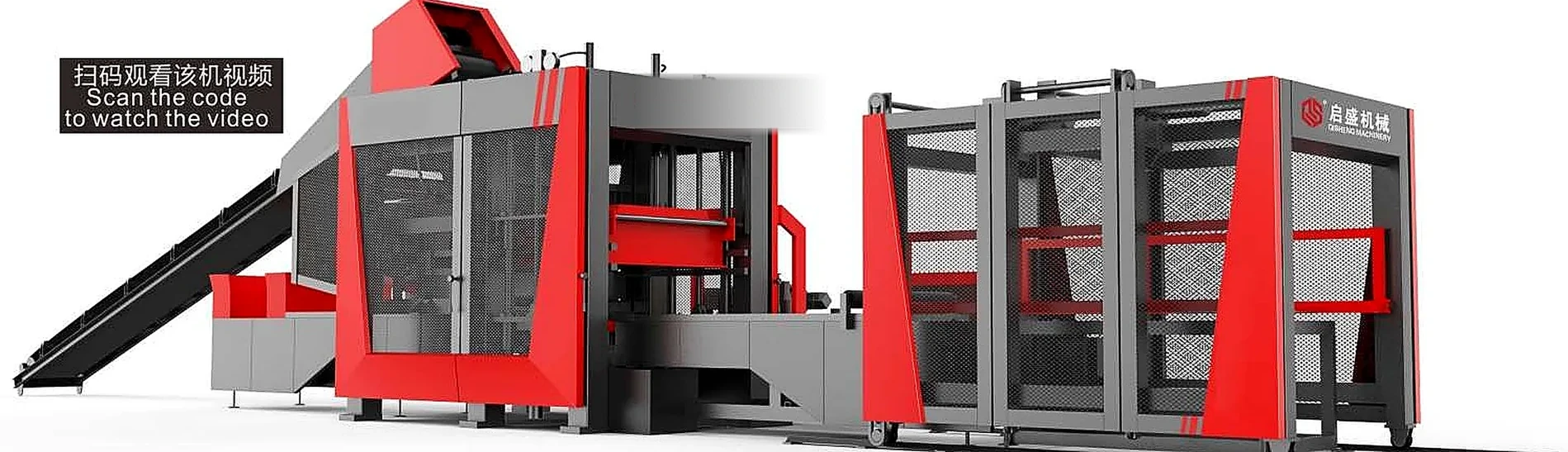
How a hollow block making machine is specified: the QST1200 and QST1000 models, hollow block moulds, capacity conditions, cuber and handling options, raw materials, price factors and regional fit for Syria and the Middle East.
Configured around output, blocks and operating conditions.
PLC control, hydraulic forming, replaceable moulds, configurable automation, installation and training support.
Typical decision factors
What changes the machine price?
Daily capacity
Output target determines machine size, mould cycles and line configuration.
Automation
Pallet handling, cubing, batching and packaging change total project scope.
Block types
Hollow block, paver, interlock and curbstone may require different moulds and handling.
Service scope
Shipping, installation, training and spare parts are quoted by destination.
Applications: Hollow Blocks and Related Products
A hollow block making machine forms blocks with one or more voids, and the void shape and wall thickness decide the mould. The common regional block is 390 x 190 x 190 mm, used for load-bearing and partition walls, and the same machine runs two-void, three-void and larger hollow units by changing the mould. Because the QST1200 and QST1000 carry a dedicated vibration feeding system, the mix fills a deep hollow mould evenly, which is the part that decides whether the block comes out square or short on one corner.
The machine is not limited to hollow blocks. On the same platform you run solid blocks, concrete bricks, lawn pavers, kerb stones, slope-protection bricks and interlocking blocks. That range matters to a yard that supplies both housing and road work, because one machine covers a product list that would otherwise need two.
- Hollow blocks, including 390 x 190 x 190 mm wall blocks.
- Solid blocks and standard concrete bricks.
- Lawn pavers, kerb stones, slope-protection bricks and interlocking blocks.
- Mould change is the only product change on the same machine.
Hollow Block Making Machine Models: QST1200 and QST1000
Two mid-size models carry this work. The QST1200 is the larger of the pair, with a 1,350 x 880 mm pallet, 150 kN vibration force, 57.6 kW installed capacity and a machine weight of 17 t. The QST1000 runs a 1,100 x 880 mm pallet with 105 kN vibration force and 48.9 kW. Both use the same vibration plus press moulding method at 3,800 to 4,500 vibrations per minute and 31.5 MPa rated pressure, so the choice is about pallet size and output, not about a different process.
Machine size follows the site. The QST1200 needs 11,500 x 4,550 mm of floor, and the QST1000 needs 11,500 x 4,050 mm, so both fit a compact building. The larger pallet on the QST1200 carries more hollow blocks per cycle, which is why a yard chasing wall-block volume leans to the QST1200 while a mixed-product yard can run the QST1000.
| Model | Machine size (mm) | Pallet size (mm) | Machine weight | Vibration force | Rated pressure | Installed capacity | Cycle time |
|---|---|---|---|---|---|---|---|
| QST1200 | 11,500 x 4,550 x 2,800 | 1,350 x 880 x 25 | 17 t | 150 kN | 31.5 MPa | 57.6 kW | 15 to 25 s |
| QST1000 | 11,500 x 4,050 x 2,800 | 1,100 x 880 x 25 | depends on configuration | 105 kN | 31.5 MPa | 48.9 kW | 15 to 23 s |
Capacity and Output for Hollow Blocks
The published figure for the QST1200 is up to 120,960 standard bricks in an 8-hour shift, and that number assumes a standard brick mould, a full shift and a stable mix. A hollow block mould produces far fewer pieces per cycle than a brick mould, because each block is much larger, so the per-shift count falls. Treat the brick figure as the ceiling of the machine and calculate hollow output from your own block size and cycle.
| Model | Reference capacity, 8-hour shift | Basis |
|---|---|---|
| QST1200 | Up to 120,960 standard bricks | Standard brick mould, full shift, stable mix |
| QST1000 | Configured to your target | Depends on block size, mould and cycle |
Hollow block output is set by the mould, the cycle and the handling after the press. Green hollow blocks are more fragile than bricks, so the cuber and the curing plan matter more here than on a solid brick line.
| Handling equipment | Role | Reference figure |
|---|---|---|
| QS-1200A cuber | Automatic layer stacking for dry products | 18 standard hollow blocks per layer, about 3,800 pallets per shift |
| QS-1200B cuber | Self-retaining hole stacking, pallet-free handling | Retrofits an existing line; original cuber still usable |
| QSMT pallet-free line | Wet block online cubing with no pallets at all | Up to 135,000 bricks per 8-hour shift on the QSMT1000 |
| QS forklift clamp | Pallet-free yard stacking and truck loading | 40 hollow blocks or 5 layers per bite |
Plan the line around curing. Hollow blocks need moisture and time, and in a hot climate that means shade and covered storage, so the curing area is part of the capacity plan, not an afterthought. The hollow block production line plan shows how the machine, the cuber and the curing yard connect.
Raw Materials and Mix for Hollow Blocks
A hollow block making machine runs on cement, sand, gravel and crushed stone powder, and accepts fly ash, slag, gangue and construction waste as cement-replacement fillers where local supply allows. Hollow blocks need a mix that holds its shape around the void, so grading and moisture are set so the block releases from a deep mould without tearing.
- Base materials: cement, sand, gravel, crushed stone powder.
- Fillers: fly ash, slag, gangue, crushed construction waste.
- A well-graded, controlled-moisture mix releases cleanly from a deep hollow mould.
- Cement content and curing together set the compressive strength of the wall block.
Main Components of a Hollow Block Line
The host press is the centre, and a hollow block line adds batching, mixing, pallet handling and cubing around it. The vibration feeding system on the QST1200 and QST1000 is the component that keeps a deep mould evenly filled, and the handling equipment protects the green block after the press.
- Host: QST1200 or QST1000 vibration plus press moulding frame with PLC control.
- Batching: PL series concrete batching machine with fast and slow dosing.
- Mixing: CMP vertical shaft planetary mixer for a uniform batch.
- Pallets: QS-1200 automatic pallet feeding machine, cycle about 13 s.
- Handling: QS-1200A or QS-1200B cuber, or a pallet-free QSMT arrangement.
What Drives the Price of a Hollow Block Making Machine
The price of a hollow block making machine follows the configuration around the press, and we publish no figure here. These are the factors that raise or lower it.
- Model: QST1200 or QST1000, and the pallet size that follows.
- Mould set: hollow block sizes and the number of product types.
- Pallet quantity, which limits real output if it is too small.
- Handling: cuber, stacker, forklift clamp or a pallet-free arrangement.
- Support equipment: batching machine, mixer and conveyors.
- Automation level and control system.
- Spare parts kit, shipping, destination voltage and installation scope.
Because a hollow block line can be quoted with or without a cuber and with a different pallet count, the only fair comparison is a like-for-like offer on the same block list. That is why we configure before we quote.
Installation, Training and Spare Parts
A hollow block machine is installed on a level, reinforced foundation sized to the machine footprint, with the mixer and batching plant placed to cut travel time to the pallet feeder. We supply the foundation drawing, the electrical and hydraulic schematics and the manual, and support commissioning by remote guidance or by an engineer on site depending on scope. Operators are trained on mix moisture, mould change and the PLC screen, because a hollow block punishes a wet mix and a worn mould faster than a brick does.
The wearing parts are the mould, the wear plates and the hydraulic and vibration components. Keep a first-order spare kit on site so a stoppage never waits on an air shipment. Buyers comparing offers should read the block machine for sale guide to see what a complete hollow block offer should include.
Hollow Block Machines for Syria and the Middle East
We configure hollow block machines for 380 V / 50 Hz three-phase supply and for hot, dusty sites, with hydraulic oil cooling and dust protection around the vibration unit. Hollow blocks need steady curing, so shade, water and covered storage are part of the regional plan, and where yard space is tight a cuber that stacks higher uses less ground for the same output. We support buyers across Syria and the wider Middle East on machine selection, power supply and delivery planning, and a hollow block machine can anchor a complete concrete block factory.
Send your block drawing, the pieces per day you need and your power supply. Get Hollow Block Line and we match the model, the mould and the handling equipment to your job. The block making machine price guide explains how the cost of the machine and its support equipment is built up.