Hollow Block Production Line
A hollow block production line makes 390 x 190 x 190 mm cored blocks on a QST1200 or QST1000 host, with QSDJ or QSRGY curing and QS-1200 cubing. This page covers the equipment, capacity conditions, area, power and manpower for cored block production.
A hollow block production line makes cored blocks, typically 390 x 190 x 190 mm, on a QST1200 or QST1000 vibration and press host machine. Batching and mixing feed the host, a QSDJ or QSRGY line cures the green blocks, and a QS-1200A cuber stacks 18 standard hollow blocks per layer at about 3,800 pallets per shift. Because hollow blocks cure longer and carry fewer pieces per mould than thin brick, curing volume and pallet count decide the real daily output.
What a Hollow Block Production Line Covers
A hollow block production line is built around one product family: blocks with two or three cores, typically 390 x 190 x 190 mm, used for load-bearing and partition walls. Hollow blocks are heavy per piece and slower to cure than thin solid brick, so the line leans on batching accuracy and curing capacity more than on raw press speed.
The host machine for this work is the QST1200 or the QST1000. Both run by vibration and press, both change product by changing the mould, and both feed a green block onto a pallet that then travels into curing. Get the batching, the curing and the cubing right and the block count follows.
- Host machine: QST1200 or QST1000 fully automatic vibration and press machine.
- Typical block: 390 x 190 x 190 mm two or three core hollow block.
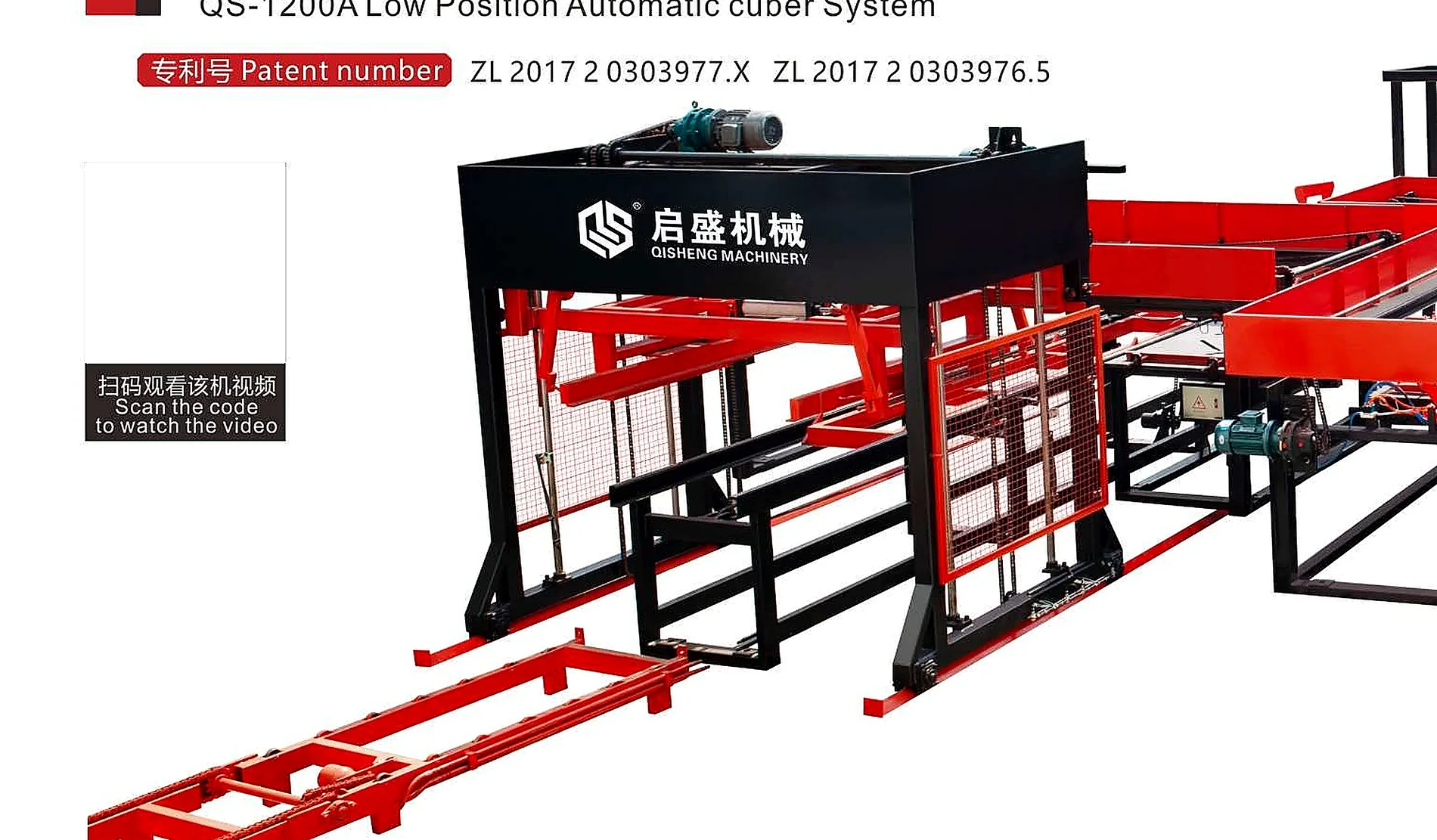
- Cuber capacity for hollow products: the QS-1200A handles 18 standard hollow blocks per layer, about 3,800 pallets per shift.
- Mobile stacking: the QS-1000Y stacks up to 11 layers of hollow block on site.
- Handling: the QS forklift clamp grips about 40 hollow blocks and 5 layers per bite, pallet-free.
- One machine, many moulds: hollow blocks, solid bricks, pavers and kerb stones share one host.
Line Flow for Hollow Blocks
The flow is one direction with a pallet loop, but the curing stage carries more load here because a hollow block stays in curing longer than a thin brick.
- Sand, gravel, crushed stone powder and any secondary material are weighed by the PL Series batching machine against a pre-set ratio.
- The batch mixes in the CMP vertical shaft planetary mixer, using a mix that holds the block edges and cores cleanly.
- The QST1200 moulds the hollow block on a 1,350 x 880 x 25 mm pallet with a cycle of 15 to 25 seconds.
- Loaded pallets move into the curing line, QSDJ belt-rack or QSRGY finger-car, which stores them on curing levels and returns empty pallets.
- Cured hollow blocks reach the cuber. The QS-1200A low-position cuber separates bricks from pallets and stacks 18 standard hollow blocks per layer.
- Finished cubes go to the yard by forklift, or straight onto a truck with the QS clamp when pallet-free handling is wanted.
Equipment List by Function
| Stage | Equipment | Role for hollow blocks |
|---|---|---|
| Batching | PL Series batching machine | Fast and slow dosing to a pre-set ratio, three-point induction weighing, vibration anti-bridging. |
| Mixing | CMP vertical shaft planetary mixer | Uniform mix so cores stay clean and edges hold their shape. |
| Moulding | QST1200 or QST1000 | Vibration and press host; cycle 15 to 25 s, pallet 1,350 x 880 x 25 mm on the QST1200. |
| Curing | QSDJ belt-rack line or QSRGY finger-car line | Stores heavy hollow blocks through the curing period and returns empty pallets. |
| Cubing | QS-1200A low-position cuber | 18 standard hollow blocks per layer, stack up to 1,400 mm, about 3,800 pallets per shift. |
| Mobile stacking | QS-1000Y mobile cuber | Up to 11 layers of hollow block in the curing yard under remote control. |
| Handling | QS series forklift clamp | About 40 hollow blocks and 5 layers per bite, without pallets. |
See the hollow block making machine page for the host machines, and the concrete block production line range for the line-level families.
Capacity Assumptions for Hollow Blocks
| Measure | Value | Condition |
|---|---|---|
| QST1200 stated output | Up to 120,960 standard bricks per 8-hour shift | Thin solid brick; hollow counts are lower |
| QST1200 cycle | 15 to 25 s | Block height and mould layout |
| QS-1200A layer | 18 standard hollow blocks per layer | Block size and pallet |
| QS-1200A cuber | About 3,800 pallets per shift | Stack up to 1,400 mm, cycle 15 to 18 s per layer |
| QS forklift clamp | About 40 hollow blocks per bite, 5 layers | Load matched to the forklift |
A hollow block uses more material per piece and fewer pieces per mould than a thin brick, so the same host returns a lower piece count. Read the standard-brick figure as the host ceiling and the hollow count as the commercial target for your block size, mould and cycle. The block machine capacity guide shows how to convert between product types.
One more condition matters for hollow blocks: cycle time is set by the block height, not only by the machine. A tall 390 x 190 x 190 mm block needs a longer vibration and press cycle than a short brick, so the counted output falls even when the host is running flat out. Set the cycle for the tallest block you sell, then read the daily count from that cycle rather than from the shortest product.
Factory Requirements
Area
Hollow blocks stay in curing longer than thin bricks, so the curing area carries more pallets for the same daily output. A multi-layer curing design stores more of those pallets in the same floor by using height. The QS-1200A low-position cuber covers 12,000 x 3,000 mm, and the QS-1000Y mobile cuber works in the yard on a 5,000 x 5,000 x 2,500 mm working footprint, so plan the cuber and yard as their own zones.
Power
Reference values: QST1200 host 57.6 kW, QST1000 48.9 kW, QS-1200A cuber 34.15 kW, QS-1000Y mobile cuber 15 kW. Equipment is built for a 380 V three-phase supply, and the QSRGY sub-car can run on 380 V AC stepped to 36 V DC on the rail or on a 36 V lithium battery with a charging pile. Size the supply to the driven load plus a margin.
Water and Foundation
Water is for mixing and curing moisture, sized from your mix design and daily batch count. The host machine is heavy and vibrates, so its foundation must carry the machine weight with dynamic loading on ground that does not settle unevenly. Release foundation drawings before shipment so the concrete work runs during transit.
Manpower
| Zone | People per shift | Note |
|---|---|---|
| QSRGY finger-car curing line | 3 to 4 persons | Completes the whole production task, automatic fault display |
| QS-1000Y mobile cuber | Remote-controlled, manual or automatic | Operated from the yard |
| Fully automatic high-level line (reference) | 3 to 6 persons | QSGW range, shown for comparison |
Hollow block handling is heavier than solid brick, so the forklift clamp and the mobile cuber do work that would otherwise need extra hands. The crew stays small when curing and cubing are automatic, and the skill sits on the PLC, the mould change and the daily core cleaning routine.
Cost Factors
No price is quoted here, because a figure only exists once the configuration is fixed. These are the variables that move a hollow block line budget.
- Host model. QST1200 against the QST1000, which carries a lighter frame and lower installed capacity.
- Curing type. A belt-rack line, a finger-car line and a multi-layer upgrade differ in steel, track and control content.
- Curing volume and pallets. Hollow blocks cure longer, so more pallets circulate and pallets are a real line item.
- Cuber and handling. A low-position cuber, a mobile cuber and a forklift clamp each remove manual labour at a cost.
- Moulds. Every hollow block size and core layout you sell needs its own mould.
- Site works, freight and commissioning. Foundations, buildings, incoming power, container count and site conditions are the buyer scope.
Delivery and Installation
A hollow block line is commissioned as a loop, with the curing stage as the critical path.
- Install batching and mixing, then set the QST1200 or QST1000 host on its foundation and level it to the pallet line.
- Assemble the curing line or racks and align the transfer points.
- Install the cuber and any clamp handling, and connect them to the control system.
- Run the loop on a real hollow block mix, then train the crew on the control system, the mould change and core cleaning.
- Agree the wear-parts list for the moulds and the mixer before handover.
Hollow block moulds wear faster than brick moulds because of the cores, so budget the wear-parts routine from the start. For regional demand and power habits, see the Syria market page, and when you are ready Get Hollow Block Plan with your block sizes, core layout and output target.
Frequently Asked Questions
What is a hollow block production line?
Which machine produces hollow blocks?
How many hollow blocks can the line produce per shift?
What curing system suits hollow block production?
How is hollow block palletising handled?
What area and power does a hollow block line need?
How many workers does a hollow block line need?
What affects the cost of a hollow block production line?
Related machines
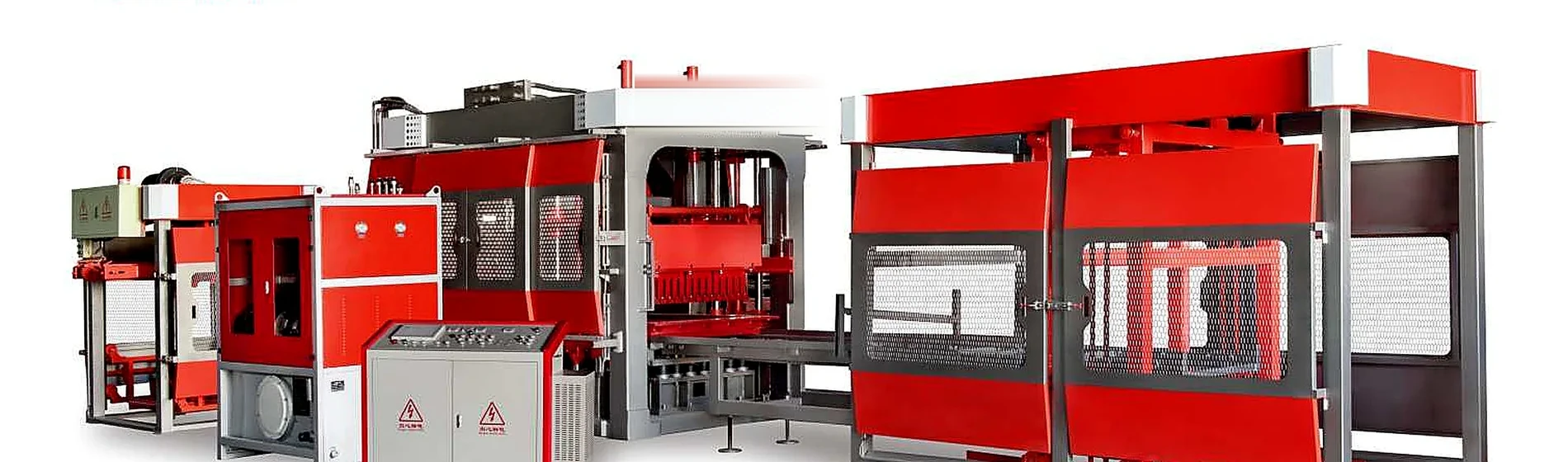
Concrete Block Making Machine
Core machine for hollow blocks, solid blocks, pavers and curbstones.
Automatic Block Making Machine
High-output automatic block machine for industrial production lines.
Hydraulic Block Making Machine
Hydraulic forming system for stable density and consistent blocks.
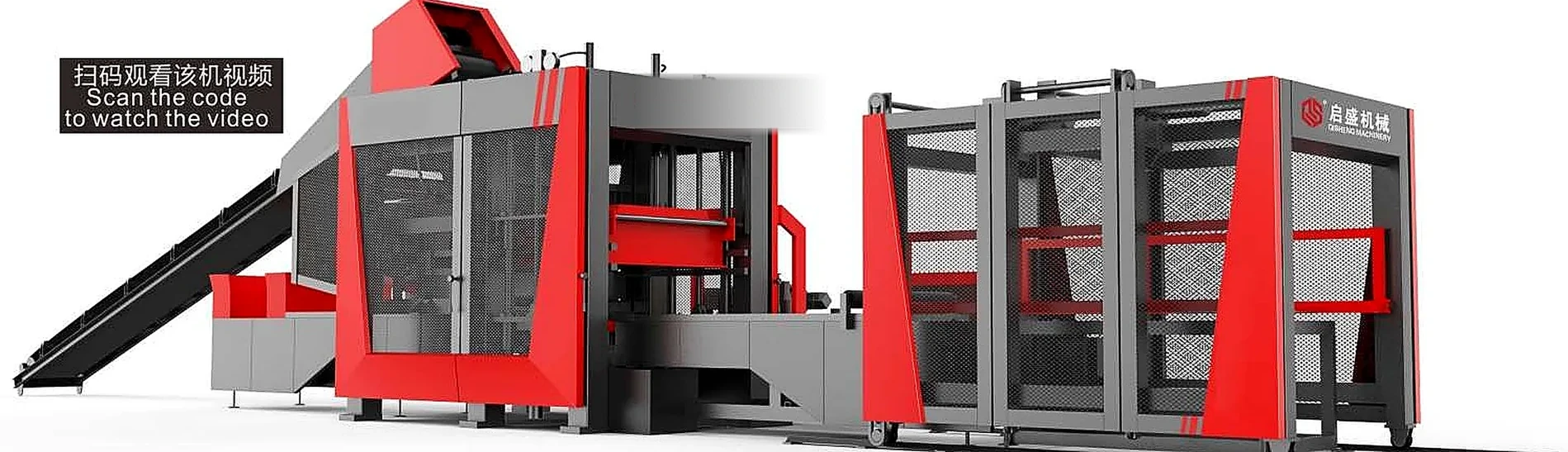
Hollow Block Making Machine
Machine configurations for common hollow concrete block sizes.