What Block Machine Capacity Do I Need for 10,000 Blocks per Day?
A capacity target of 10,000 blocks per day resolves into four inputs: pieces per mould, cycle time, shift length and real uptime. This guide runs the arithmetic with published QST figures, shows which host fits one shift and which fits two, and lists what to send for a capacity check.
What block machine capacity do I need for 10,000 blocks per day? A single 8-hour shift holds 28,800 seconds, so a 20 second cycle gives 1,440 cycles and a 6-piece mould gives 8,640 pieces. The published QST6-15 figure is exactly 8,640 hollow blocks per shift on a 6-piece mould. To reach 10,000 blocks in one shift you need a fast cycle, more pieces per mould, or a larger host such as the QST8-15, and two shifts reach the target on a compact machine with margin.
What block machine capacity do I need for 10,000 blocks per day?
What block machine capacity do I need for 10,000 blocks per day? The target is a mould and cycle question more than a machine size question. One 8-hour shift contains 28,800 seconds. At a 20 second cycle that is 1,440 cycles, and a 6-piece mould returns 8,640 pieces. Raising the cycle speed to 15 seconds lifts the same mould to 1,920 cycles, and the piece count rises with it.
The arithmetic is always the same three factors: pieces per mould, cycles per shift, and the share of the shift that the machine actually runs. Change any one of them and the answer moves. That is why two buyers asking for 10,000 blocks a day can end up with two different hosts and both be right.
Cycles per shift at each cycle time
Cycle time is published per host, not per product, so take the fast end and the slow end and see where the target sits.
| Cycle time | Cycles in an 8-hour shift | Pieces from a 6-piece mould | Pieces from a 12-piece mould |
|---|---|---|---|
| 15 seconds | 1,920 | 11,520 | 23,040 |
| 20 seconds | 1,440 | 8,640 | 17,280 |
| 23 seconds | 1,252 | 7,512 | 15,024 |
| 25 seconds | 1,152 | 6,912 | 13,824 |
These numbers assume the shift runs end to end with no stop. They are the ceiling, and the ceiling is useful because it shows how close the 10,000 target sits to a compact machine. A 6-piece mould at 15 to 20 seconds already brackets the target on the smallest automatic host in the range.
Published output of the QST range
Published figures are quoted per product and per shift, so they compare cleanly against a 10,000 target. The QST6-15 carries one mould set and four product types, from 8,640 hollow blocks to 61,440 standard bricks in a shift.
| Model | Installed capacity | Pallet | Machine weight | Published output |
|---|---|---|---|---|
| QST6-15 | 34.4 kW | 980 x 680 x 20 mm | 12 t | From 8,640 hollow blocks to 61,440 standard bricks per shift |
| QST8-15 | 44.9 kW | 980 x 860 x 22 mm | 14 t | Up to 90,000 standard bricks per 8-hour shift |
| QST1200 | 57.6 kW | 1350 x 880 x 25 mm | 17 t | Up to 120,960 standard bricks per 8-hour shift |
| QST1500 | 69.1 kW | 1350 x 1150 x 30 mm | 20 t | 220 kN vibration force, larger moulds per cycle |
| QST1800 | 104 kW | 1400 x 1400 mm | 34 t | 280 kN vibration force, up to 220,000 standard bricks per 8-hour shift |
Read the hollow block figure against the brick figure and the shape of the problem appears. A standard brick 240 x 115 x 51 mm is small, so a mould holds many of them and the piece count per cycle is high. A hollow block 390 x 190 x 190 mm is far larger, so the same pallet holds fewer pieces and the count per cycle falls. The 10,000 target is measured in hollow blocks far more often than in bricks, and that is the harder of the two counts.
One shift or two: how the shift pattern changes the answer
Ten thousand blocks a day does not have to come from one shift. Two shifts of 5,000 change which host is needed, because the machine runs twice as long at half the pace. On a compact host with a 6-piece mould, a steady 20 second cycle over two shifts lands well past 10,000 while keeping every stroke inside the published cycle band.
The trade is real in both directions. A second shift adds labour, lighting and supervision, and it needs curing space and pallet count to support the extra daily volume. A larger host costs more up front and draws more power. Sites with a limited electrical supply often find the two-shift route easier to run than a single large machine, and sites with tight curing space often find the opposite.
Real uptime, and what it does to the number
Published figures describe a clean run. A working yard stops for mould changes, mix feeds, pallet returns, shift handover and routine faults. Apply a realistic uptime to the rated figure before you size the machine.
| Uptime | Pieces from a rated 8,640 | Pieces from a rated 11,520 |
|---|---|---|
| 100% | 8,640 | 11,520 |
| 85% | 7,344 | 9,792 |
| 75% | 6,480 | 8,640 |
| 65% | 5,616 | 7,488 |
The table explains a common disappointment. A buyer sizes a machine on the rated 8,640 and then sells 10,000 a day, and the shortfall is not a machine fault. It is the gap between a published ceiling and a real shift. Keep the target inside the 75 to 85 percent band of the rated figure, and the machine keeps its margin on the days when a mould change eats an hour.
Which machine fits 10,000 blocks per day?
Four routes reach the same daily target, and the right one depends on the products and the site rather than on the number alone.
- One shift on the compact host. A 6-piece hollow block mould at the fast end of the cycle, with curing and pallet return sized to match, puts 10,000 inside one shift with a small margin.
- One shift on the QST8-15. A larger pallet holds more pieces per cycle, which turns a target that sat on the edge of the compact host into a comfortable figure, at 44.9 kW of installed capacity.
- Two shifts on the compact host. The same machine, run twice as long, reaches the target with the gentlest duty cycle and the smallest electrical demand.
- A higher class of output. Where the market is already asking for more than 10,000, the QST1200 at up to 120,960 standard bricks per shift or the QST1500 with 220 kN of vibration force gives the headroom without a second purchase.
What else limits 10,000 blocks a day
The host is only one part of the daily figure. The loop around it holds the rest.
- Curing space and pallet count. Every pallet leaving the machine needs a place to cure. A finger-car line keeps the loop moving with single-layer curing as standard, and multi-layer curing uses the height of the building when floor space is tight.
- Mixing and batching. A cycle of 20 seconds needs a fresh batch on time, every time. Batching and mixing sized to the cycle hold the pace, and a mix that arrives late costs cycles that never come back.
- Pallet feeding and cubing. Empty pallets must return to the machine at the pace of the moulding cycle, and cured blocks need handling that does not break faces. Pallet-free options such as a self-retaining hole cuber remove the pallet return entirely.
- Electrical supply. Installed capacity rises with the host, from 34.4 kW to 104 kW across the range, before batching, mixing and curing equipment. Confirm the site supply, phase, voltage and frequency at quotation stage.
- Labour. A high-level automatic line runs the whole curing task with 3 to 6 persons, and a finger-car curing line with 3 to 4, so the number of hands does not grow with the block count.
For the line-level view, see the block machine capacity guide, and the complete block factory solution for how curing and cubing are wired together.
How to check a quotation against a 10,000 block target
A quotation answers the capacity question only when it names the mould. Ask for the pieces per cycle for each product, the cycle time band, the pallet size and the installed capacity, and the daily figure can be rebuilt from those four values. Where a quotation gives one headline number and no mould detail, the figure cannot be checked against a shift, and there is no way to tell whether the plan survives a product change six months later.
Then compare the same four values across quotations. Pallet size sets the ceiling on pieces per cycle, the cycle band sets the pace, and installed capacity sets the site supply and the transformer. A capacity claim that cannot be rebuilt from those values is a claim rather than a calculation, and at 10,000 blocks a day the difference shows up in the first month of production.
What to send for a capacity calculation
Five answers turn the target into a configuration.
- The block sizes and the product type for each one, in millimetres.
- The daily target and whether it must fit one shift or can run over two.
- The mould count you expect to run, because every product needs its own mould.
- The site supply, together with the curing area and pallet stock available.
- Whether the machine runs alone or inside a curing and cubing line.
Send them through the request for quotation form and the reply comes back as a configuration sheet: host, moulds, pallet count, curing line and the spare parts set that keeps the cycle running.
Send your block sizes and daily target and the capacity calculation for your plant comes back with the machine that holds it.
Frequently Asked Questions
How many blocks can a block machine make in one 8-hour shift?
Is 10,000 blocks per day a large target for one machine?
Why does the block size change the output so much?
Should I choose a bigger machine or a second shift?
What uptime should I assume in a capacity calculation?
Which models should I compare for a 10,000 block target?
What block machine capacity do I need for 10,000 blocks per day?
Related machines
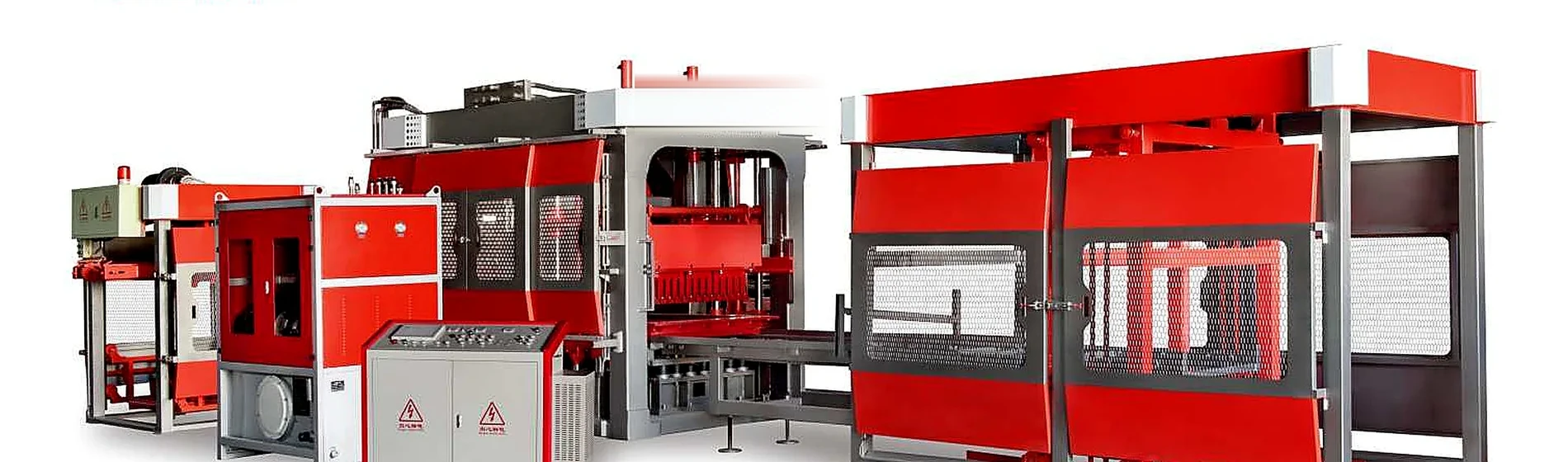
Concrete Block Making Machine
Core machine for hollow blocks, solid blocks, pavers and curbstones.
Automatic Block Making Machine
High-output automatic block machine for industrial production lines.
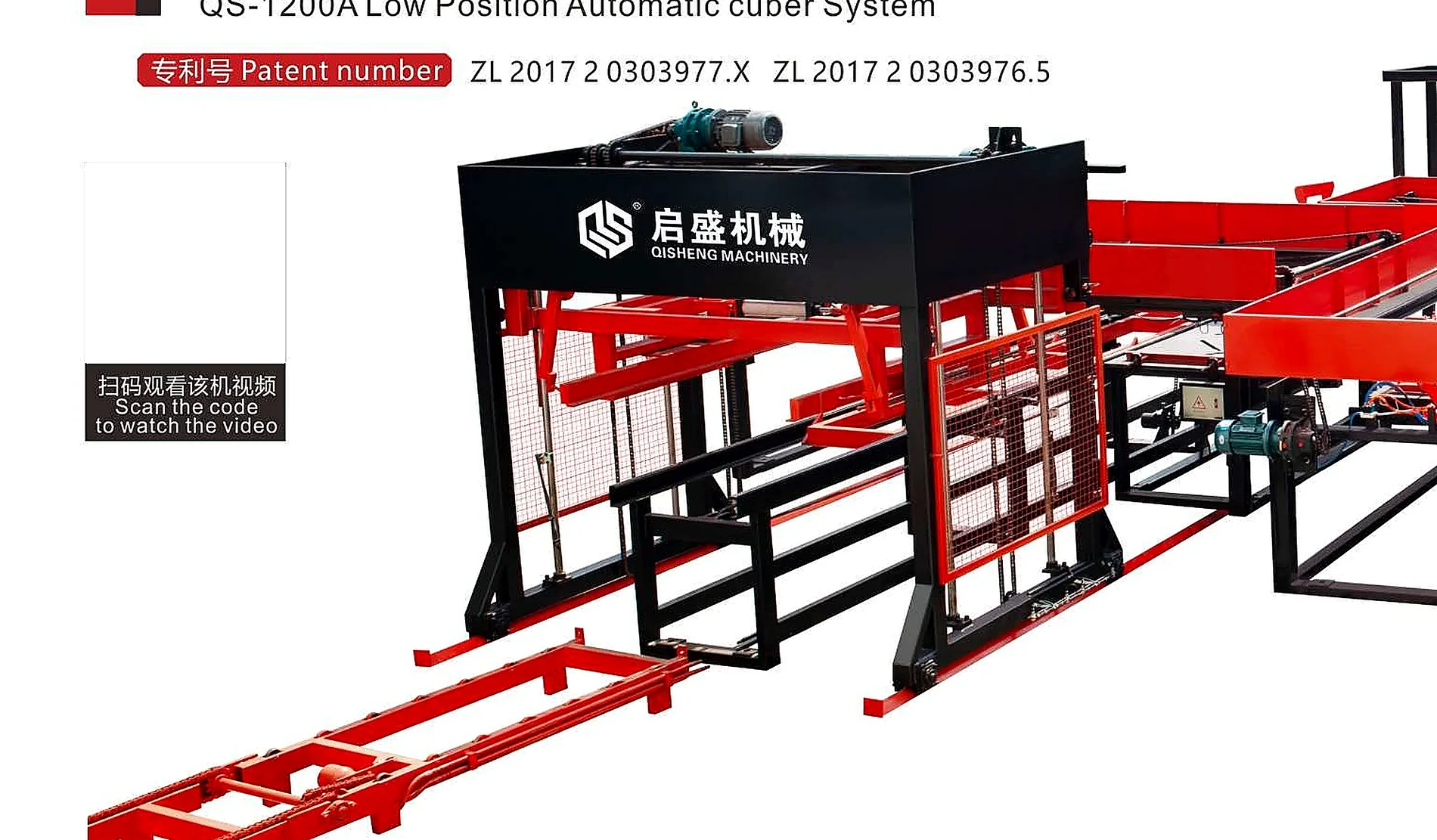
Hydraulic Block Making Machine
Hydraulic forming system for stable density and consistent blocks.
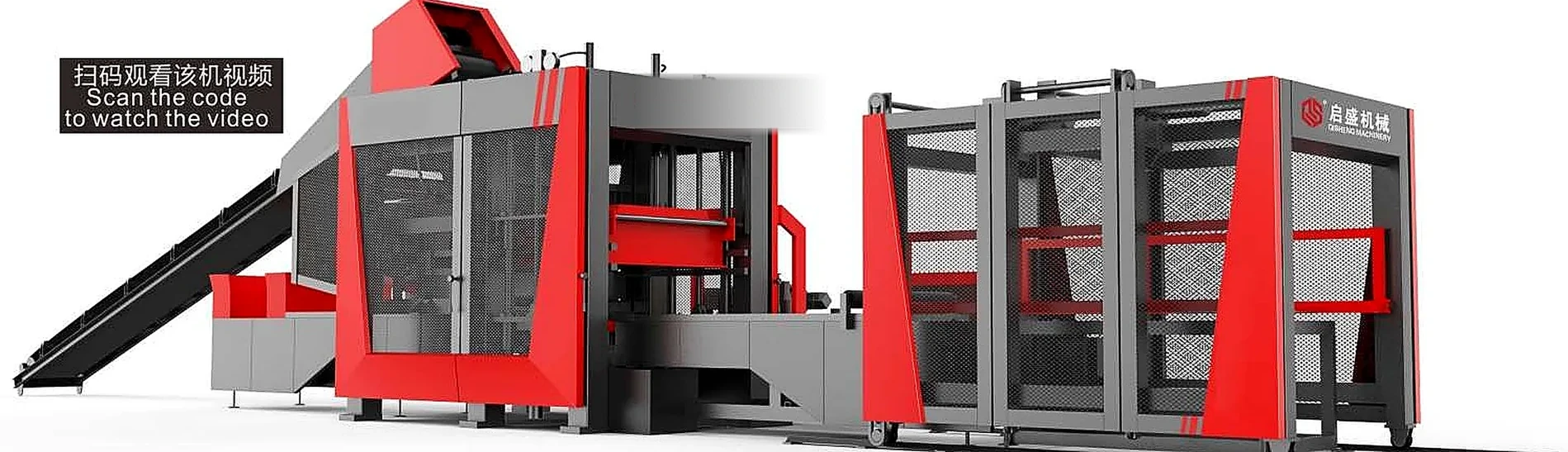
Hollow Block Making Machine
Machine configurations for common hollow concrete block sizes.