Block Factory Equipment: The Full Machine List for a Concrete Block Plant
A block factory runs on nine matched stations, from the batching machine PL series and CMP planetary mixer through the QST host machine, QS-1200 pallet feeder, curing system and QS-1200A cuber. Host machine cycles of 15 to 25 seconds set the pace, so this page lists the equipment, the capacity ceilings and the floor, power and manpower each model implies.
Block factory equipment means the nine matched stations that turn cement, sand and aggregate into cured blocks: a batching machine PL series, a CMP planetary mixer, a QST host machine, a QS-1200 automatic pallet feeding machine, the pallets, a curing system, a QS-1200A cuber, packing, and the control system. Output is set by the host machine, from a QST8-15 at up to 90,000 standard bricks per 8-hour shift to a QST1800 at up to 220,000. Every other station is sized to that press cycle.
What Counts as Block Factory Equipment
A working block plant is a chain, not a single purchase. The chain has nine stations: a batching machine PL series, a CMP planetary mixer, the QST host machine, a QS-1200 automatic pallet feeding machine, the pallet fleet, a curing system, a QS-1200A cuber, packing, and the control system. Each station has its own cycle, and the slowest one sets plant output. The host machine cycle across the QST range runs 15 to 25 seconds, so any upstream or downstream step slower than that turns a 220,000 brick shift into something less. Read the list as a matching problem before you read it as a shopping list.
Batching Machine PL Series and the CMP Planetary Mixer
Batching sits at the head of the line. A batching machine PL series weighs cement, sand, gravel and crushed stone powder separately, then releases them to the mixer in a set order. Accuracy here decides block strength more than any later station does, because the mix design assumes that the cement weight is the cement weight.
The CMP planetary mixer blends the batch, and it is the station that most often falls behind when a plant is scaled up. Planetary mixing suits the denser mixes used for hollow block 390 x 190 x 190 mm and for pavers, where fly ash, slag, gangue or crushed construction waste are worked in as fillers. Match the mixer output per batch to the host machine cycle: a QST1800 running a 15 second cycle consumes mix far faster than a QST6-15 at 23 seconds. Size the mixer on the target model, not on the yard you have today.
The QST Host Machine Decides Your Capacity
The host machine is the vibration press that forms the block. Every QST model uses vibration plus press moulding at 3,800 to 4,500 vibrations per minute, with rated pressure 31.5 MPa except the QST6-15 at 25 MPa. Published capacity ceilings assume a standard brick mould, a full 8-hour shift, a stable mix and uninterrupted pallet handling.
- QST1800: 34 t, 280 kN vibration force, 104 kW installed, up to 220,000 standard bricks per 8-hour shift.
- QST1500: 20 t, 220 kN, 69.1 kW installed, configured to your target.
- QST1200: 17 t, 150 kN, 57.6 kW installed, up to 120,960 standard bricks per 8-hour shift.
- QST1000: 105 kN, 48.9 kW installed, configured to your target.
- QST8-15: 14 t, 95 kN, 44.9 kW installed, up to 90,000 standard bricks per 8-hour shift.
- QST6-15: 12 t, 68 kN, 34.4 kW installed, rated pressure 25 MPa, configured to your target.
A hollow block mould changes the count, because mould fill drives pieces per cycle. Our block machine capacity guide walks through that arithmetic for hollow block and brick moulds.
QS-1200 Pallet Feeding Machine and the Pallet Fleet
The QS-1200 automatic pallet feeding machine runs a feeding cycle of about 13 seconds on a 3.0 kW motor. Those 13 seconds have to sit inside the host machine cycle of 15 to 25 seconds, which is why the feeder is specified with the press and not after it.
Pallets are the item buyers underrate. Every model takes a specific pallet: QST1800 runs 1,400 x 1,400 x 30 mm, QST1500 runs 1,350 x 1,150 x 30 mm, QST1200 runs 1,350 x 880 x 25 mm, QST1000 runs 1,100 x 880 x 25 mm, QST8-15 runs 980 x 860 x 22 mm and QST6-15 runs 980 x 680 x 20 mm. Pallet size is fixed by the machine table, so a fleet bought for the wrong model cannot be reused on a bigger press later. Order spares with the machine.
Curing System Choices and Yard Space
Curing is where the block gains strength and where most of the floor area goes.
- QSDJ belt-rack curing line: rack curing, matches the block machine of any maker, new or existing. It uses a lithium-battery transfer sub-car with wireless control and a self-organised RS-485 wireless network with cloud remote monitoring.
- QSRGY finger-car curing line: single-layer curing as standard, multi-layer optional. Sub-car power is either 380 V AC stepped down to 36 V DC on the running rail, or a 36 V lithium battery with BMS. Three to four persons complete the whole production task.
- QSGW intelligent high-level fully automatic line: central computer with PLC and sensors, layered automatic pallet lifter, high-level finger car and three-dimensional curing kiln. Configured from 30,000 to 250,000 pieces per 8-hour shift depending on the host machine matched into it, with 3 to 6 persons per shift.
Hot, dusty sites need hydraulic oil cooling and dust protection around the vibration unit, and curing areas need shade and water to hold moisture. Where yard space is tight, a curing layout that stacks higher uses less ground for the same output.
Cuber QS-1200A and Packing
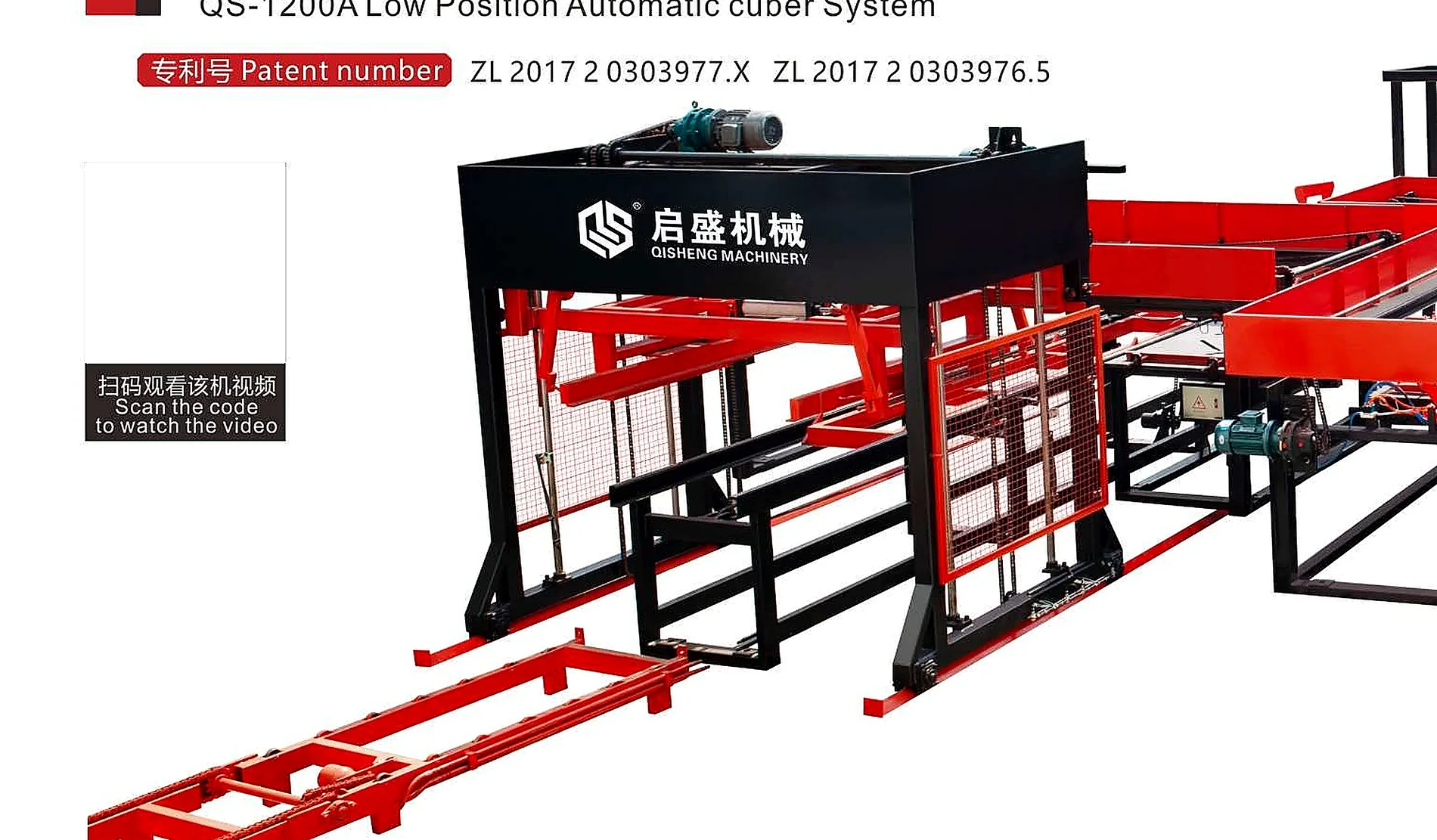
After curing, the cuber takes the stack down and rebuilds it into a transport cube. The QS-1200A low-position automatic cuber handles 18 standard hollow blocks per layer and about 3,800 pallets per shift. On a pallet-free arrangement, a QSMT1000 cuber reaches up to 135,000 bricks per 8-hour shift with 40 hollow blocks or 5 layers per bite.
Packing follows the cuber: strapping or wrapping the cube for road transport, then loading. Keep packing close to the cuber so the cube is never re-handled twice. Every extra touch is a place where corners chip.
Control System and Power Supply
The control system is the layer that makes the stations behave as one line. On a QSGW line it is a central computer with PLC and sensors, which sequences batching release, mixer discharge, press cycle, pallet feed and cuber motion, and reports faults to one screen. Without it, each station runs on its own logic and operators chase the press by hand.
Machines for Syria, Iraq, Jordan and the Gulf are configured for 380 V / 50 Hz three-phase supply. Add up installed capacity before you order the transformer: a QST1800 host machine alone draws 104 kW, a QST1500 draws 69.1 kW, a QST1200 draws 57.6 kW, and the QS-1200 pallet feeder adds 3.0 kW. The mixer, batching machine, compressors and cuber add their own loads on top. Electrical headroom is cheaper at build time than at expansion time.
Floor Area, Manpower and Capacity Assumptions
Machine footprints set the floor plan. A QST1800 measures 15,500 x 5,500 x 3,200 mm and weighs 34 t. A QST8-15 measures 9,800 x 3,600 x 2,800 mm at 14 t, and a QST6-15 measures 9,450 x 3,300 x 2,700 mm at 12 t. Those are machine envelopes only. The working floor around them must also carry the mixer and batching platform, the pallet buffer, the curing rows and the cube storage, so a QST1800 site needs a wider and longer building than a QST8-15 site for the same product mix. The slab under the press follows the machine weight, and the vibration unit needs an isolated foundation block.
Manpower depends on the automation level, not on the model alone. A QSGW high-level line runs on 3 to 6 persons per shift. A QSRGY finger-car line completes the whole production task with 3 to 4 persons. A line built from a QST press, a QS-1200 feeder and a cuber with a manual curing yard needs more hands on the yard, because pallets and cubes move by machine but block handling still needs supervision.
Write these capacity assumptions down before you buy: the target pieces per 8-hour shift, the product mix and mould sizes, the shift pattern, the mix design and the pallet flow. The published ceilings of 220,000 bricks for the QST1800, 120,960 for the QST1200 and 90,000 for the QST8-15 assume a standard brick mould, a full 8-hour shift, a stable mix and uninterrupted pallet handling. Treat them as a ceiling that your site conditions will discount.
How to Specify Block Factory Equipment
Work backwards from the host machine. Choose the QST model that meets your shift target, then fix the pallet size, then match the mixer and batching machine to the press cycle, then size the curing system to the number of blocks that comes off the press each hour, then pick the cuber and packing layout. That order keeps the stations matched instead of overloading one of them.
Our complete concrete block factory outline and the concrete block production line page show how the stations sit together, and the concrete block making machine pages carry the full model data. Send your target output, product sizes and site dimensions through the RFQ form and the equipment list can be configured against your site rather than against a catalogue.
Frequently Asked Questions
What equipment makes up a block factory?
What decides the output of a block factory line?
Which QST host machine fits my target output?
How much floor area does block factory equipment need?
How many workers does a block factory need per shift?
What is included with the QS-1200 pallet feeding machine and the pallets?
How does the curing system change the plant layout?
What power supply and installed capacity should I plan for?
Do batching and mixing affect block strength?
How should I compare block factory equipment offers?
Related machines
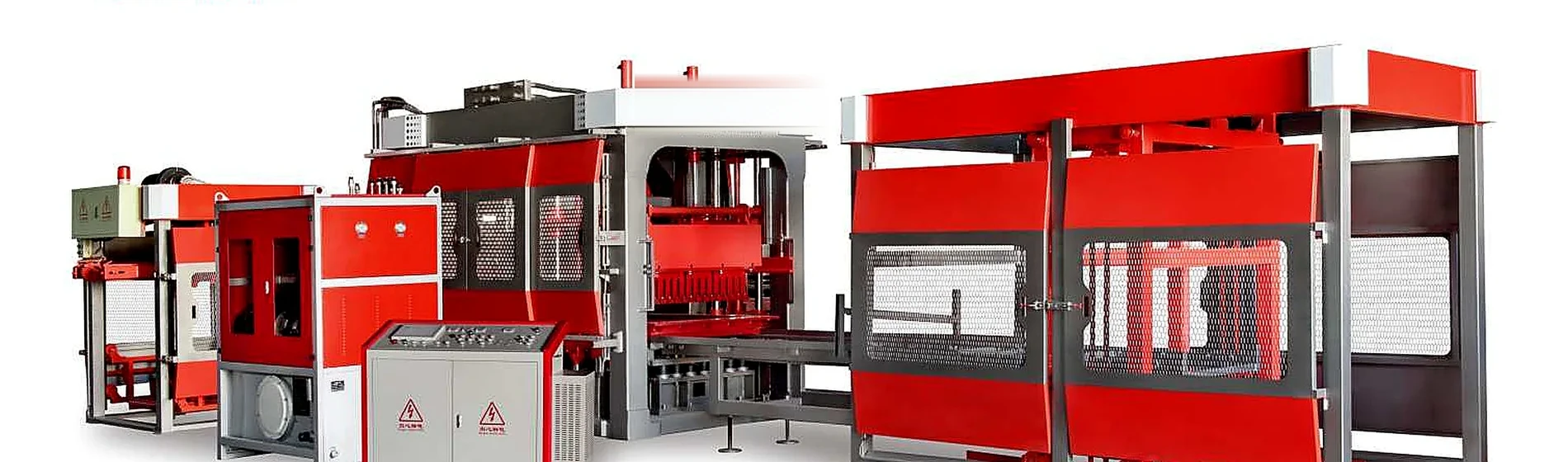
Concrete Block Making Machine
Core machine for hollow blocks, solid blocks, pavers and curbstones.
Automatic Block Making Machine
High-output automatic block machine for industrial production lines.
Hydraulic Block Making Machine
Hydraulic forming system for stable density and consistent blocks.
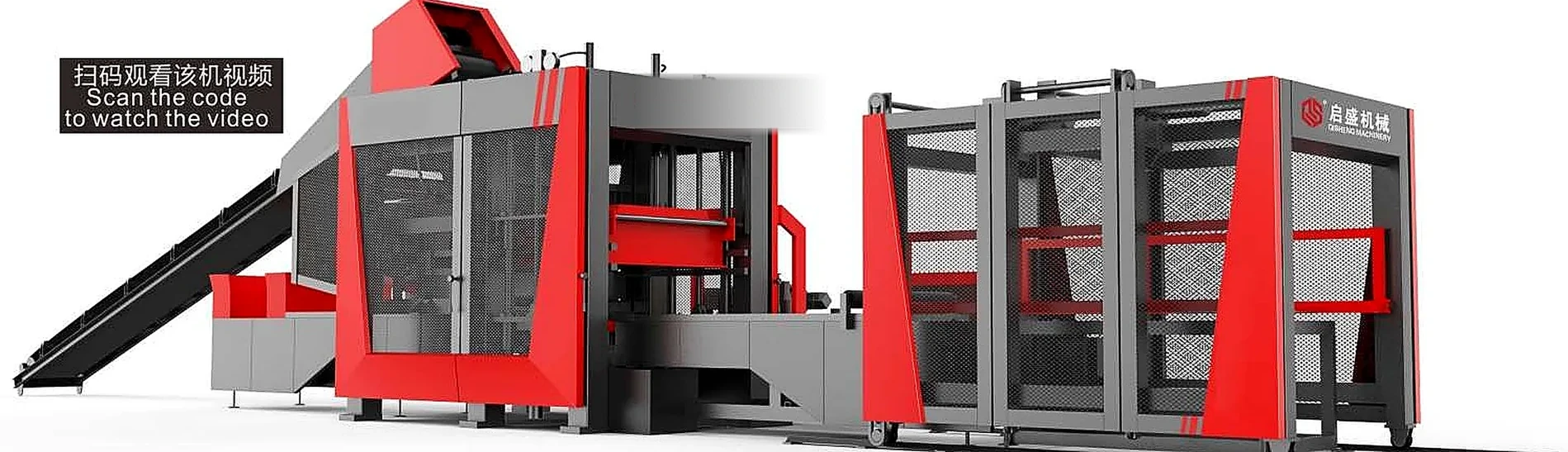
Hollow Block Making Machine
Machine configurations for common hollow concrete block sizes.