Hydraulic Block Making Machine for Sale
Buying guide for a hydraulic block making machine: how static pressing differs from vibration pressing, the published figures of the QS range, how moulds set the product list, and what must appear in the quotation.
A hydraulic block making machine for sale in the QS range presses a semi-dry mix between a static mould and a hydraulic ram at 31.5 MPa, which gives denser pavers and solid bricks than vibration alone. The range covers the QS600 at 46.9 kW and 23 t through the QS1500 bidirectional press at 108.2 kW and 43 t. Capacity follows the mould, the cycle time and the shift, and a full quotation lists the press, the moulds, batching, curing and packing.
Hydraulic Block Making Machine for Sale: What the Machine Does
A hydraulic block making machine is a static pressing unit. The mould is clamped, the mix is dropped in, and a hydraulic ram presses the material against the base plate until the block reaches its density. Vibration presses shake the mix into place and press at the same time. Hydraulic presses leave vibration out of the main stroke and rely on pressure, which is why they produce dense pavers, kerb stones and solid bricks with a finish that holds up on a road surface.
Buyers looking for a hydraulic block making machine for sale usually arrive with one of three products in mind: interlocking pavers for a municipal or port contract, kerb stones that must meet a dimensional tolerance, or solid bricks with a high compressive requirement. All three come down to the same question. Can the machine hold the cycle on your mix, and can the mould set produce the pieces per cycle your order book needs. Cycle times across the static pressing range run from 18 to 25 seconds depending on the model and the direction of pressing.
This page sets out the published figures for the QS static pressing range, how moulds define the product list, how to size the machine from a daily target, the site and power requirements, and what a usable quotation contains.
What Makes a Block Machine Hydraulic
The distinction is mechanical, not a marketing label. A hydraulic machine converts motor power into pressing force through a cylinder and a hydraulic power unit, and the force is set by the pressure and the bore of the main cylinder rather than by the mass of a vibrating frame. Three consequences follow, and each one matters at the purchase decision.
- Density is the first. Pressing a semi-dry mix at 31.5 MPa closes the mix more completely than vibration with a light top press, so the block carries more load and wears better at the edges.
- Dimensional tolerance is the second. A static mould and a controlled ram give a flatter face and a tighter thickness tolerance, which is what a paver contract measures on site.
- Cycle behaviour is the third. The pressing stroke is set by the hydraulic system, so the operator tunes pressure and hold time instead of vibration frequency and amplitude.
Vibration and hydraulic pressing are not competitors in every job. A plant that sells hollow blocks and pavers side by side often runs a vibration machine for the hollow block and a hydraulic press for the decorative and load-bearing paving products, because the two products reward different forming methods. What matters is that the quotation states which machine is being offered and why.
Hydraulic Block Making Machine for Sale: Published Specifications
The QS range is built in unidirectional and bidirectional versions. A unidirectional press applies force from one side of the mould, and a bidirectional press applies it from both, which shortens the cycle and improves density through the thickness of the block. The figures below are the published specification of each model.
| Model | Pressing direction | Maximum pressure | Main cylinder bore | Forming area | Cycle | Total power | Machine weight |
|---|---|---|---|---|---|---|---|
| QS600 | Unidirectional | 31.5 MPa | 450 mm | 850 x 700 mm | 20 to 25 s | 46.9 kW | About 23 t |
| QS800 | Unidirectional | 31.5 MPa | 500 mm | 1,100 x 680 mm | 20 to 25 s | 54.9 kW | About 24 t |
| QS800 | Bidirectional | 31.5 MPa | 500 mm | 1,100 x 680 mm | 18 to 22 s | 70 kW | 22 to 25 t |
| QS1000 | Unidirectional | 31.5 MPa | 600 mm | 1,100 x 850 mm | 20 to 25 s | 66.4 kW | About 29 t |
| QS1000 | Bidirectional | 31.5 MPa | 600 mm | 1,100 x 850 mm | 18 to 22 s | 105.4 kW | About 33 t |
| QS1500 | Bidirectional | 31.5 MPa | 720 mm | 1,440 x 850 mm | 18 to 22 s | 108.2 kW | About 43 t |
Pallet size follows the forming area: the QS600 runs a 900 x 700 x 20 mm pallet, the unidirectional QS800 and QS1000 run 1,100 x 700 x 20 mm and 1,200 x 900 x 20 mm, and the bidirectional QS1000 runs a 1,200 x 950 x 20 mm pallet. The pallet has to match the machine and the mould together, because the green block rides the pallet into the curing area and a pallet that does not fit the forming area cannot be used.
Pieces per mould are set by the mould, not by the press. On the QS600 a 200 x 100 x 60 mm coloured paving mould produces 16 pieces per cycle, which is why the same press can look strong on one product and weak on another. Ask for the pieces per cycle of the moulds you actually sell before comparing machines on a single number.
Vibration Presses in the Same Range
If your product mix is mostly hollow block and standard brick, the vibration and press models carry the same catalogue and a lower power requirement. Rated pressure on the compact models is 25 MPa on the QST6-15 and 31.5 MPa on the QST8-15, with excitation force from 68 kN to 280 kN across the family.
| Model | Excitation force | Installed capacity | Pallet | Published output |
|---|---|---|---|---|
| QST6-15 | 68 kN | 34.4 kW | 980 x 680 x 20 mm | 46,080 to 61,440 standard bricks per 8 h shift, 32 to 36 per mould |
| QST8-15 | 95 kN | 44.9 kW | 980 x 860 x 22 mm | Up to 90,000 standard bricks per 8 h shift |
| QST1200 | 150 kN | 57.6 kW | 1,350 x 880 x 25 mm | Up to 120,960 standard bricks per 8 h shift |
| QST1800 | 280 kN | 104 kW | 1,400 x 1,400 x 30 mm | Up to 220,000 standard bricks per 8 h shift |
| QSMT1000 | 150 kN | 57.5 kW | Pallet free | Up to 135,000 bricks of 240 x 115 x 50 mm per 8 h shift |
The QST6-15 also shows how the mould changes output inside one machine: a 390 x 190 x 190 mm hollow block mould produces 6 pieces per mould and 8,640 to 11,520 units per 8 hour shift, while a 240 x 115 x 51 mm standard brick mould produces 32 to 36 pieces and 46,080 to 61,440 units over the same shift. The machine is constant, the mould is the variable.
Moulds Decide the Product Range
One mould produces one product at a fixed cavity count. A plant that sells hollow block, paver, kerb stone and solid brick holds one mould per product, plans the changeover time into the weekly schedule, and keeps a spare for the mould that works the most hours. Moulds are the first wear part in any block plant, because they run under pressure for tens of thousands of cycles.
The moulds supplied with the QS machines are cut from wear resistant alloy steel, machined on CNC equipment to micron level, and hardened through a controlled heat treatment cycle. Each set includes the mould frame, the mould core, the base plate, the guiding assembly and the positioning mechanism. When you compare two quotations, compare the mould list as carefully as the press, because a quote that looks lower often carries fewer moulds, and the missing ones appear later as a separate cost.
Power, Foundation and Site Requirements
The press is only part of the electrical load. Installed capacity runs from 46.9 kW on the QS600 to 108.2 kW on the QS1500 bidirectional press, and those figures are the machine itself, not the site supply. Add the mixer, the batching machine, the pallet feeder, the cuber and the packing line before sizing a transformer or a generator, and tell us the site voltage and frequency so the drives and controls are configured to match rather than assumed.
Foundations matter more on a hydraulic press than on a light machine. A QS1500 at about 43 t and a QS1000 bidirectional at about 33 t transfer a pulsing load into the floor, so an isolated, oversized foundation under the press and the mixer is normal practice. The curing area needs a floor that carries pallet stacks without settling, because a curing yard that moves will show up as thickness variation on the finished block. Aggregate storage, mixing hall, curing area and finished goods yard are usually laid out as separate zones so the material flows forward once and the pallets loop back.
What a Hydraulic Block Making Machine for Sale Quotation Should Include
A press price on its own is not a project price. The equipment list below is what we quote line by line, so two offers can be compared item by item instead of by one headline number.
- The host press, named by model and pressing direction.
- The mould set, with the cavity count for each product you intend to sell.
- Batching equipment, such as the PL series machine with two to four hoppers and three point weighing, and a CMP vertical shaft planetary mixer sized to the press cycle.
- Pallet handling, for example the QS-1200 automatic pallet feeder at 3 kW with a feed cycle of about 13 seconds.
- Curing scope, whether ground curing, a belt frame line or a high level line with mother and child vehicles.
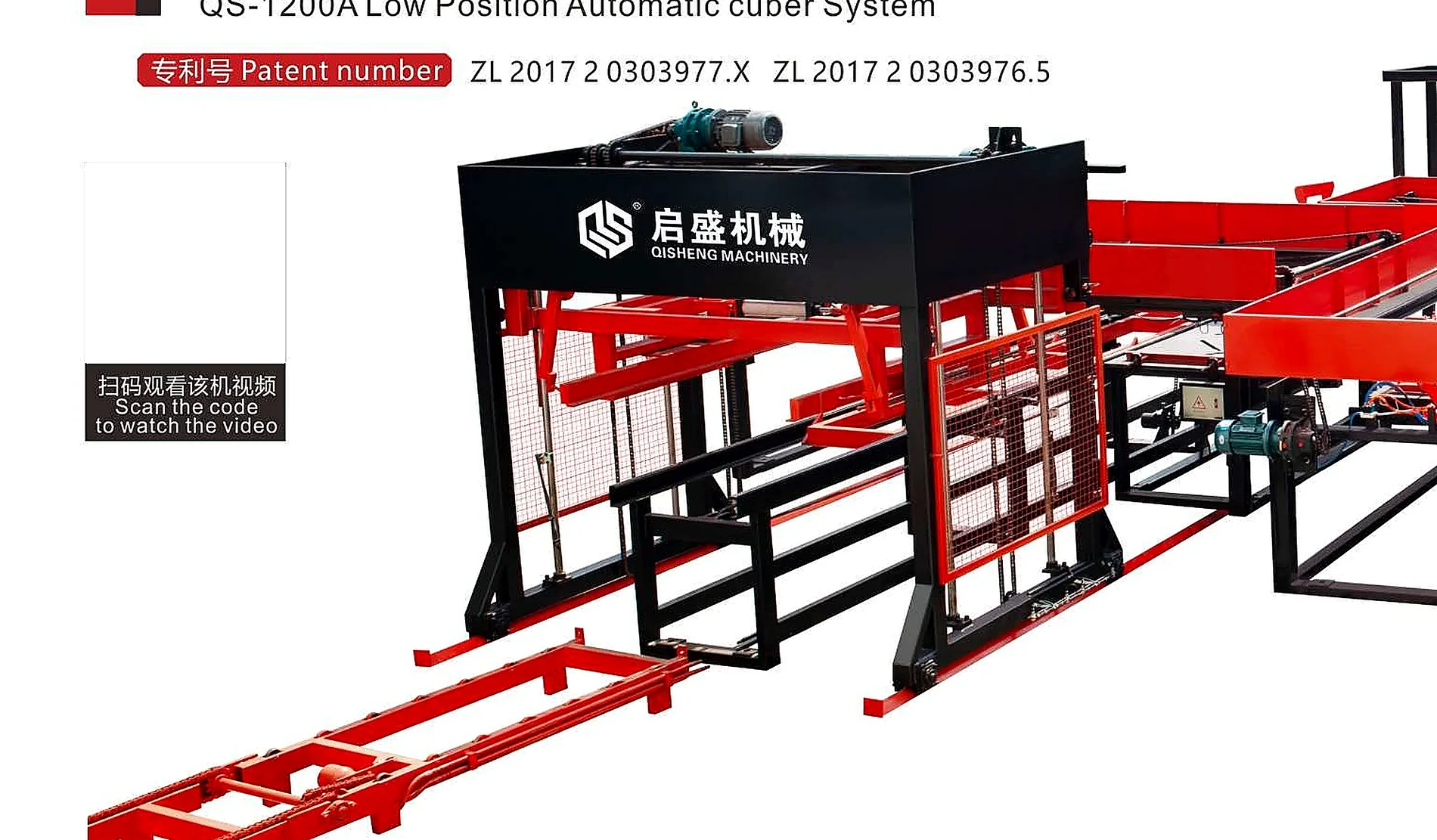
- Cubing and packing, such as the QS-1200A low position palletizer at 29.5 kW with a single layer cycle of about 18 seconds, or the QS-1000G-A stationary unit that handles about 1,700 pallets per day with one operator.
- Packing equipment, such as the QSSX-16A strapping machine with a cycle of about 11 seconds per stack and a strap tension range of 200 to 2,500 N.
- Handling equipment, such as the QS series forklift clamp that lifts 500 to 800 standard bricks or 40 hollow blocks per lift at a load capacity of 2,000 kg.
- Shipping terms, the supervision days on site, who supplies the crane during installation, and who runs the control cabling and the panel.
- Operator training and the documentation set, including layout drawings and electrical schematics.
A quotation that names only the machine leaves the buyer to discover the pallet count, the mixer size and the civil works afterwards. Those three items move the total more than most buyers expect, and the cheapest offer on the table is often the one that left them out.
Installation, Commissioning and Training
A press is commissioned before it is handed over. The foundation is checked, the hydraulic system is flushed and filled, pressure and hold time are set against a trial mix, and a first production run proves the cycle on your material rather than on a laboratory sample. On a full line, commissioning runs stage by stage: batching and mixing first, then the press, then pallet transfer and curing, then cubing and packing, and finally an integrated loop test at the rated cycle.
Training is part of the scope because the machine rewards an operator who reads the mix. A team that understands why the water content changes through a hot afternoon will hold quality better than a team that only knows which buttons to press. We ask for the name of the technician who will own the machine on site, because training one person properly is worth more than training everyone briefly. Remote support covers the first production shifts, and the customer tells us the site conditions before the first trial rather than after.
Three Mistakes When Comparing Offers
The same three errors appear in most purchasing files, and each one is avoidable.
- Comparing presses without comparing moulds. Pieces per cycle and the product list come from the mould set, so a lower machine price with fewer moulds is not a lower project price.
- Sizing the press from a catalogue ceiling rather than from the product. A published figure is usually quoted on a standard brick mould. Your paving mould may carry a different cavity count and a different cycle.
- Leaving the civil works and the electrical package out of the comparison. Foundations, the incoming transformer, the panel and the cable runs are usually the buyer scope, and they are the items that turn a low offer into a high final cost.
How to Request a Quotation
Send the block or paver drawings with exact sizes and the thickness, the product you expect to sell most, the daily output target and the number of shifts, the site voltage and frequency, the usable site area, your automation preference and your destination with the delivery terms you want. With those inputs we return a recommended configuration, a mould list and a written quotation, and we will say plainly if a different press size suits your order book better.
For the wider equipment picture, the automatic block factory page sets out the full line from batching to packing. If your product is interlocking paving, start with the interlocking block machine page for thicknesses and mould patterns. Pricing background is explained in the block making machine price guide, and the core machine family is listed on the hydraulic block making machine page, with the QS1500 bidirectional press and the QS1000 bidirectional press shown in detail.
Request your press quotation: send the drawings, the daily target and the site power, and we return a configuration you can compare line by line.
Frequently Asked Questions
What is the difference between a hydraulic and a vibration block making machine?
How much does a hydraulic block making machine cost?
Can one hydraulic press produce pavers, kerb stones and solid bricks?
What power supply does a static pressing machine need?
How is the daily capacity of a hydraulic press calculated?
What should a quotation for a hydraulic block making machine include?
How long does installation and commissioning take?
Related machines
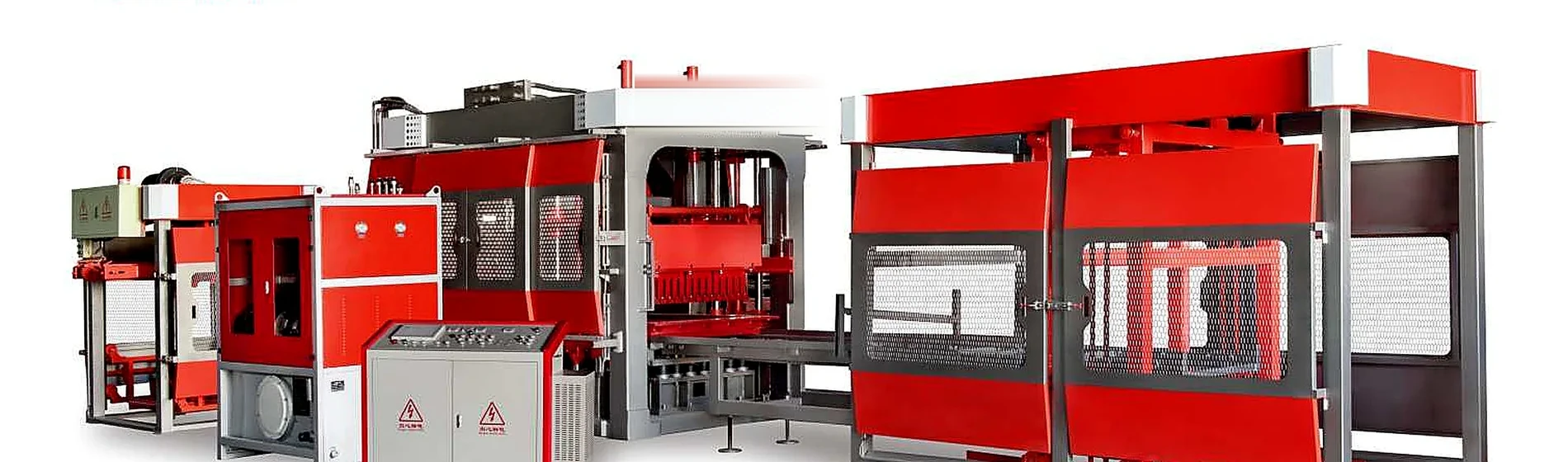
Concrete Block Making Machine
Core machine for hollow blocks, solid blocks, pavers and curbstones.
Automatic Block Making Machine
High-output automatic block machine for industrial production lines.
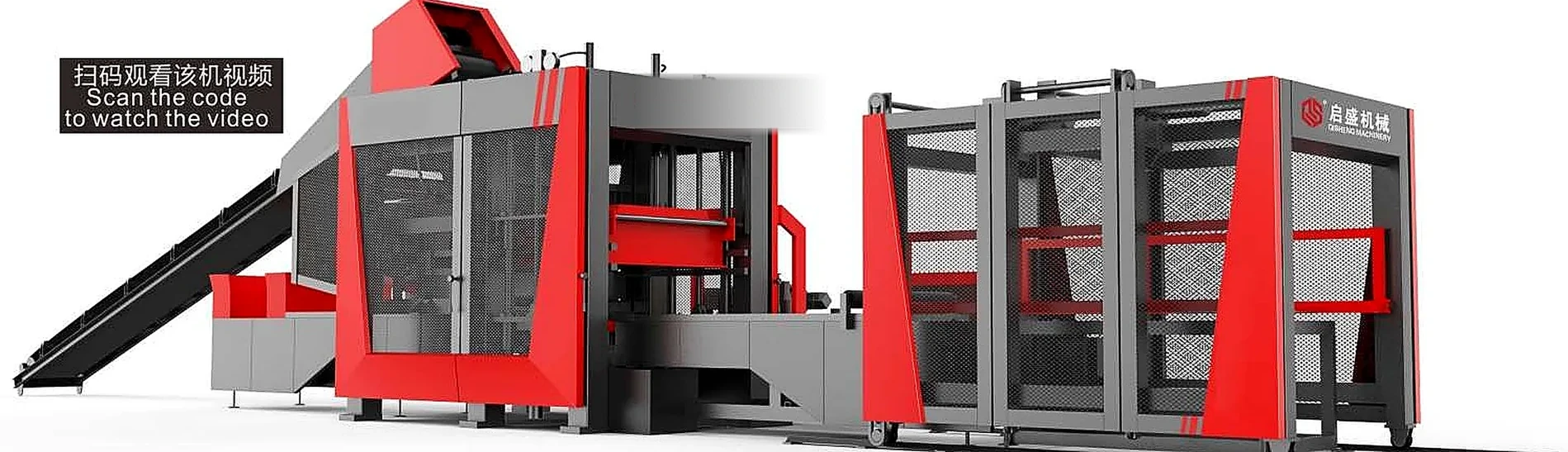
Hydraulic Block Making Machine
Hydraulic forming system for stable density and consistent blocks.
Hollow Block Making Machine
Machine configurations for common hollow concrete block sizes.